
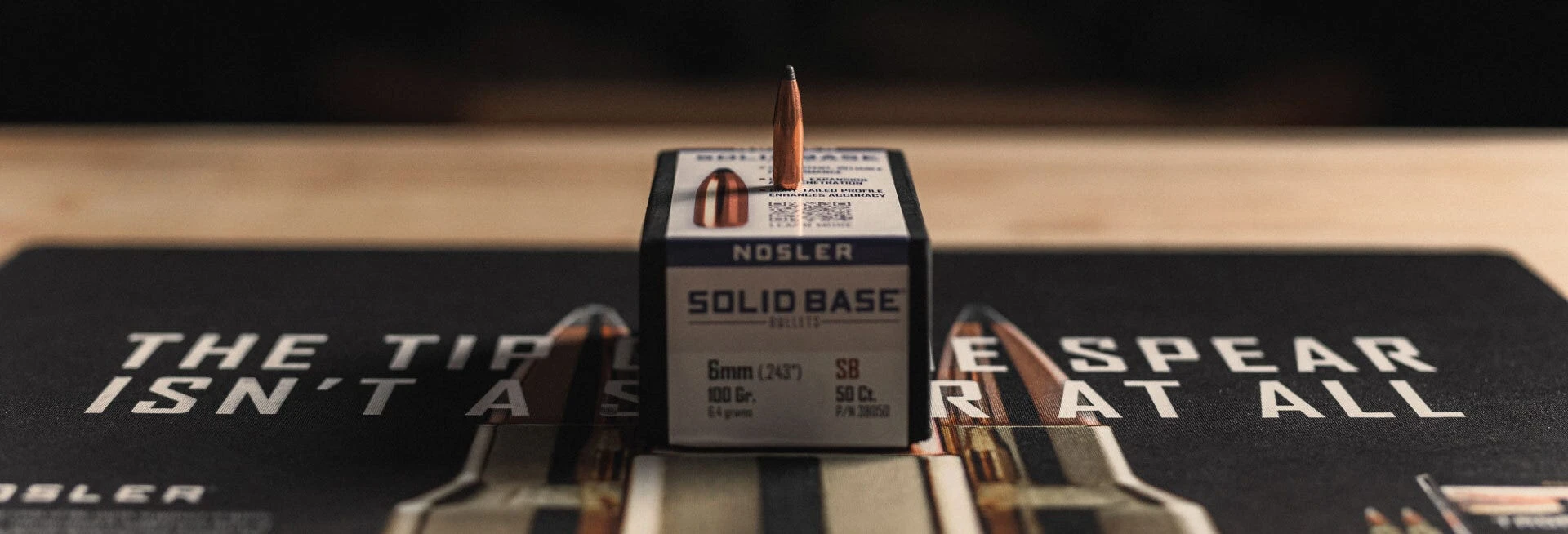

In 1946 a Canadian moose did not drop to a well-placed shot. The bullet John Nosler designed so it would never happen again is still being made.
Image: Nosler, Inc.
- Founded 1948 · Ashland, Oregon
- Founder John A. Nosler
- Factory Bend and Redmond, Oregon
- What we carry Bullets · ammunition · brass
- Categories Ammunition · Reloading
History
A moose that did not fall
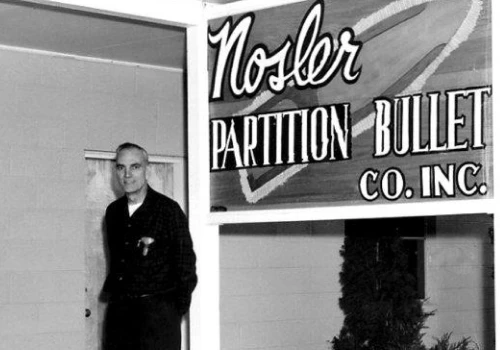
In the autumn of 1946, hunting in British Columbia, John Nosler put a well-placed shot from his .300 H&H into a mud-caked moose and it stayed on its feet. The problem was the bullet. The jacketed bullets of the day came two ways: the military type, closed at the nose and open at the base, penetrated but often passed through the animal without opening; the soft point opened a wide channel, but sometimes broke into fragments that no longer had the weight to get through bone and muscle.
The following year he tried a bullet with two cores separated by a partition: the front one to expand, the rear one to keep pushing. That autumn he and his friend Clarence Purdie each dropped a moose with a single shot. In 1948 he founded the Nosler Partition Bullet Company in Ashland, Oregon, to sell it. The company is named after the bullet, not the other way round.
The dates that came later are the ones read on the boxes today: 1958, the move to Bend; 1970, impact extrusion for the Partition; 1972, the Solid Base; 1984, the Ballistic Tip, with its polymer tip colour-coded by calibre; 1997, the Combined Technology alliance with Winchester, from which the Ballistic Silvertip emerged; 2003, the AccuBond and the Custom Competition; 2007, the lead-free E-Tip; 2013, the AccuBond Long Range; 2016, the RDF. The house returned to family hands in 1988 and became Nosler, Inc. in 1990.
Of what crosses customs to get here, the bulk is bullets for handloading. That, together with the ready-prepared brass and the manual, is what explains why this house sits on so many Spanish reloading benches.
Product families
What we distribute
Loaded ammunition first; then the bullets, grouped by line. Inside each card are the calibre and weight of every reference. Nosler makes more lines than we bring in.
Loaded ammunition
Licence-restricted product. This is catalogue information: sales go through an authorised gun shop.
Trophy Grade
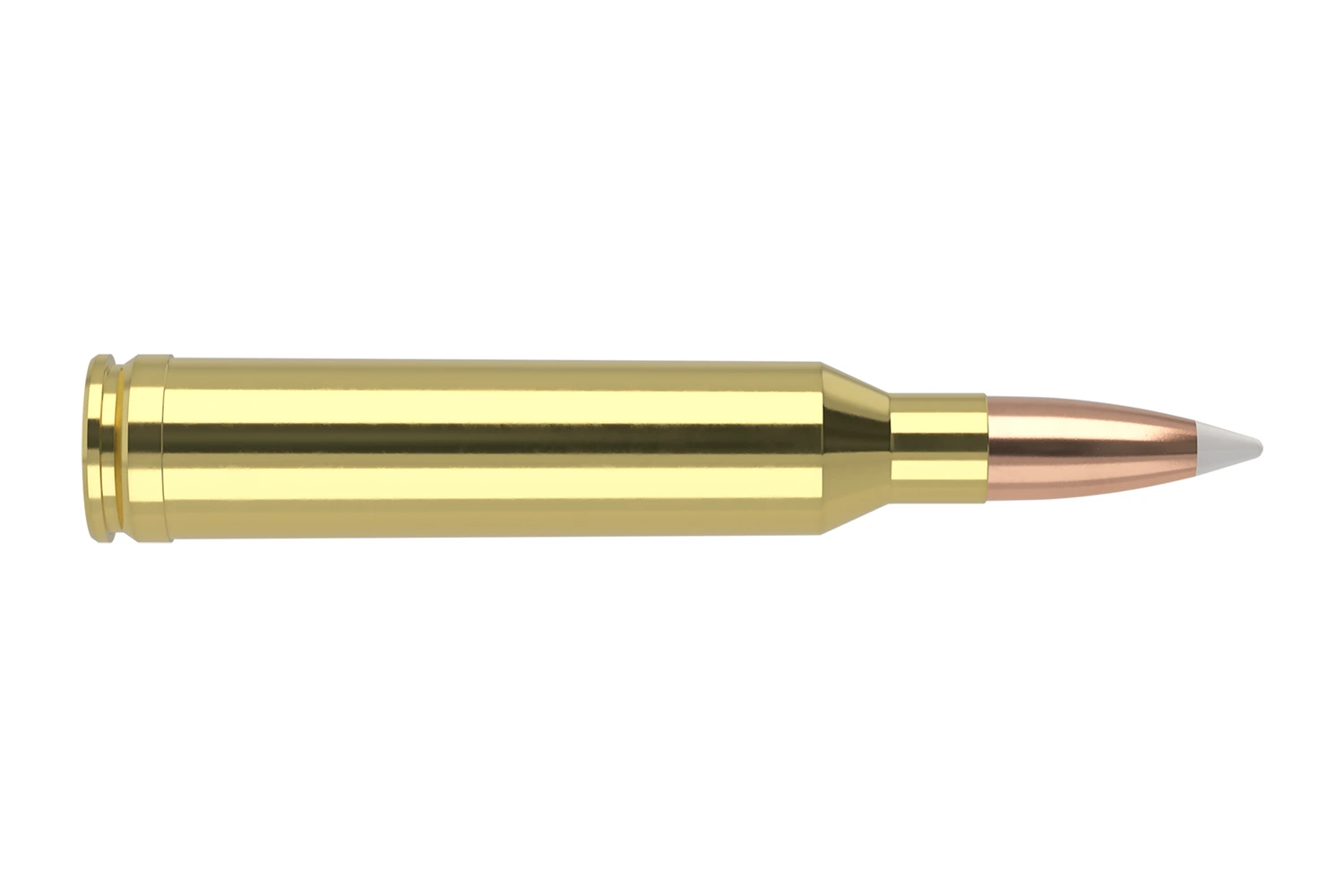
Loaded with NoslerCustom brass and a Nosler bullet. It comes with Partition and with AccuBond, and each reference’s label says which. Those marked RMEF carry the Rocky Mountain Elk Foundation licence.
References
- .243 Win. · 90 gr AccuBond
- .243 Win. · 100 gr Partition
- .257 Wby. Mag. · 110 gr AccuBond
- 6,5 Creedmoor · 140 gr Partition RMEF
- .270 Win. · 130 gr AccuBond
- .270 Win. · 130 gr Partition
- .270 Win. · 150 gr Partition
- .270 WSM · 140 gr AccuBond
- 7 mm Rem. Mag. · 160 gr AccuBond
- .30-06 · 165 gr AccuBond
- .30-06 · 180 gr Partition
- .308 Win. · 150 gr AccuBond
- .308 Win. · 165 gr Partition RMEF
- .308 Win. · 165 gr AccuBond
- .300 Win. Mag. · 180 gr AccuBond
- 9,3 × 62 · 250 gr AccuBond
Trophy Grade Long Range
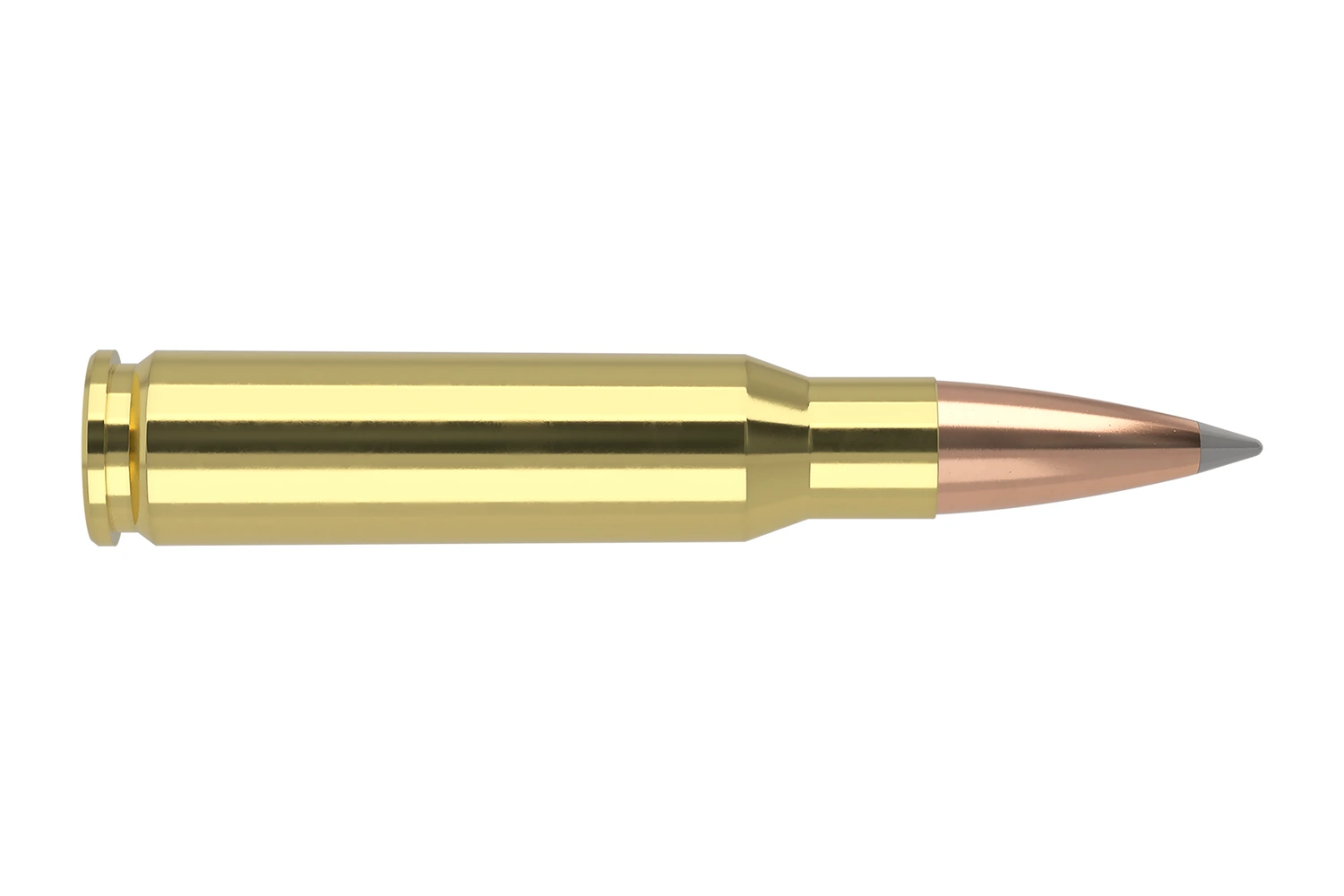
The same ammunition, loaded with the AccuBond Long Range.
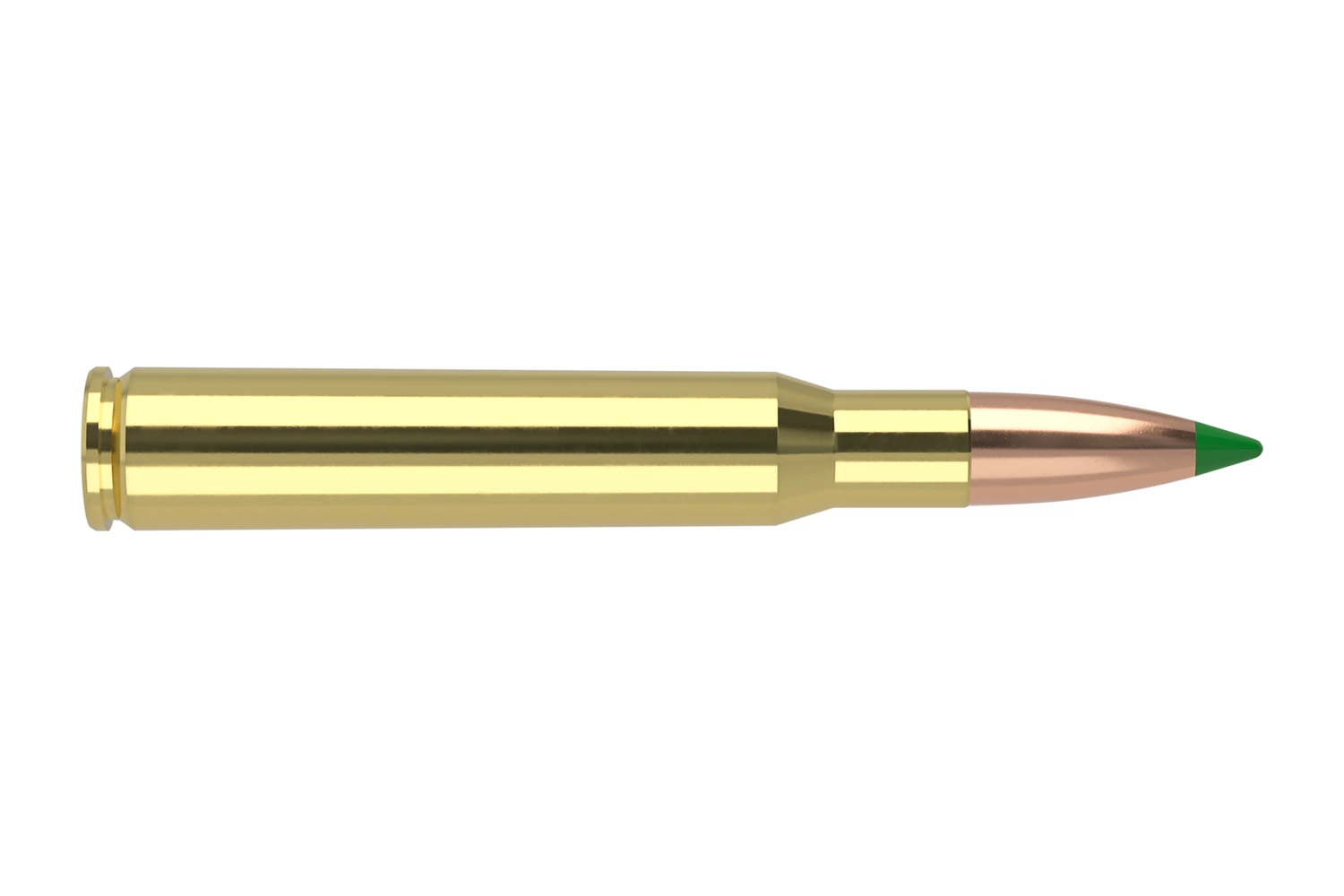
Ballistic Tip
Loaded with the Ballistic Tip. Nosler tunes each reference’s bullet weight and muzzle velocity for deer, antelope and wild boar.
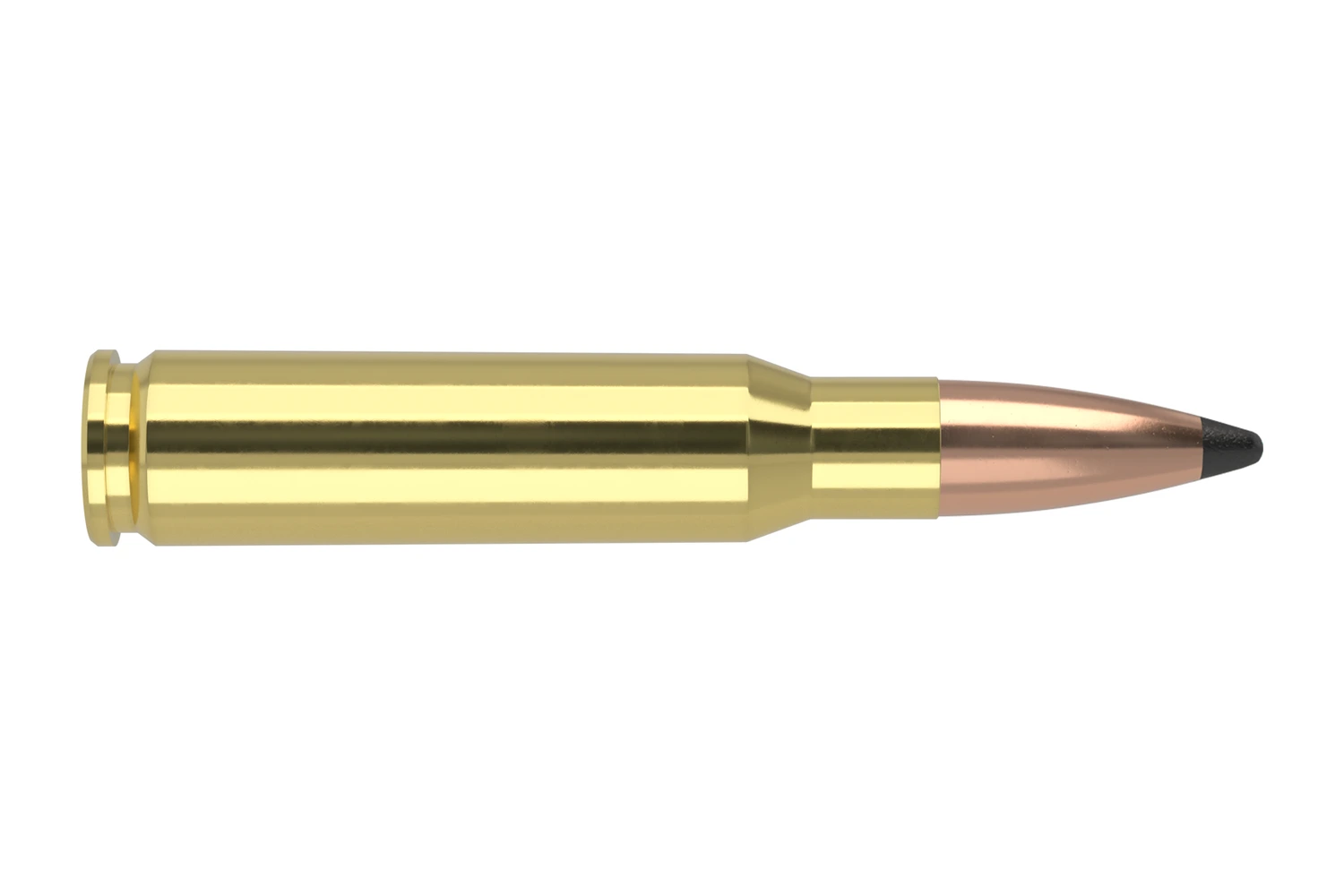
Whitetail Country
From 2024 and made specifically for deer. The ones we carry are loaded with the Solid Base.
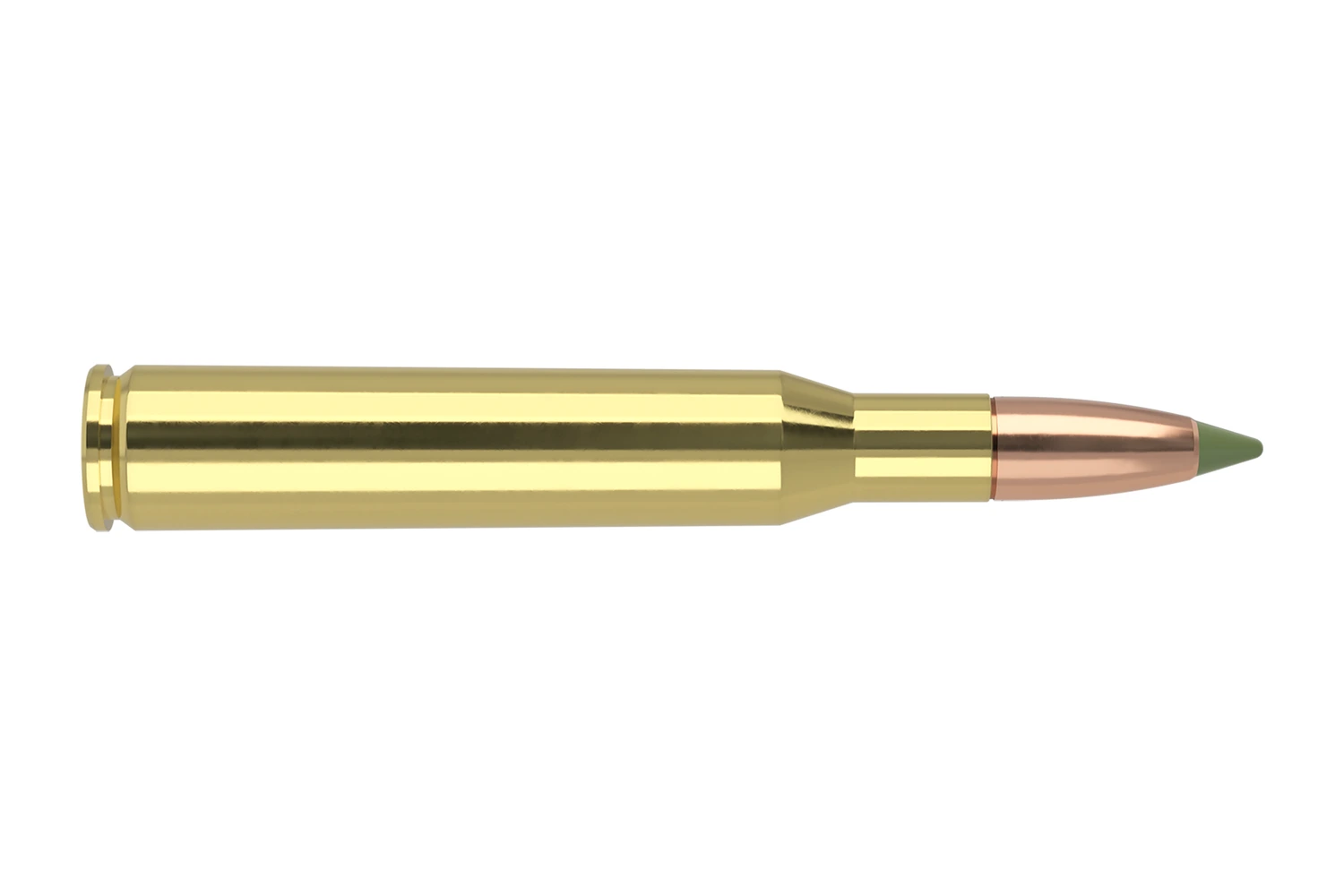
Expansion Tip
The ammunition loaded with the lead-free E-Tip.
References
Hunting bullets
Lead core and copper jacket in all but the E-Tip. What changes from one line to the next is how the bullet is built and what it does on impact.
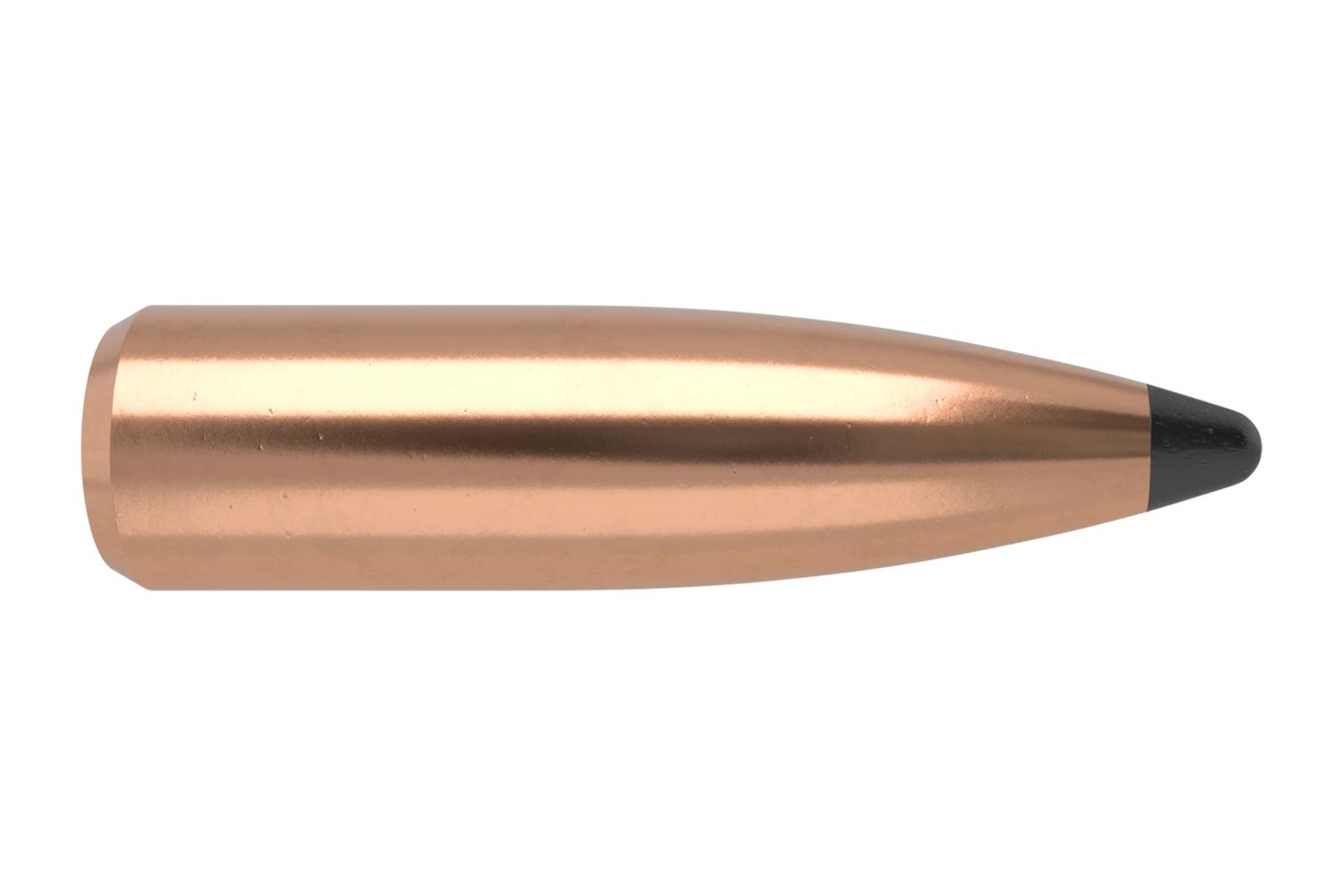
Partition
The bullet the company was founded on in 1948: two lead cores separated by a partition. The front one expands and the rear one, sheltered by the partition, keeps pushing. Made by impact extrusion since 1970. It is the widest line we carry.
References
- .22 · 60 gr
- 6 mm · 85 gr
- 6 mm · 95 gr
- 6 mm · 100 gr
- .25 · 100 gr
- .25 · 115 gr
- .25 · 120 gr
- 6,5 mm · 100 gr
- 6,5 mm · 125 gr
- 6,5 mm · 140 gr
- .270 · 130 gr
- .270 · 140 gr
- .270 · 150 gr
- .270 · 160 gr
- 7 mm · 140 gr
- 7 mm · 150 gr
- 7 mm · 160 gr
- 7 mm · 175 gr
- .30 · 150 gr
- .30 · 165 gr
- .30 · 170 gr
- .30 · 180 gr · protected point
- .30 · 180 gr · 50 u
- .30 · 200 gr
- .30 · 220 gr
- 8 mm · 200 gr
- .338 · 210 gr
- .338 · 225 gr
- .338 · 250 gr
- .35 · 225 gr
- .375 · 260 gr
- .375 · 300 gr
- .416 · 400 gr
- .45 · 300 gr
- 9,3 mm · 286 gr
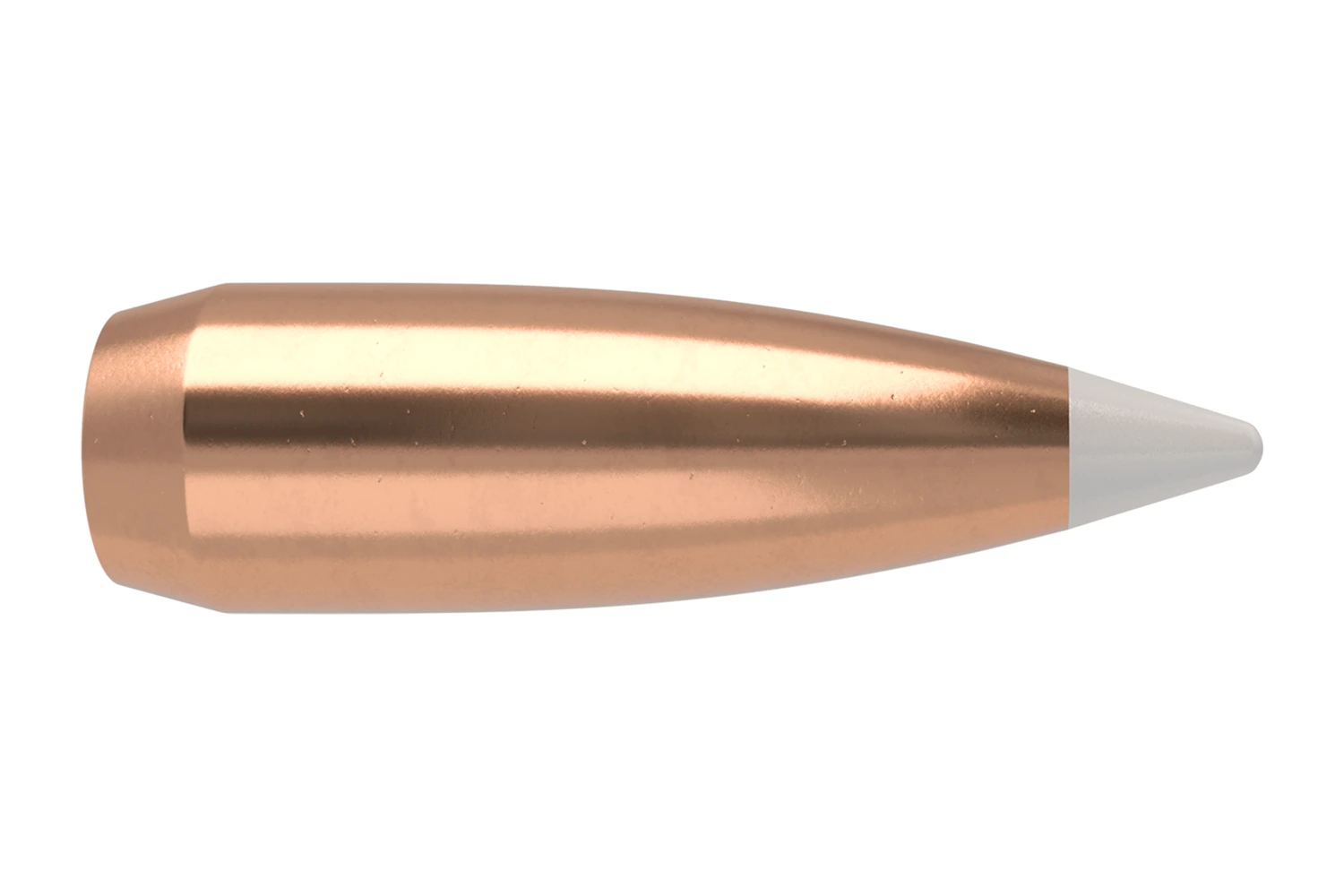
AccuBond
From 2003. A bonding process between jacket and core which, according to the manufacturer, eliminates core voids: it joins the penetration of the Partition to the accuracy of the Ballistic Tip.
References
- .22 · 70 gr
- 6 mm · 90 gr
- .25 · 110 gr
- 6,5 mm · 130 gr
- 6,5 mm · 140 gr
- .270 · 130 gr
- .270 · 140 gr
- .270 · 150 gr
- 7 mm · 140 gr
- 7 mm · 150 gr
- 7 mm · 160 gr
- .30 · 125 gr
- .30 · 150 gr
- .30 · 165 gr
- .30 · 180 gr
- .30 · 200 gr
- 8 mm · 200 gr
- .338 · 180 gr
- .338 · 200 gr
- .338 · 225 gr
- .338 · 250 gr
- .375 · 260 gr
- 9,3 mm · 250 gr
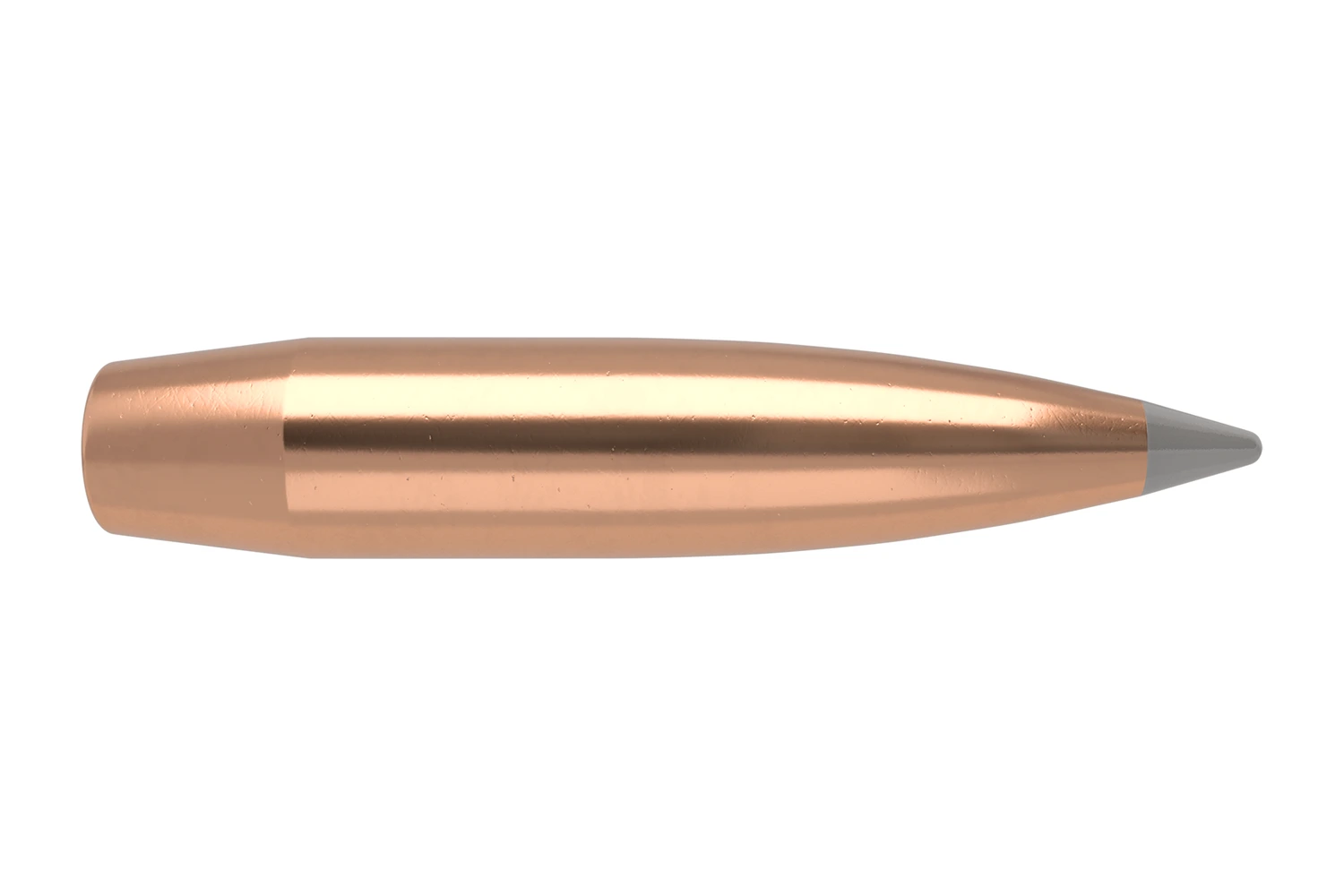
AccuBond Long Range
From 2013. Nosler built it for long-range hunters asking for a hunting bullet able to keep pace with optics and high-velocity cartridges beyond 1,000 yards.
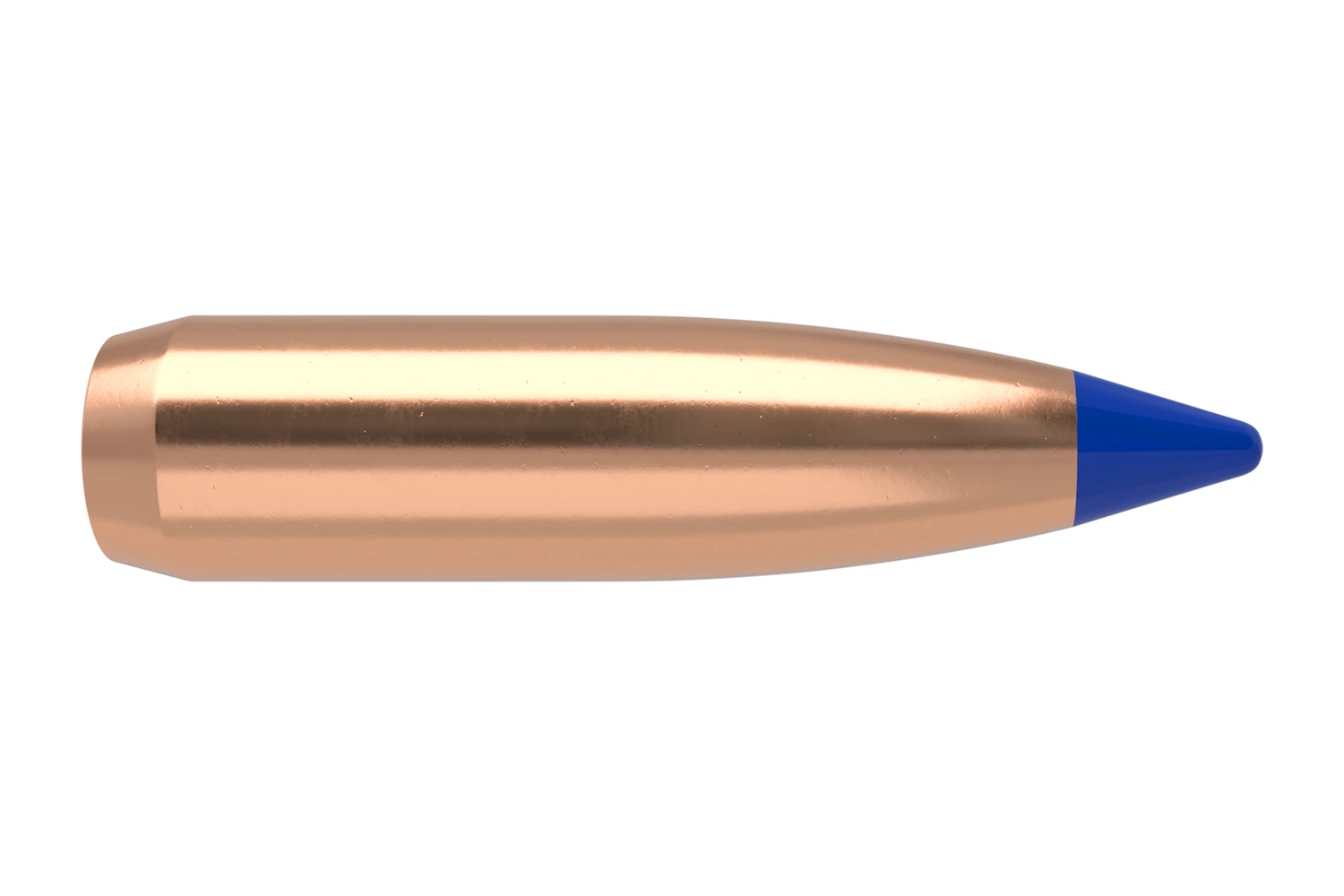
Ballistic Tip Hunting
From 1984. It takes the expansion and penetration of the Solid Base and puts a polymer tip in front, colour-coded by calibre.
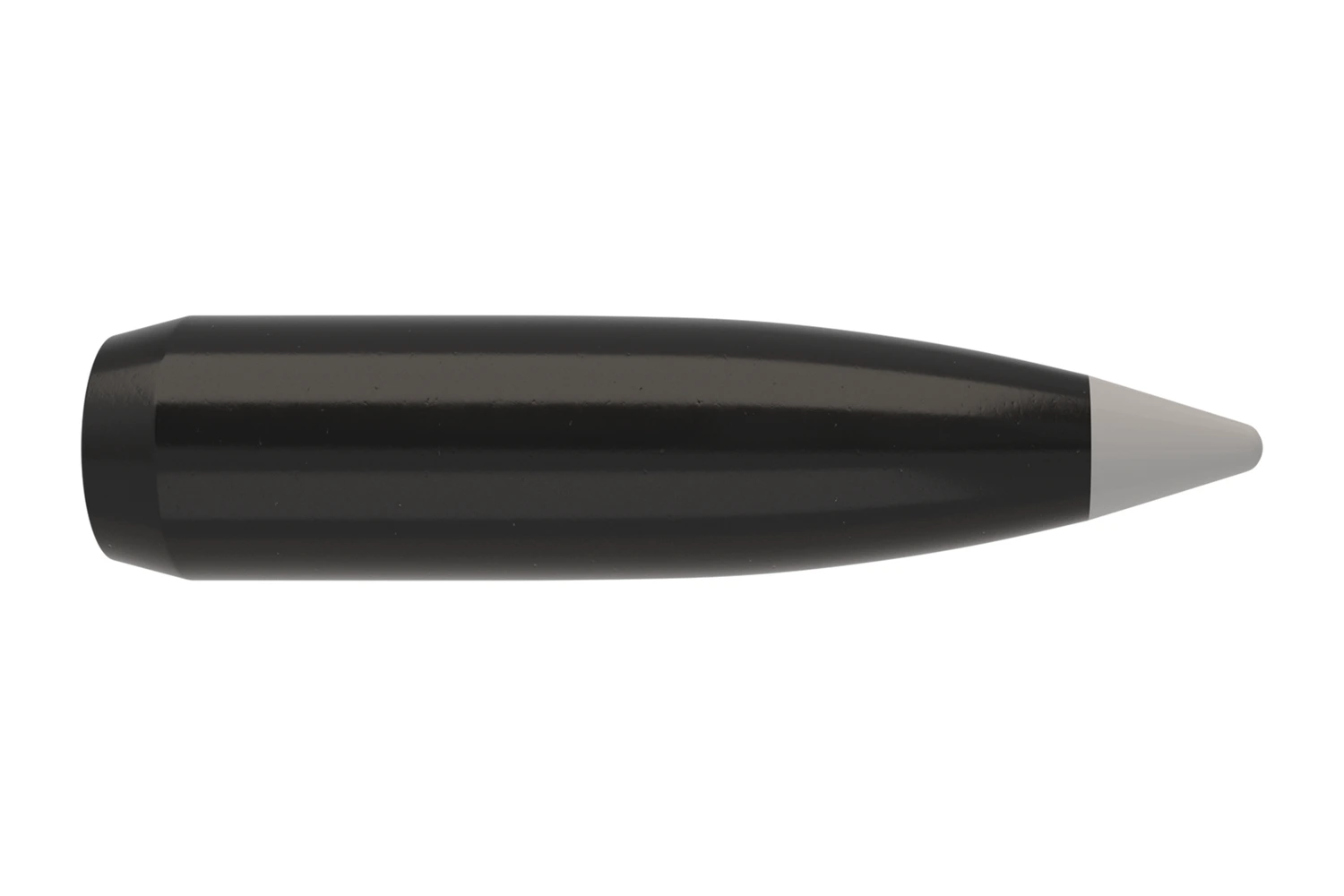
Ballistic Silvertip
Born of the Combined Technology alliance Nosler and Winchester formed in 1997: the Ballistic Tip construction with Winchester’s Lubalox black-oxide coating, which the manufacturer presents as gentler on the bore.
E-Tip
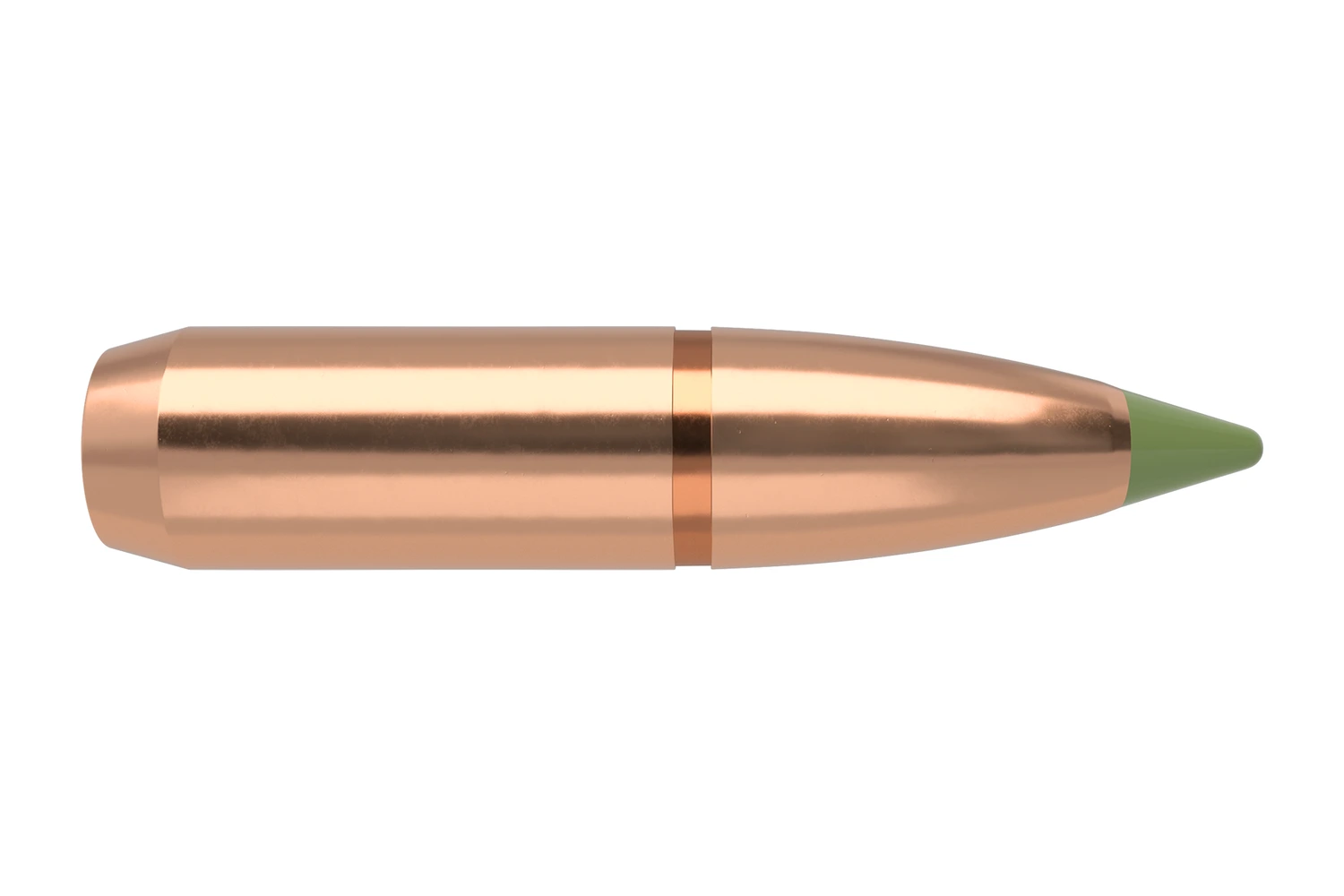
Introduced in 2007. A one-piece copper-alloy bullet, lead-free: it meets the hunting regulations that ban lead. The E² cavity in the tip is what opens it on impact, and the manufacturer credits it with weight retention above 95%.
Competition bullets
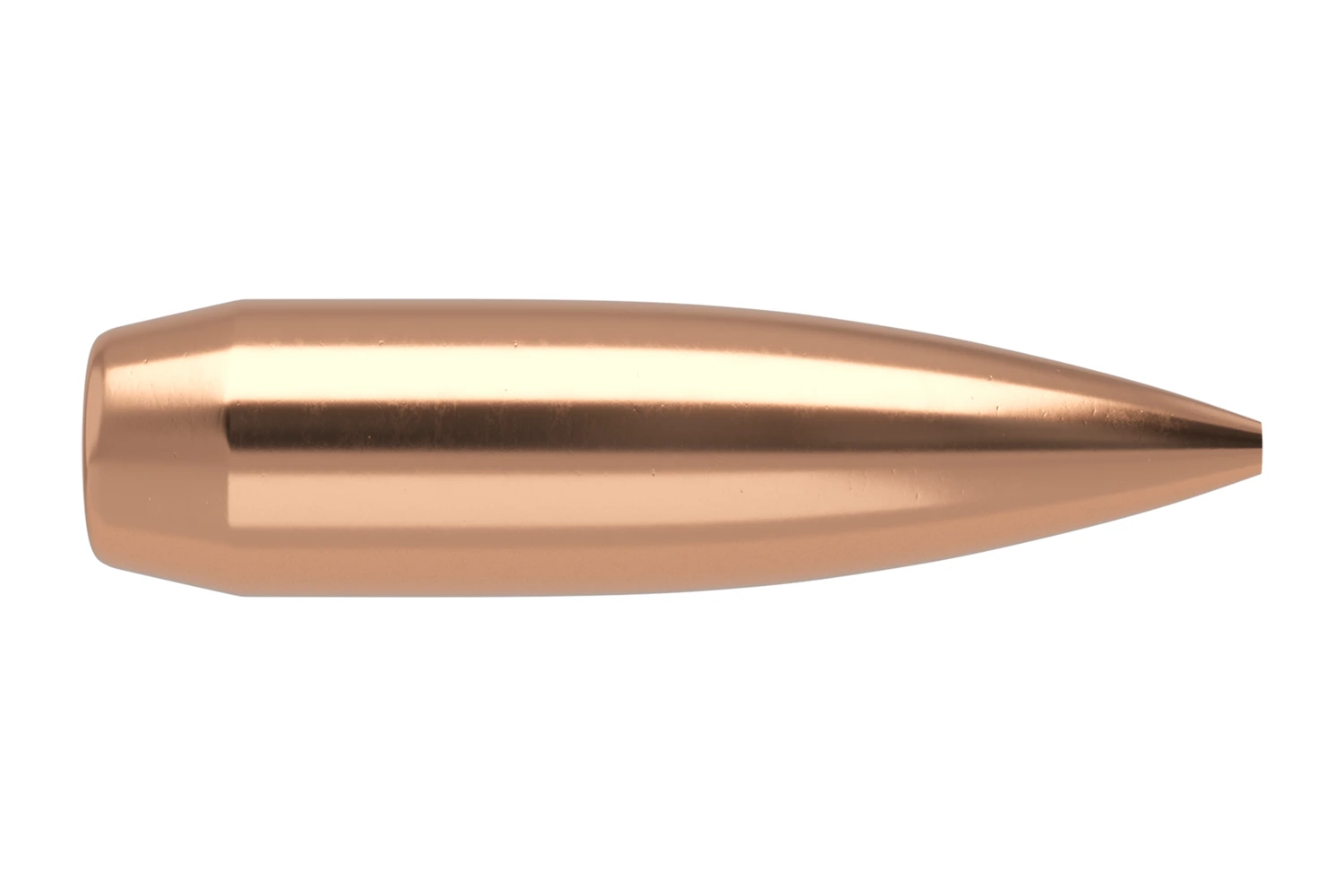
Hollow point and boat tail. Expansion is not the aim here: the aim is ballistic coefficient and a whole box weighing the same.
Custom Competition
From 2003. Competition jackets and tight-tolerance lead-alloy cores. It comes in boxes of 100, 250 and up to 1,000.
RDF
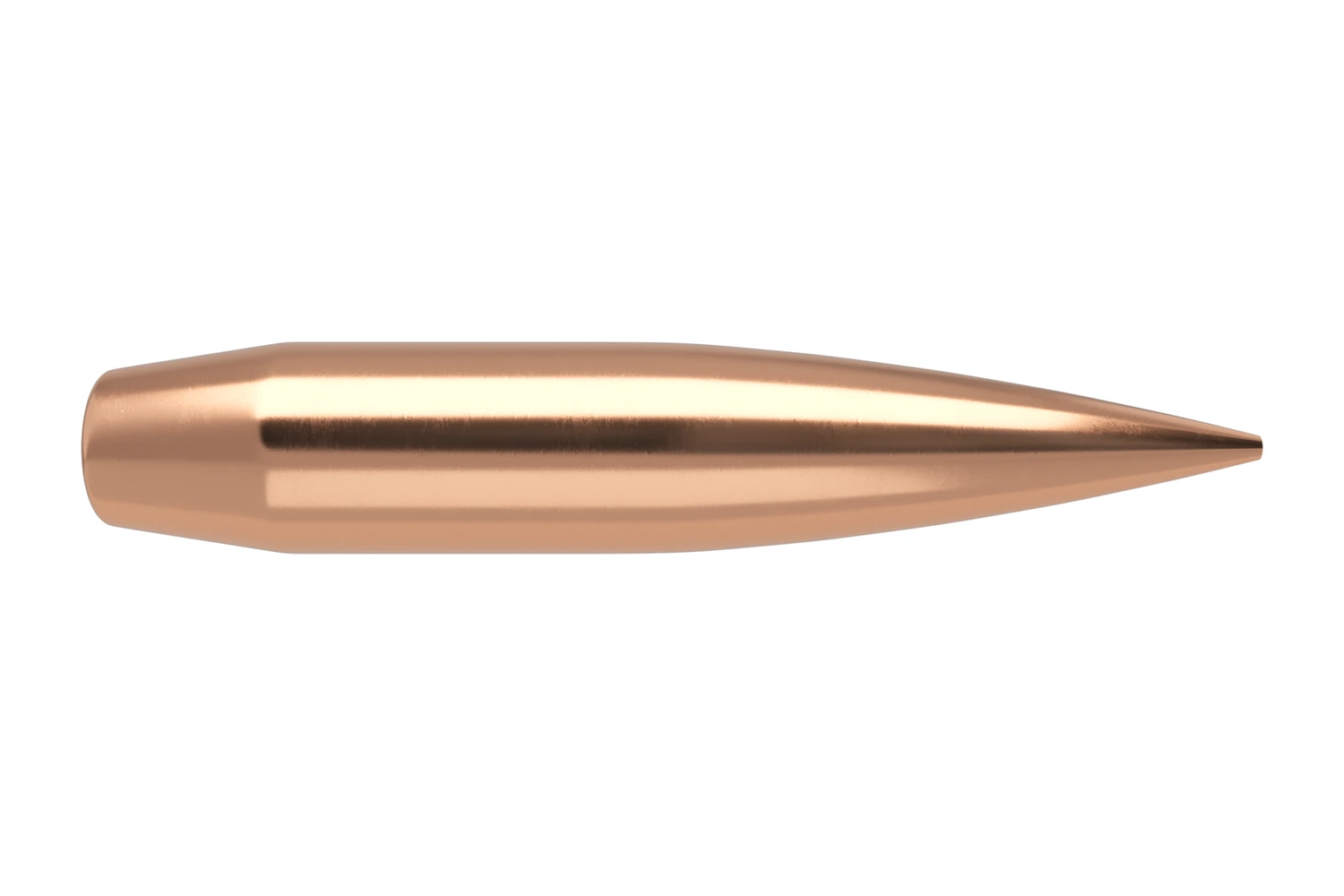
RDF stands for Reduced Drag Factor. Launched in 2016 and designed from scratch for very high ballistic coefficients: the flattest trajectory and the least wind drift Nosler offers.
Varmint and handgun bullets
Ballistic Tip Varmint
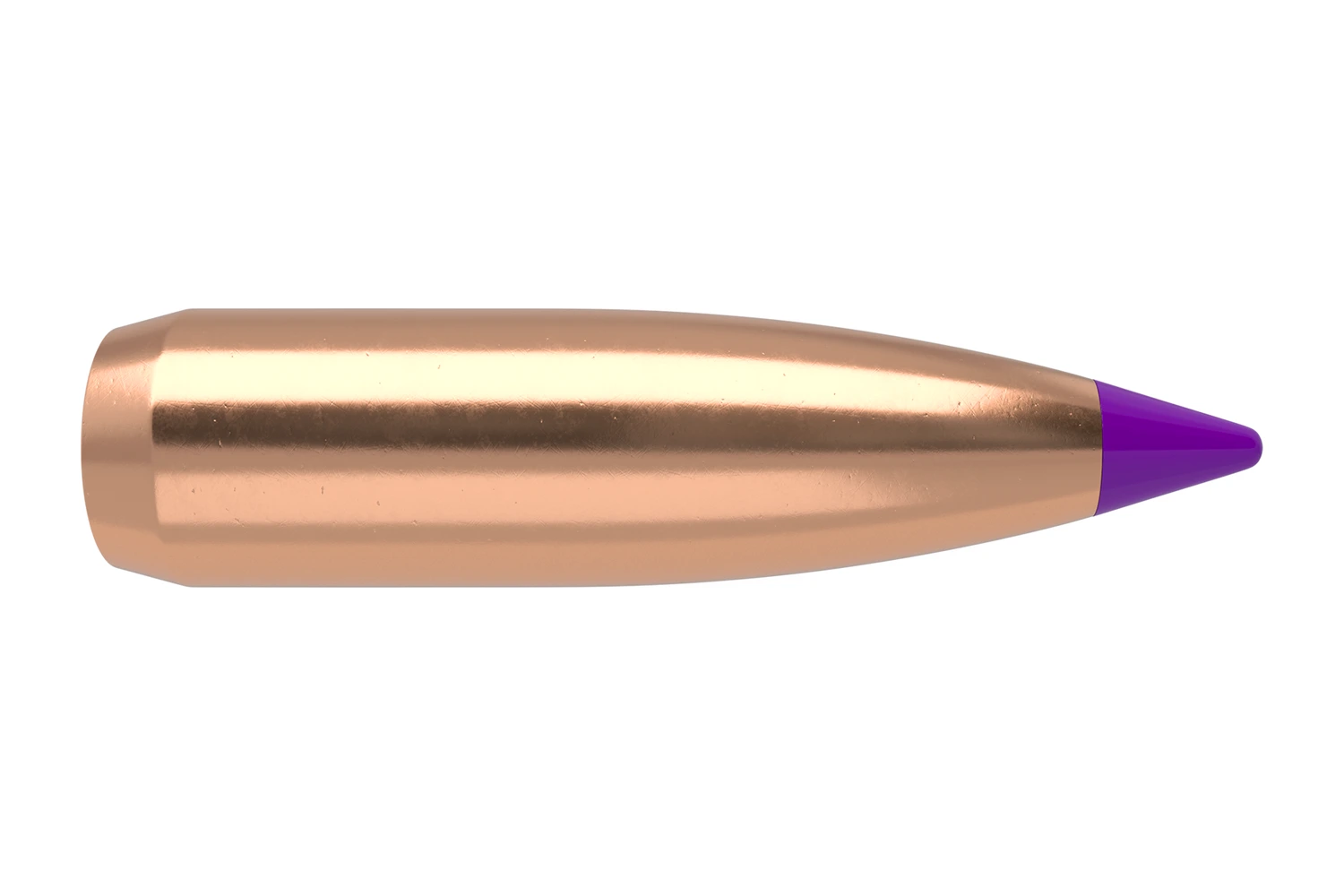
Polymer tip and a very thin jacket mouth: it opens on contact. Nosler pitches it for very high-velocity loads without losing performance at low ones.
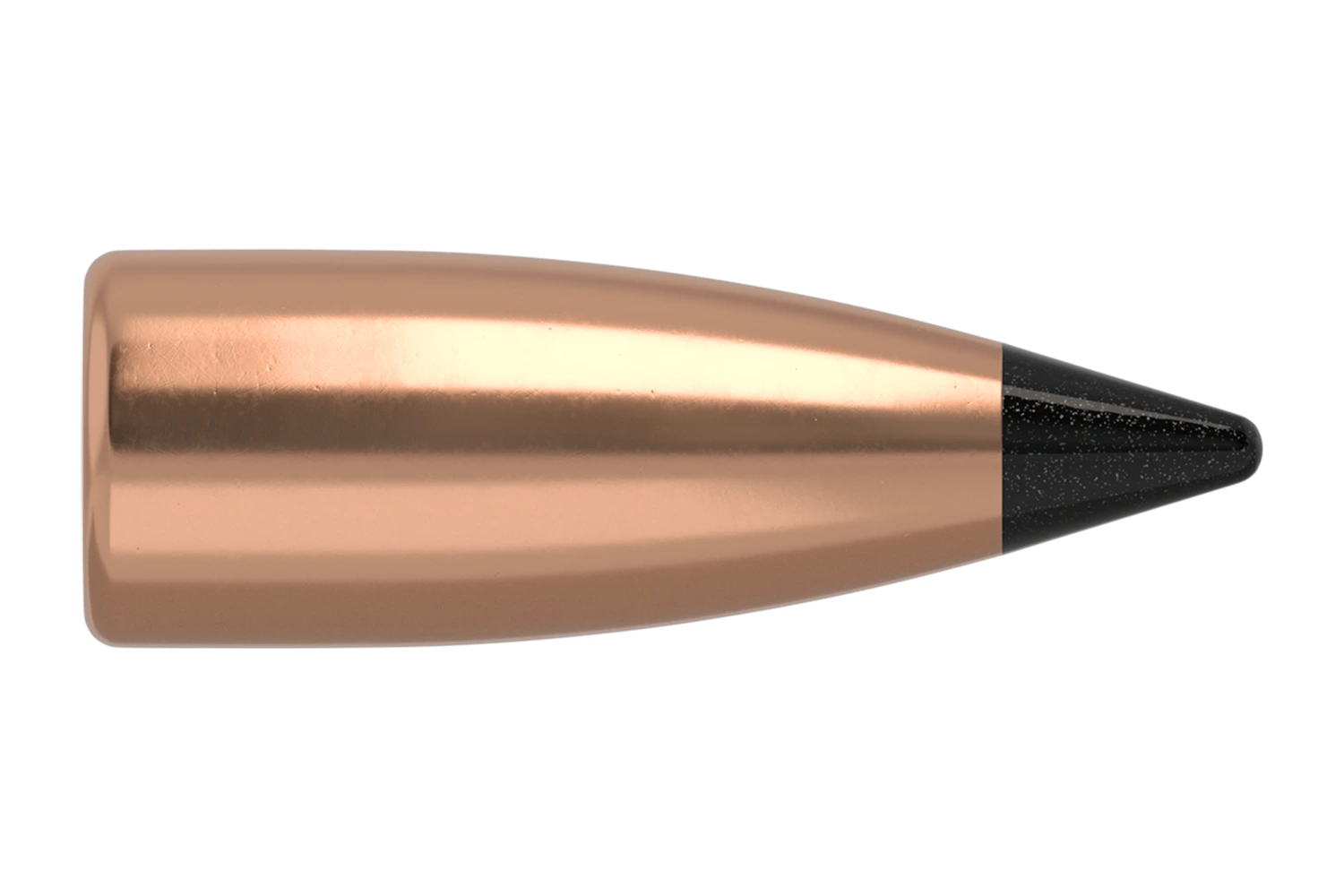
Varmageddon
From 2011. Lead-alloy core and a copper-alloy jacket built to stand high velocities and expand on impact. Here it comes in .22 only, with polymer tip and flat base, in boxes of 100 to 500.
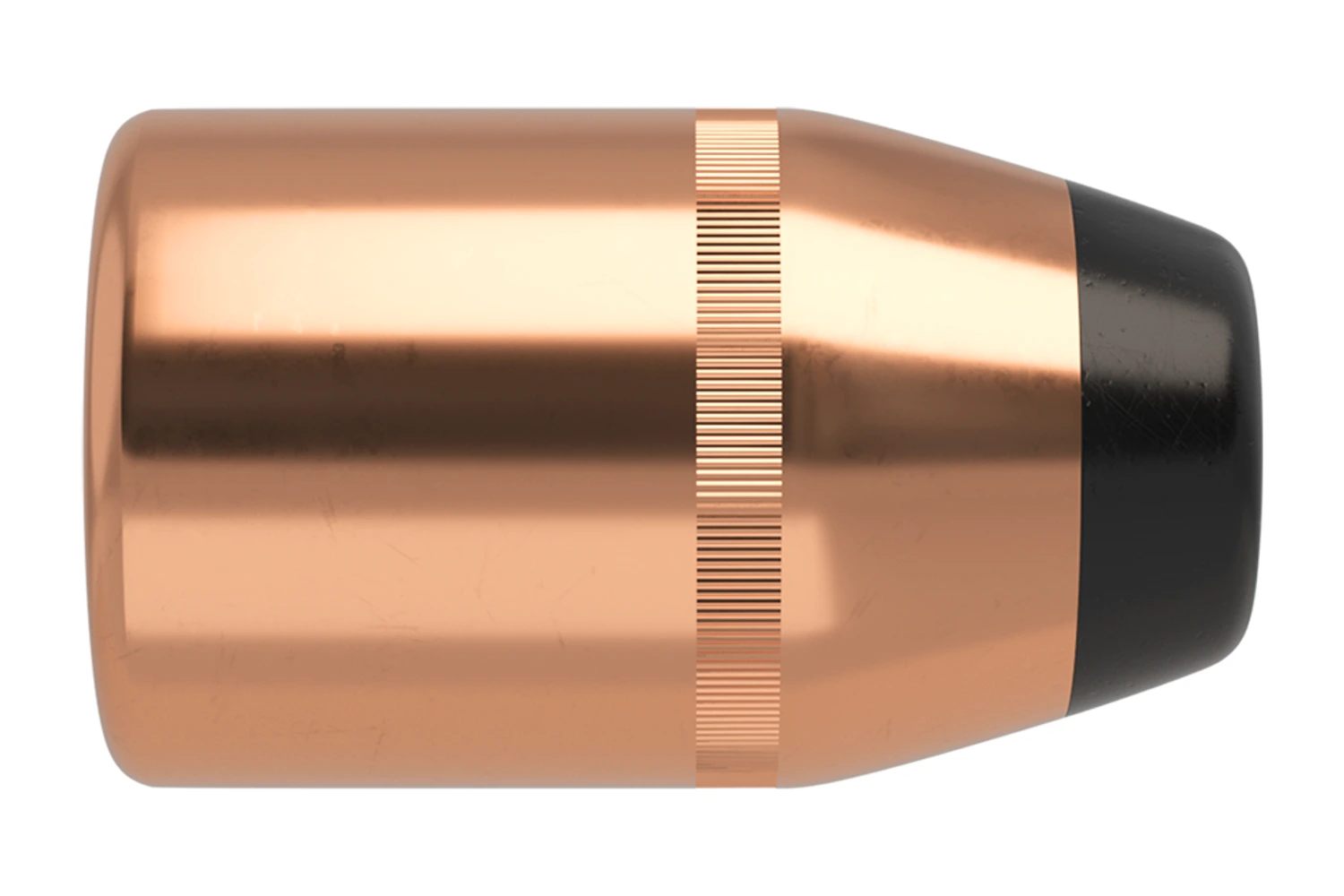
Sporting Handgun
The house’s handgun bullet line. From it we carry the .44 of 240 grains, jacketed hollow point, box of 250.
Reference
Brass and manual
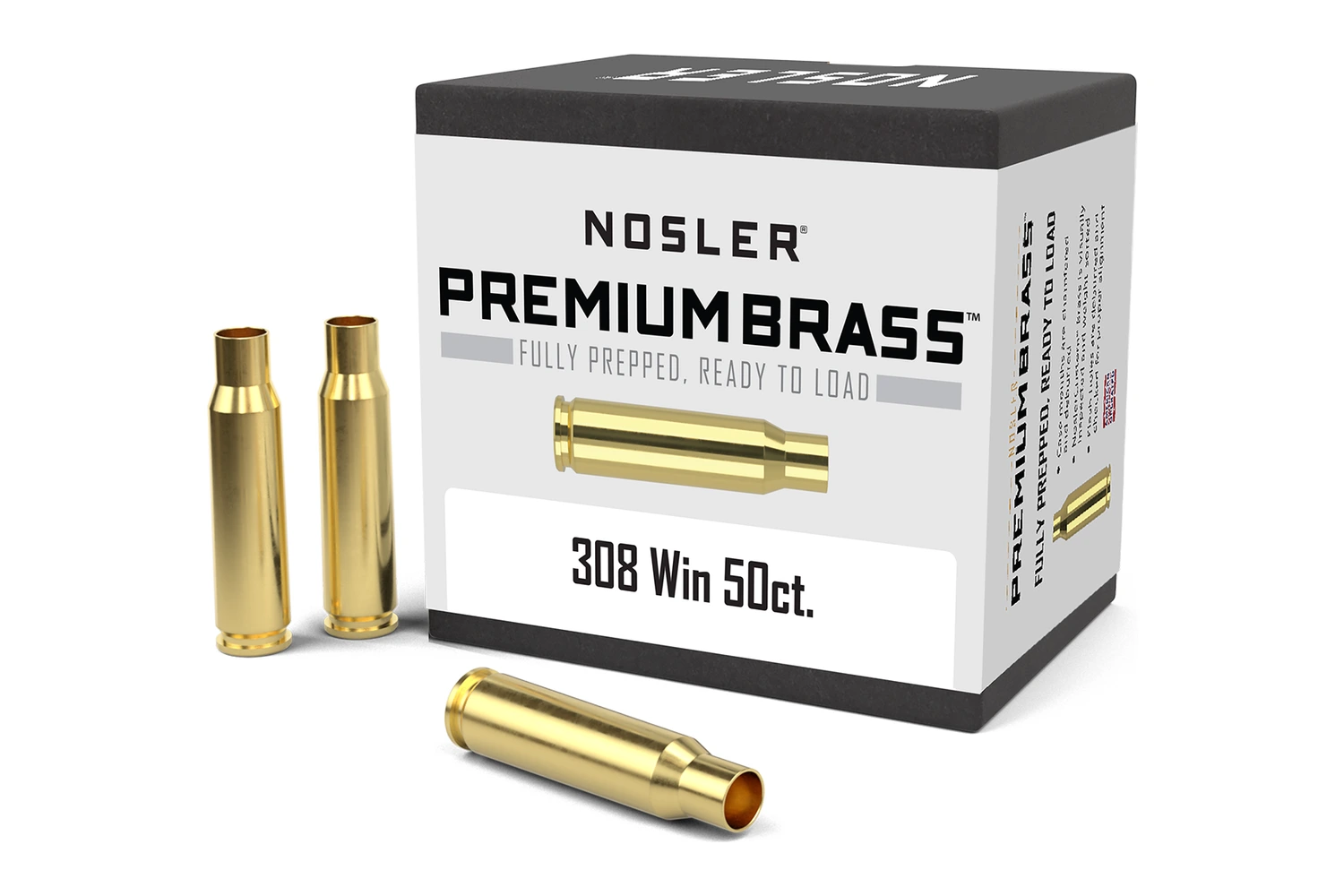
Premium Brass
Virgin brass delivered fully prepped, ready to load. From .222 Remington to .35 Whelen, with the 26 Nosler and the 33 Nosler in between.
Reloading Guide 9
The house reloading manual, ninth edition, published in 2021. In English.
Reference
To read
Nosler catalogue
This catalogue is published in Spanish.
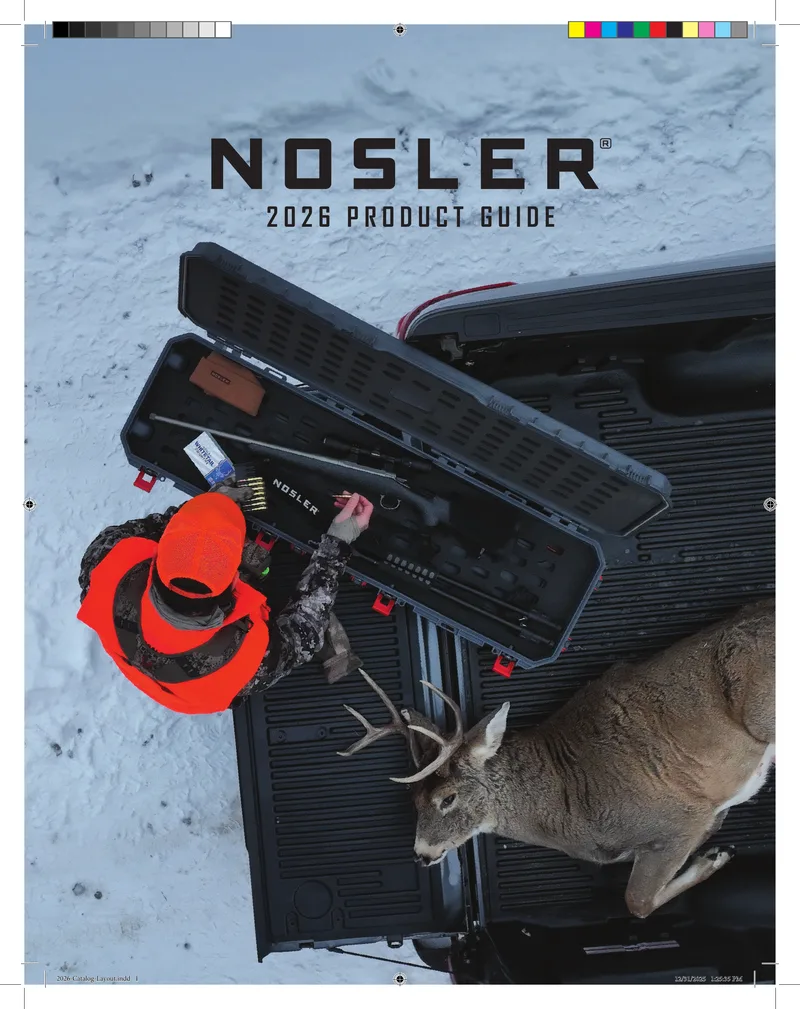
Nosler at the shop
Bullets, loaded ammunition, brass and the manual.
Firearms and ammunition subject to regulatory control are purchased and processed under the applicable rules through an authorised gun dealer.
The shop is available in Spanish.