
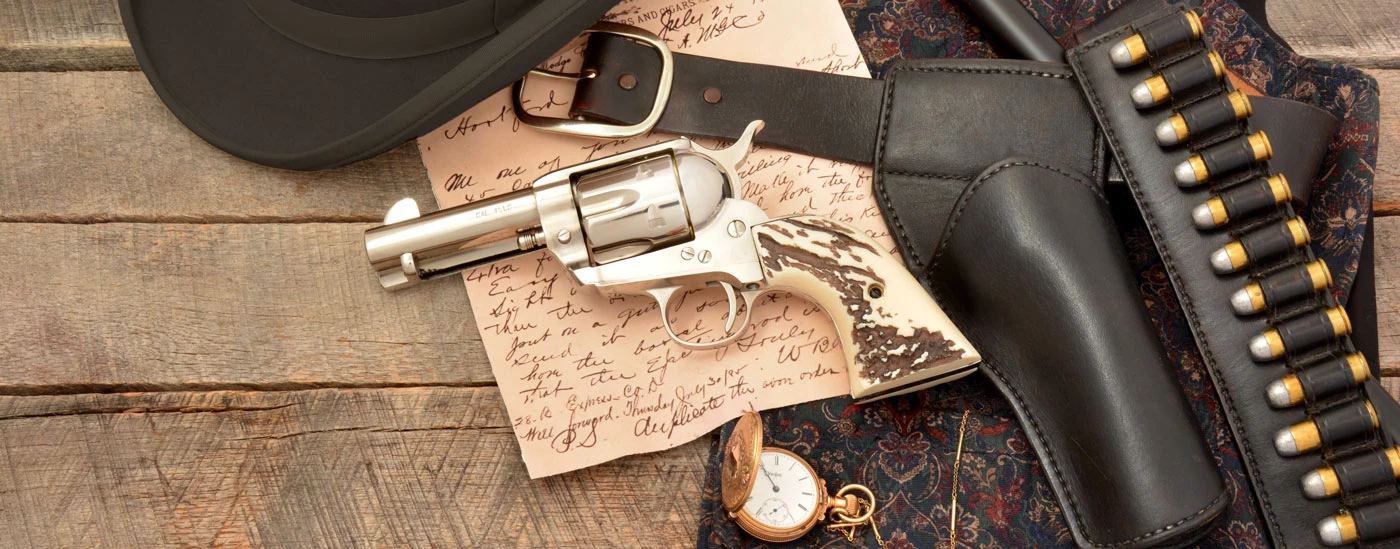

It began in 1963 making shotgun parts. In 1974 it started making muzzle-loading revolvers, and has done so for half a century.
Image: F.lli Pietta
- Founded 1963
- Factory Gussago, Brescia (Italy)
- Founder Giuseppe Pietta
- First revolver 1974
- Categories Firearms
History
From shotgun part to reproduction
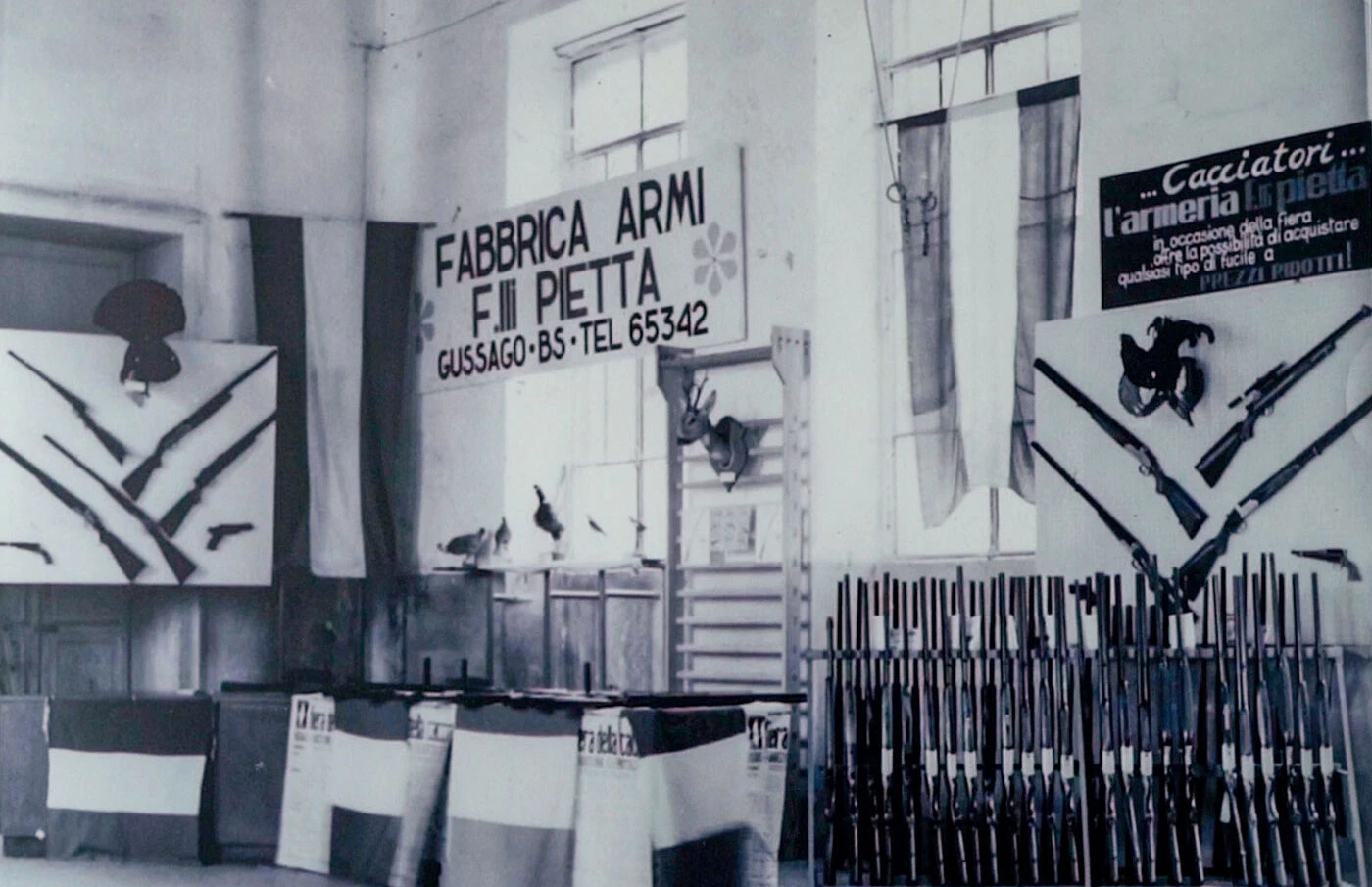
On 22 March 1963, Pietta Giuseppe was founded in Gussago, in the province of Brescia. It made shotgun parts. Its founder, born there in 1938, was the seventh of nine siblings, son of a Tempini worker; at fourteen he was already working in a small firearms factory in Collebeato while studying technology and mechanics at night school.
In 1965 his gunsmith brother joined him and they formed Fratelli Pietta. They stopped making parts alone and began buying components to assemble complete shotguns: the first left the workshop in April 1966 and sold the following month for 30,000 lire, a 12-bore over-and-under and the first firearm bearing their name. They made 156 that year; more than a thousand the following year. The workshop occupied seventy square metres in Via Briglia.
The change came from France. A customer receiving their first order in 1967 introduced an entrepreneur looking for a factory able to reproduce historical American models. The first order was for 10,000 units of the 1851 Navy. “That order completely changed the direction of the factory”, Giuseppe Pietta said: they stopped assembling firearms and began manufacturing them. An American order for seven thousand pieces followed when monthly output was four hundred reproductions, not only of the 1851 Navy but of the Colt Army, Remington, Paterson and Le Mat. “We wondered whether the order was real.”
In 1974 the company began making revolvers and specialised in historical reproduction. The rest is continuity: the brothers separated in 1978 and the factory remained with Giuseppe and his wife Elisabetta; in 1985 the Houston chamber of commerce awarded them; in 1995 they moved to their present three thousand square metres with thirty workers. Their children run it today: Alberto, born in 1968, handles the technical side, and Alessandro the commercial side.
Product families
What we distribute
Muzzle-loading reproductions, metallic-cartridge revolvers, and the parts and consumables needed to maintain them. These firearms require a licence: sale and documentation are handled by an authorised gunshop.
Muzzle-loading revolvers
Percussion, single action and black powder. Eight historical patterns, from the 1836 Paterson to the 1863 New Pocket.
1836 Paterson
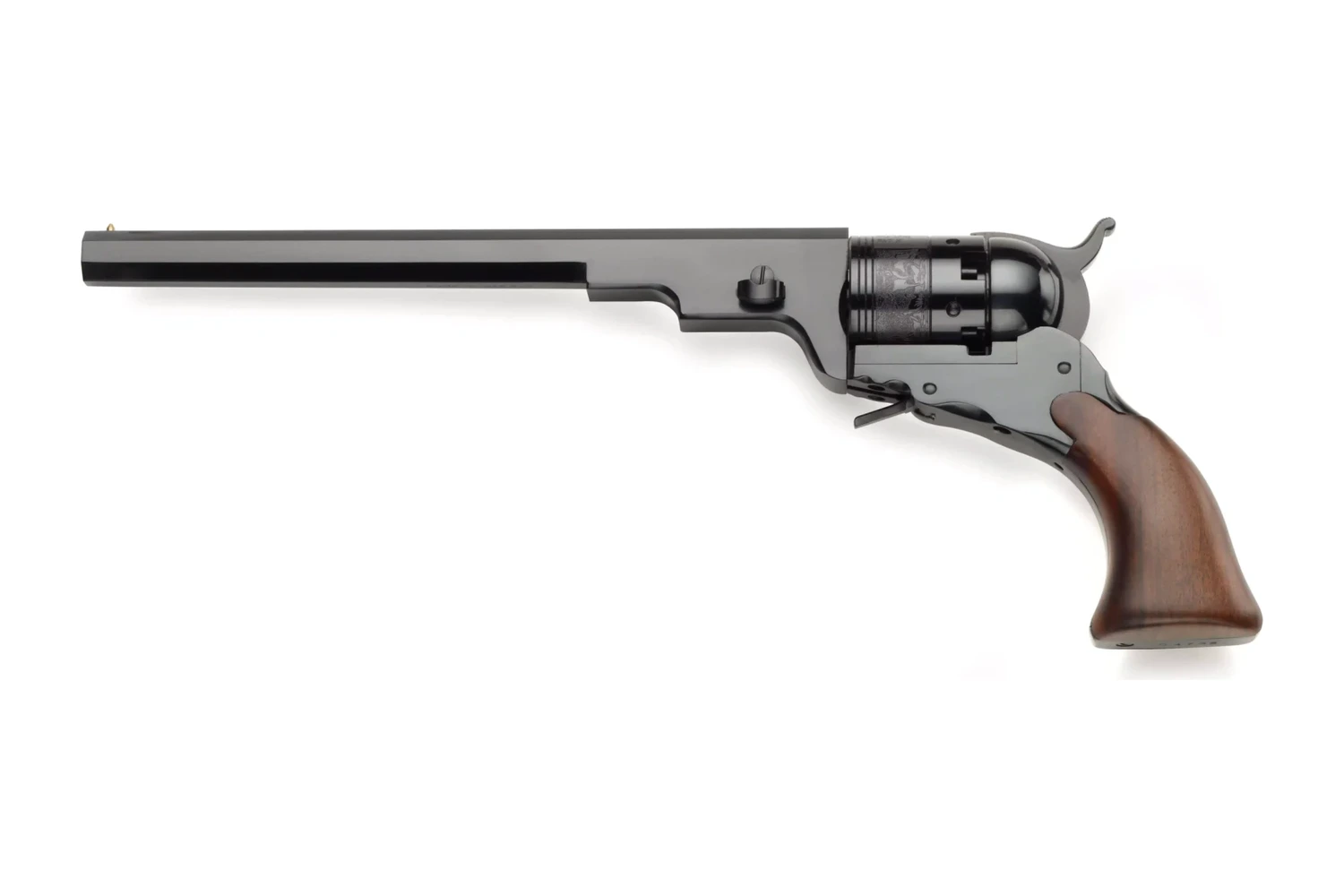
Colt’s first revolver, reproduced with its strangest feature: the trigger remains hidden until the hammer is cocked, when it drops from the frame. Single action, five-shot .36 cylinder, 9-inch octagonal barrel, 13 3/4 inches overall and 1.22 kg.
Version
1851 Navy
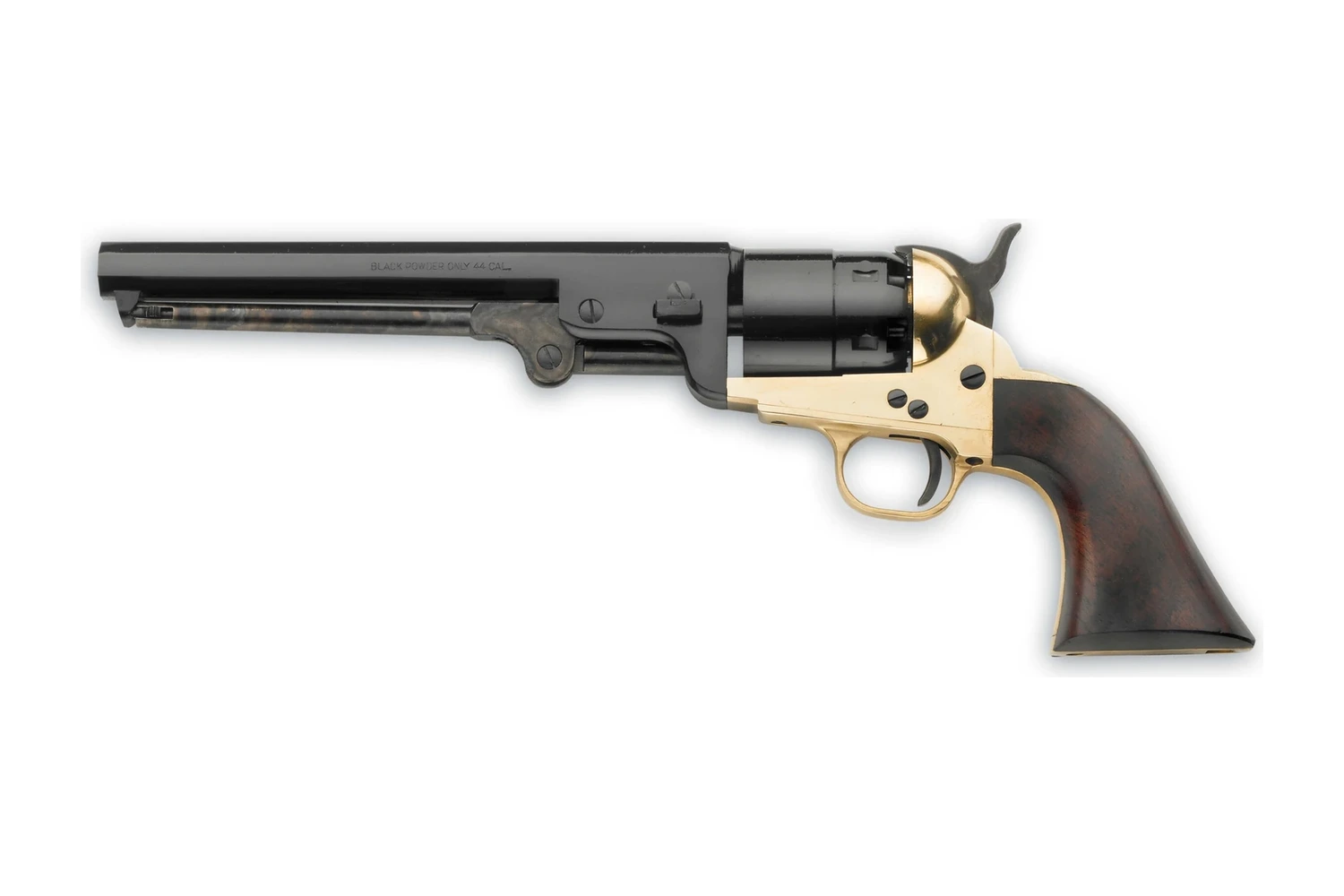
Two different firearms under the same date: the steel-framed Navy Yank and the brass-framed Reb Nord Navy, which the maker groups with its Confederate firearms. The Reb has a 7 3/8-inch octagonal barrel and weighs 1.2 kg; the Confederate has a round barrel and is in .36; the Carbine extends to twelve inches and 1.35 kg.
1858 New Model Army
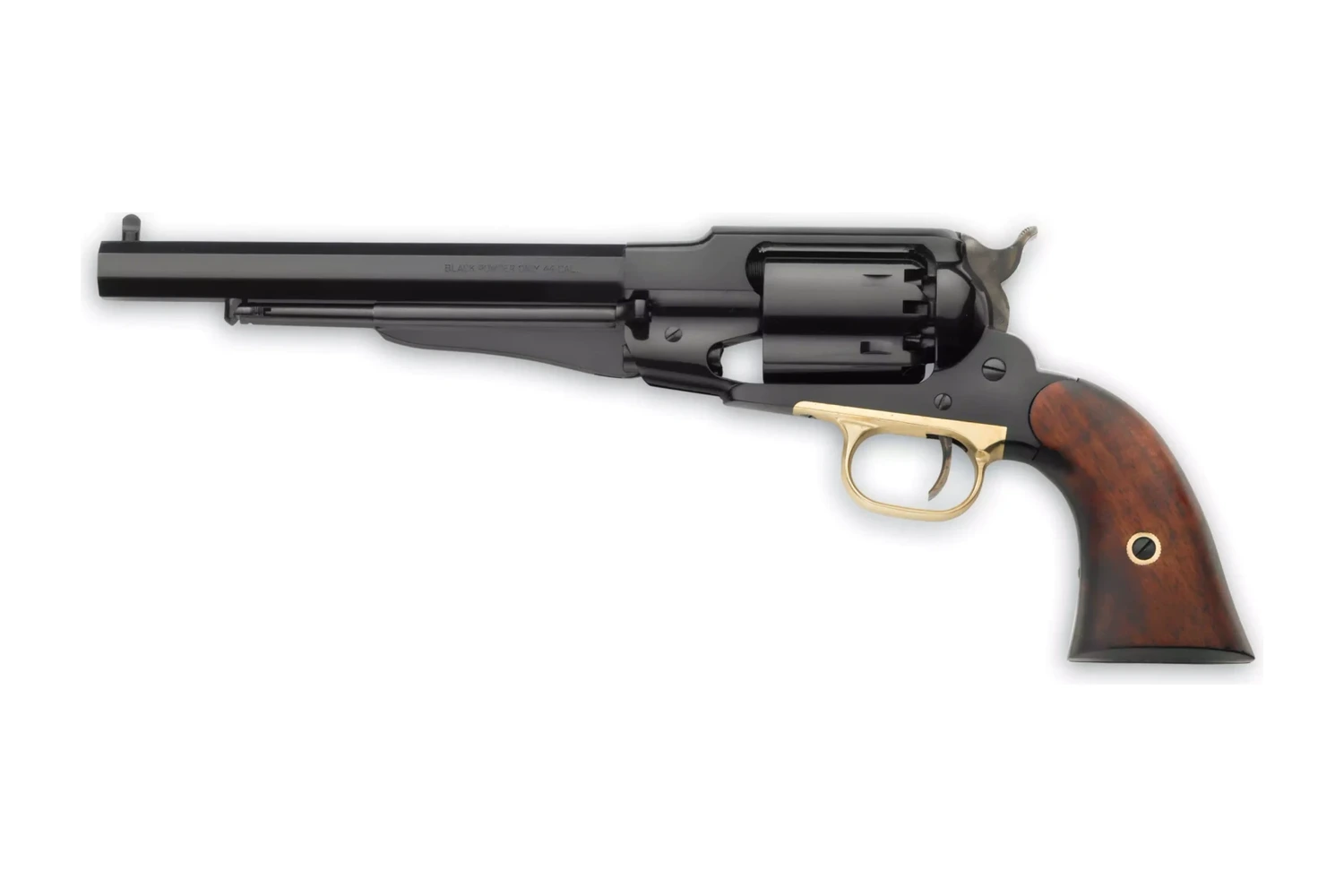
Eliphalet Remington made his first firearm in Ilion, New York, in 1816; in 1858 he patented this top-strapped revolver, designed by Beals. Pietta makes it in .44 and .36 —the latter called New Model Navy— with an adjustable rear sight on the Target version and in stainless steel, which better withstands black-powder wear. Eight-inch octagonal barrel, 14 3/5 inches overall and 1.25 kg.
1858 Texas
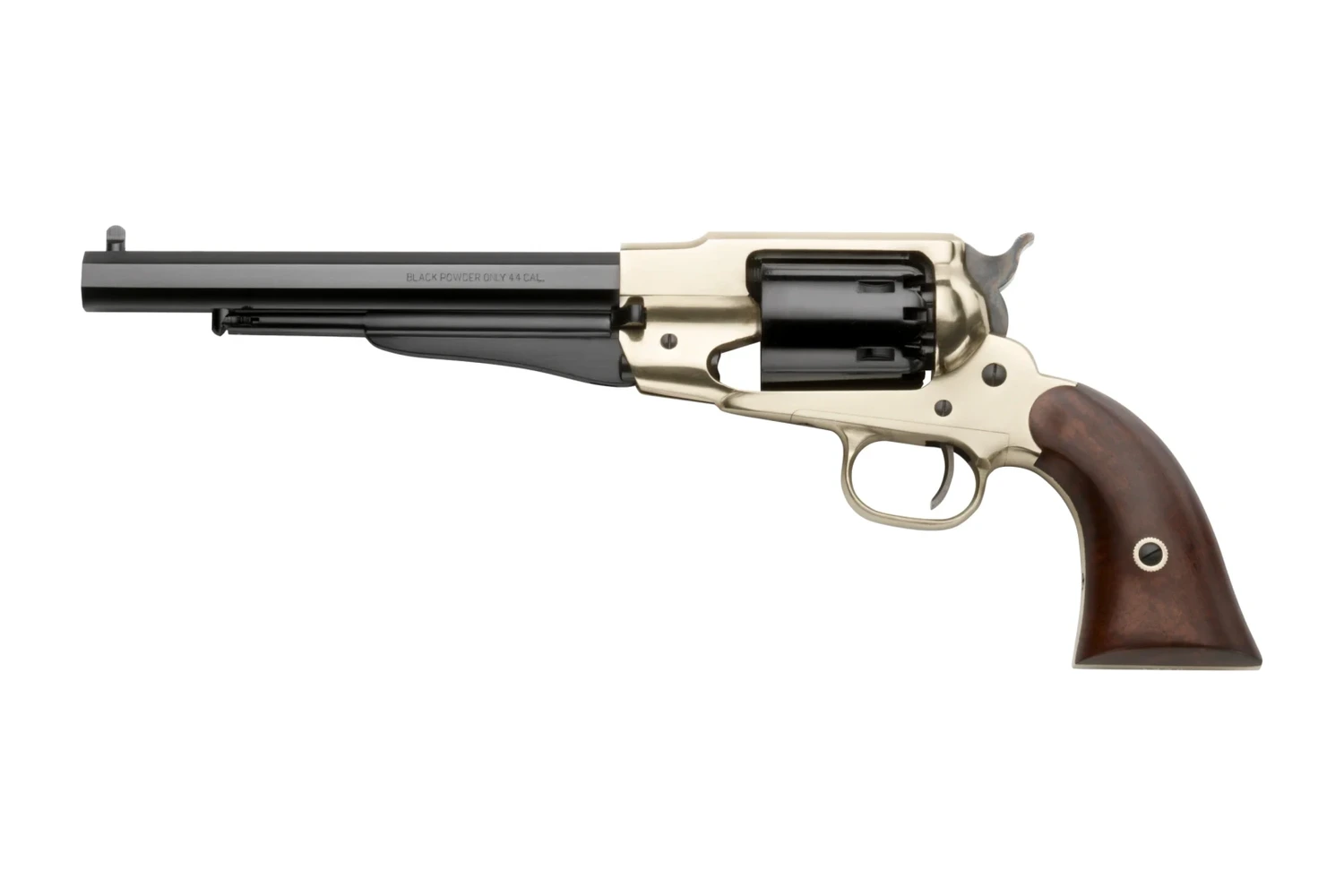
The same top-strapped Remington, here with a brass frame. The Buffalo stretches the barrel to twelve inches and weighs 1.6 kg; the other two use eight-inch barrels and weigh 1.25 kg.
1860 Army
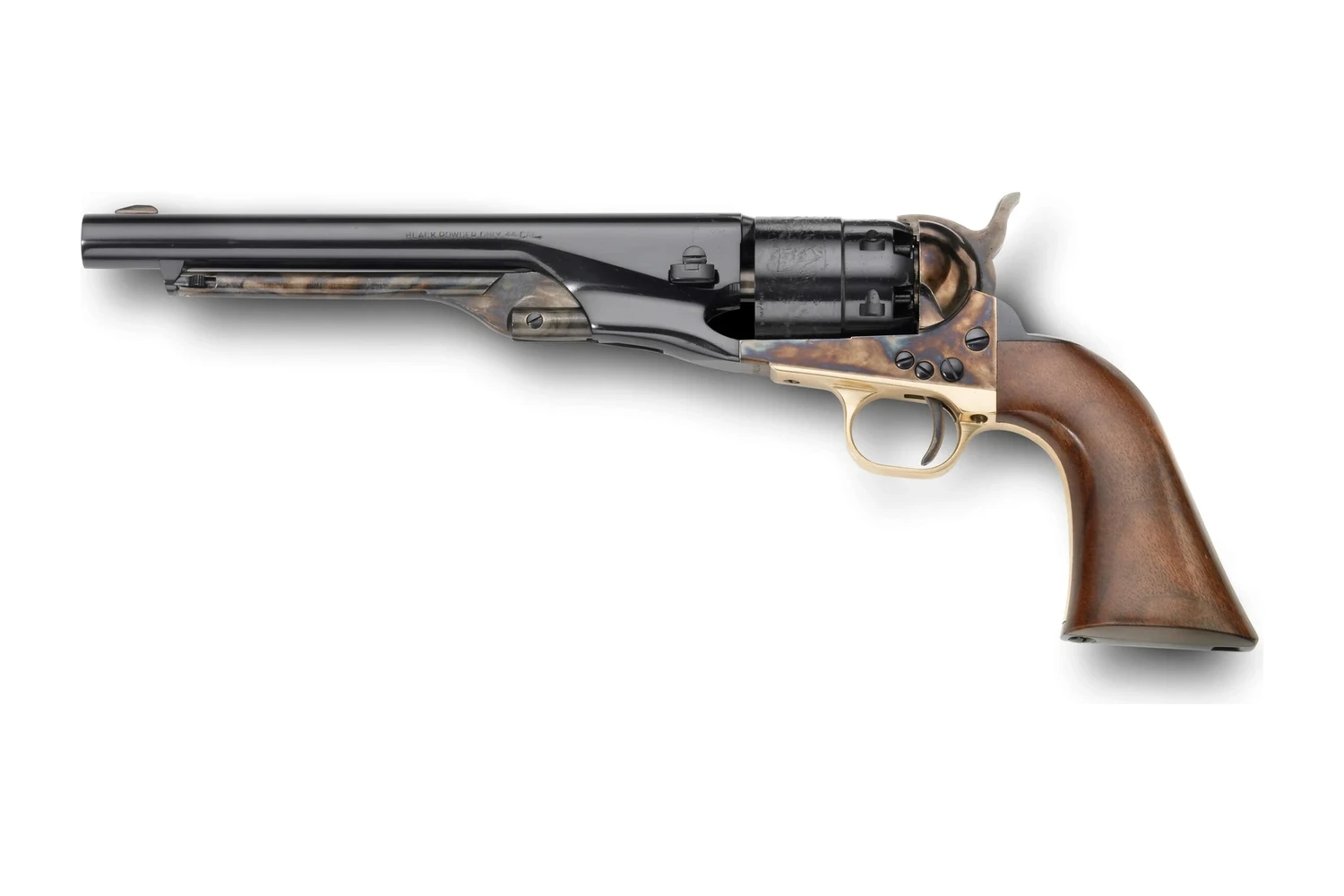
The final two models released during Colonel Colt’s lifetime were the 1860 Army in .44 and the 1861 Navy in .36. The Army has an eight-inch round barrel, steel frame, 13 3/4-inch overall length and weighs 1.2 kg.
Versions
1862 Police
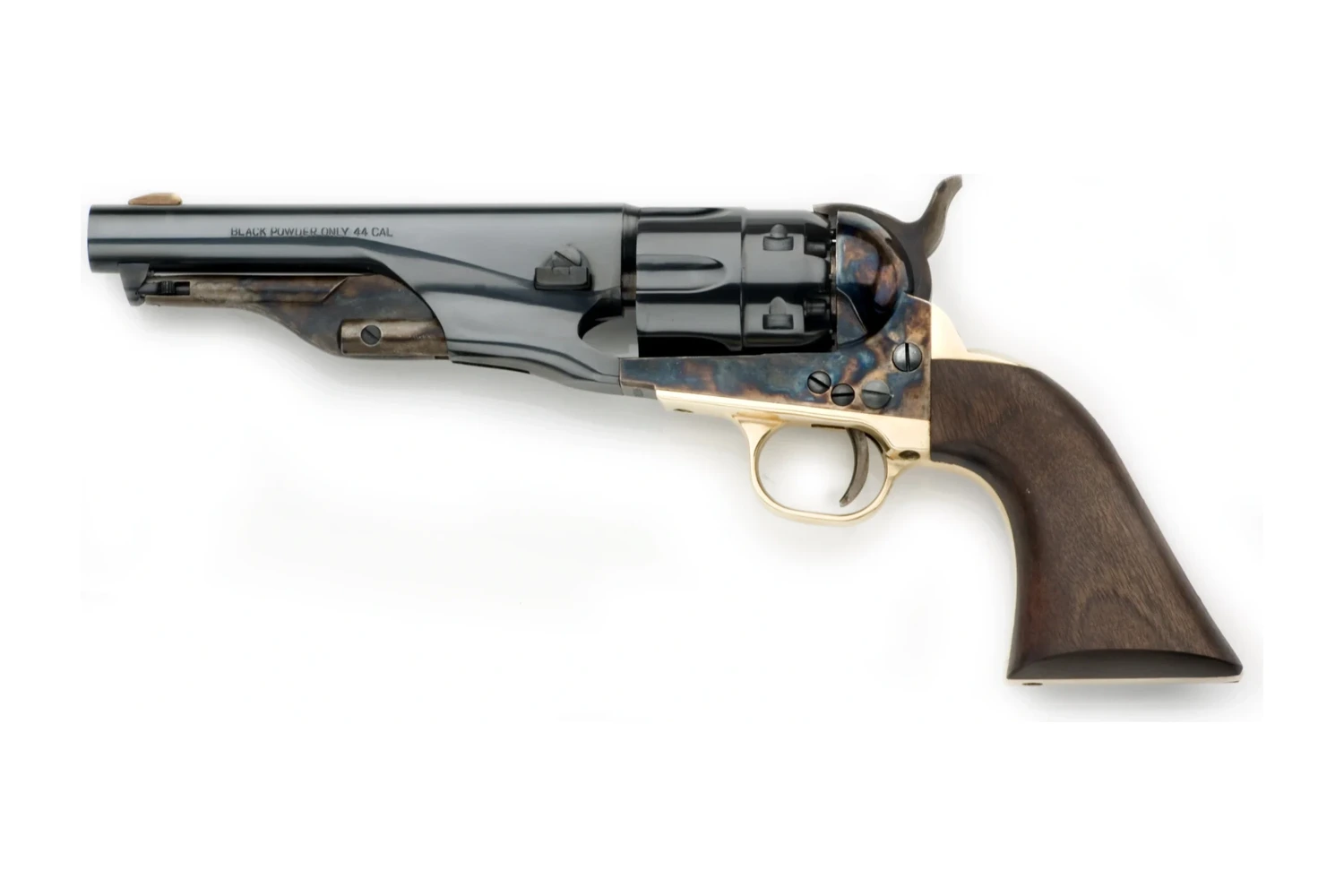
The pocket Colt, here in .44: its barrel is marked “BLACK POWDER ONLY 44 CAL”. The Snubnose cuts the barrel to three inches —8 3/4 inches overall— with an old-silver finish and chequered Thunderer grips.
Versions
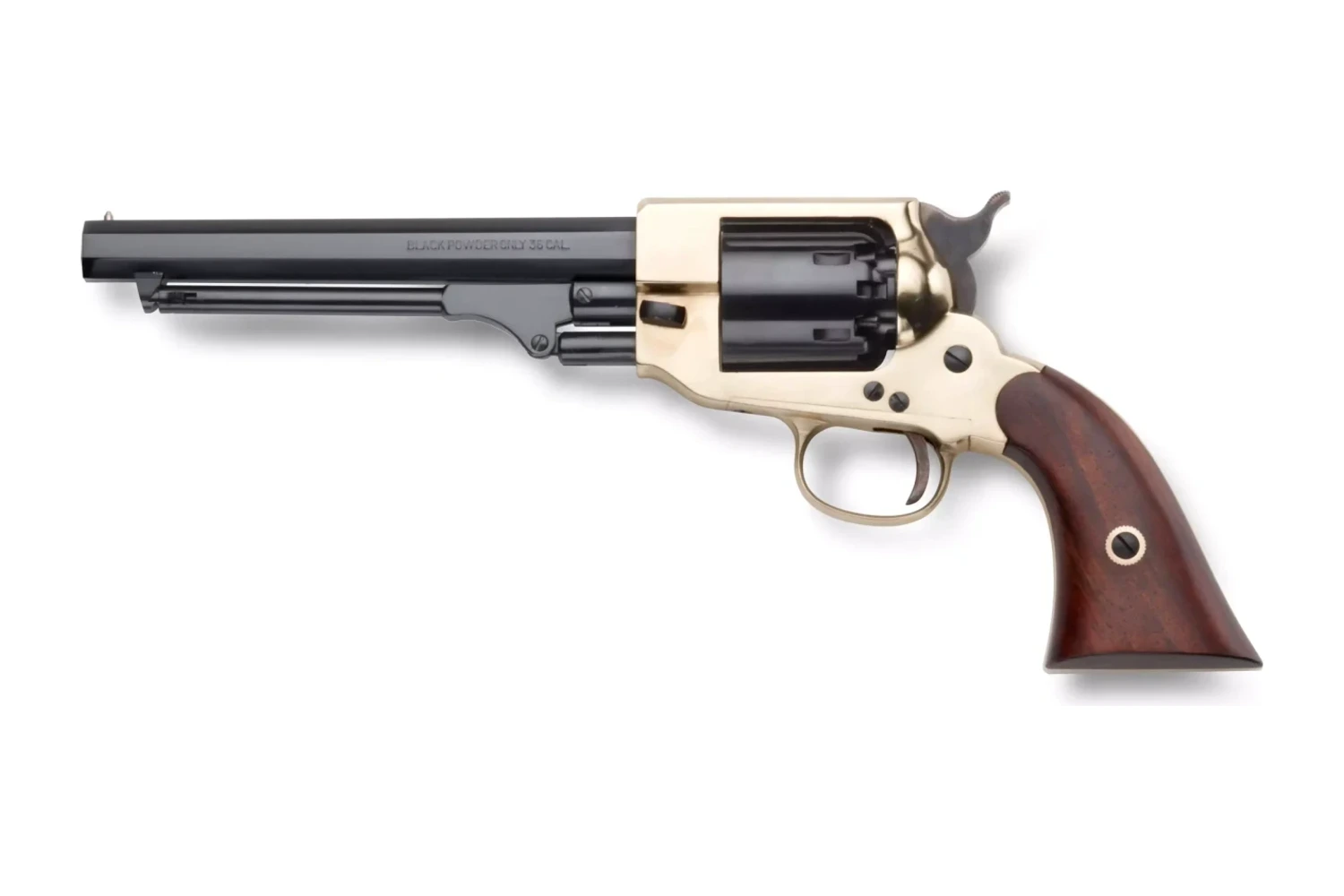
1862 Spiller & Burr
It combines the best of two revolvers, in the maker’s own words: Remington’s top-strapped frame and Colt’s mechanism. Brass frame, 6 1/2-inch octagonal barrel in .36, 12 1/5 inches overall and 1.1 kg.
Version
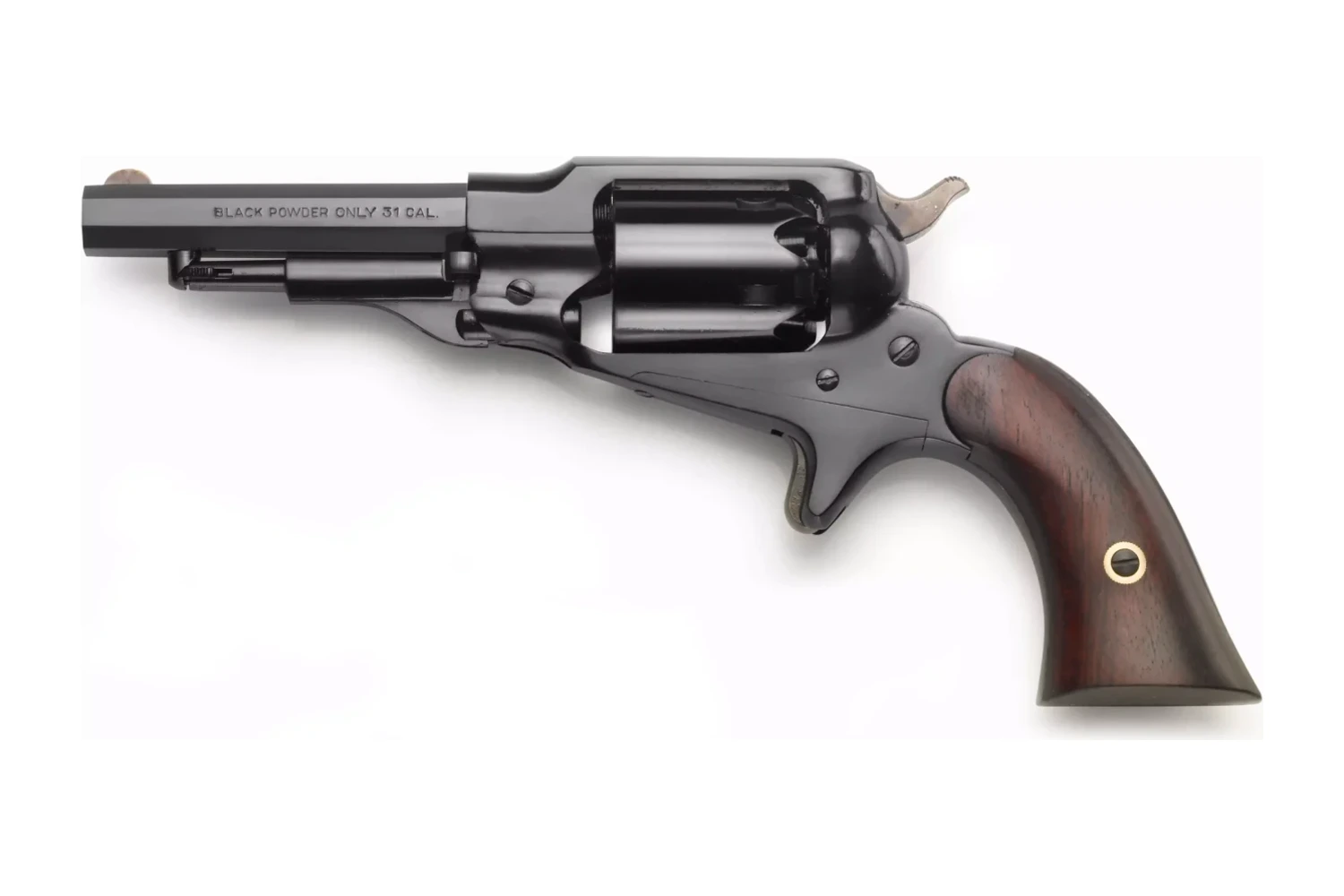
1863 New Pocket
About 25,000 were made between 1863 and 1873 in three versions: brass frame, steel frame with brass trigger guard, and all steel. A 3 1/2-inch octagonal barrel in .31, 7 3/4 inches overall and half a kilogram.
Metallic-cartridge revolvers
The 1873 Single Action, called Great Western II by Pietta.
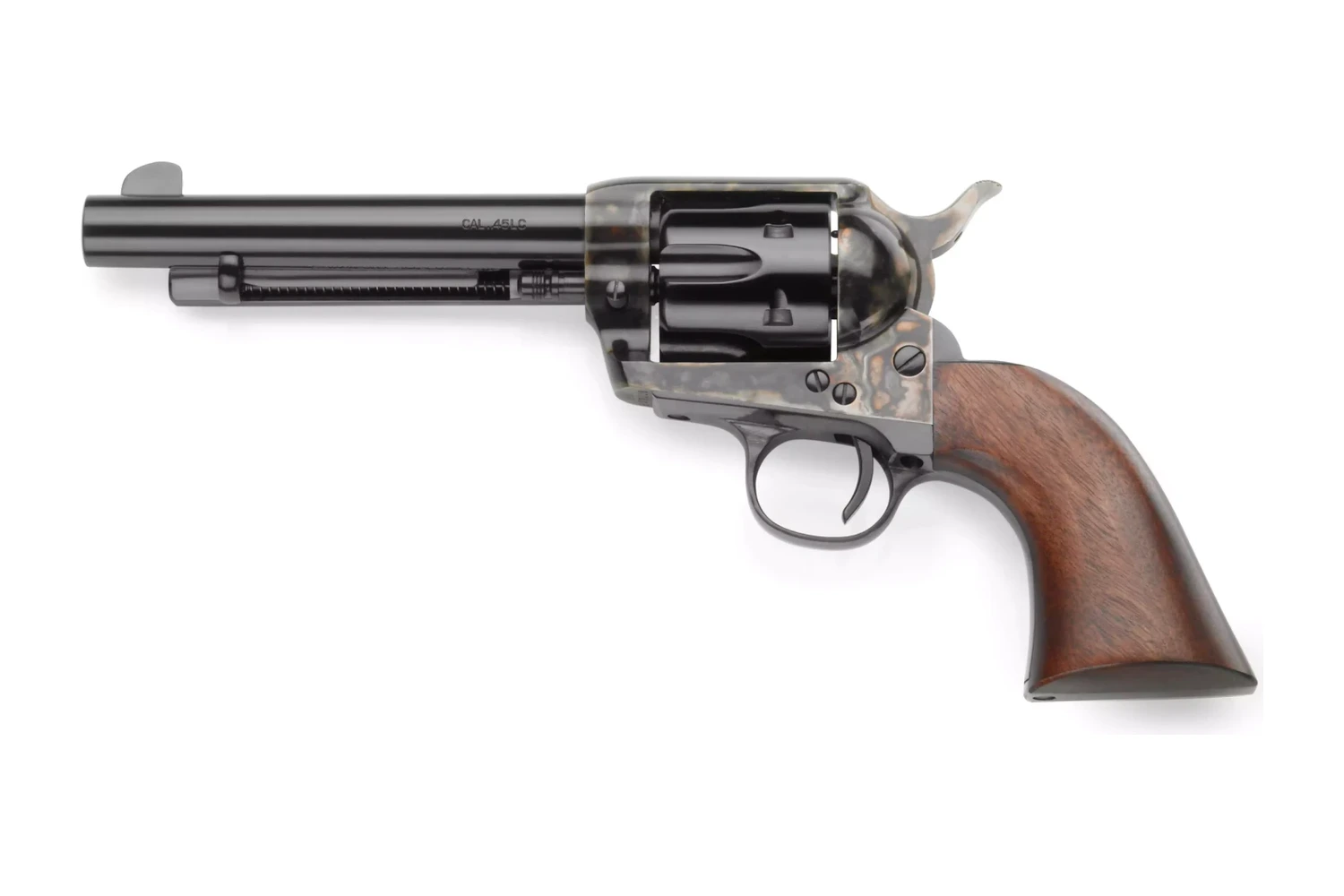
1873 Single Action
Made in the three traditional barrel lengths —4 3/4, 5 1/2 and 7 1/2 inches— and in .45 Colt, .44-40 and .357 Magnum, with colour-case-hardened, nickel-plated or stainless-steel frames and oil-finished European walnut or imitation-ivory polymer grips. Thunderer versions use a different grip. Qualified factory staff inspect every revolver.
References
- .45 LC · 4 3/4" · SA73-002
- .45 LC · 5 1/2" · SA73-003
- .45 LC · 7 1/2" · SA73-004
- .45 LC · 4 3/4" · SA73-080
- .45 LC · SA73-081
- .45 LC · 7 1/2" · SA73-082
- .45 LC · 4 3/4" · SA73-131
- .45 LC · 5 1/2" · SA73-132
- .45 LC · 7 1/2" · SA73-133
- .45 LC · 4 3/4" · SA73-141
- .45 LC · 5 1/2" · SA73-142
- .45 LC · 7 1/2" · SA73-143
- .45 LC · 4 3/4" · SA73-260
- .45 LC · 5 1/2" · SA73-261
- .45 LC · 7 1/2" · SA73-262
- .45 LC · 4 3/4" · SA73-403
- .45 LC · 5 1/2" · SA73-401
- .45 LC · 7 1/2" · SA73-405
- .45 LC Thunderer · 4 3/4" · SA73-299
- .45 LC Thunderer · 4 3/4" · SA73-419
- .44-40 · 4 3/4" · SA73-010
- .44-40 · 5 1/2" · SA73-011
- .44-40 · 7 1/2" · SA73-012
- .44-40 · 4 3/4" · SA73-149
- .44-40 · 5 1/2" · SA73-150
- .357 Mag · 7 1/2" · SA73-127
Loading and maintenance
Balls, wads, nipples and the maker’s tools.
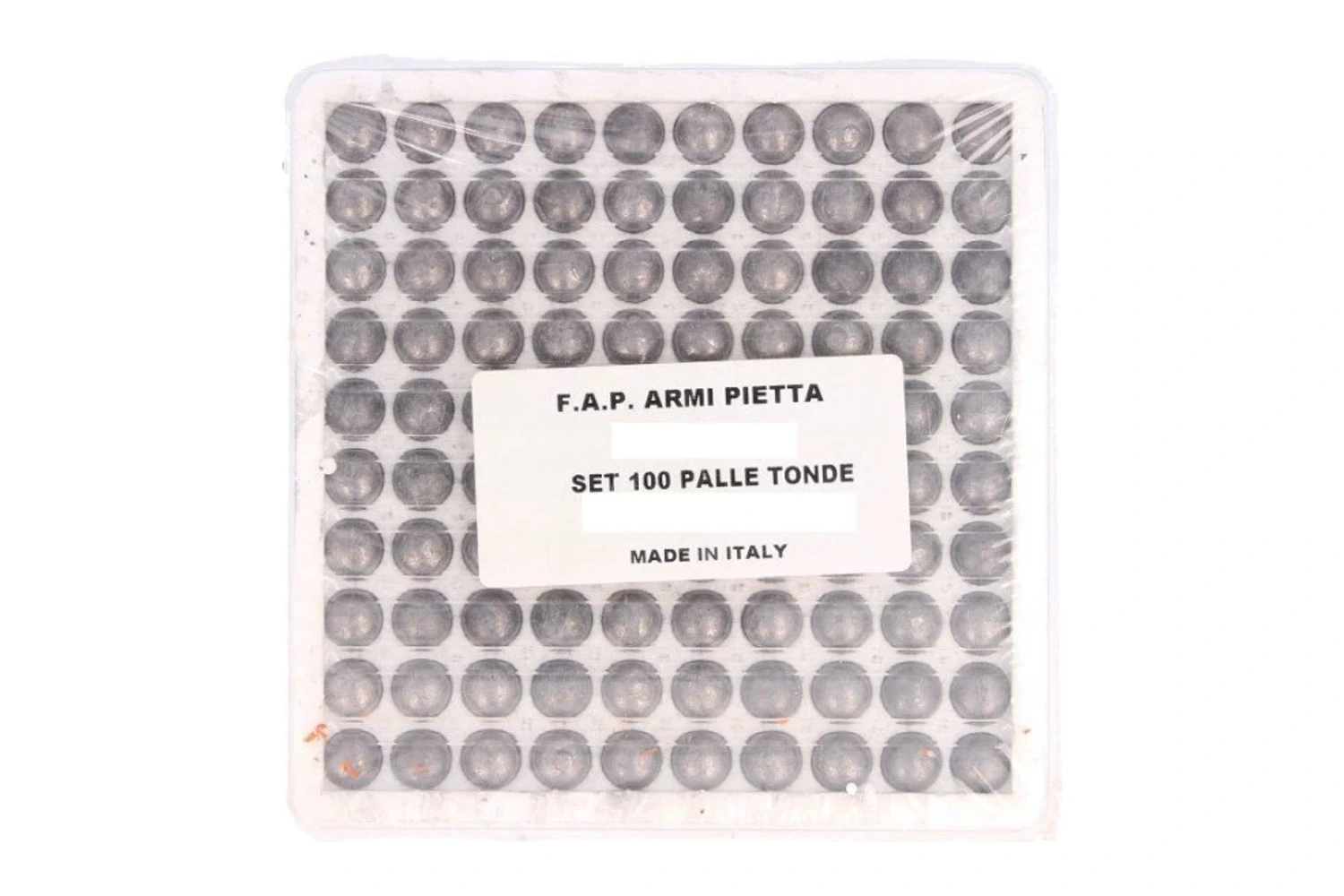
Lead balls
Cast-lead round ball, in boxes of 100. The box bears the F.A.P. Armi Pietta name and is marked “Made in Italy”.
Nipples
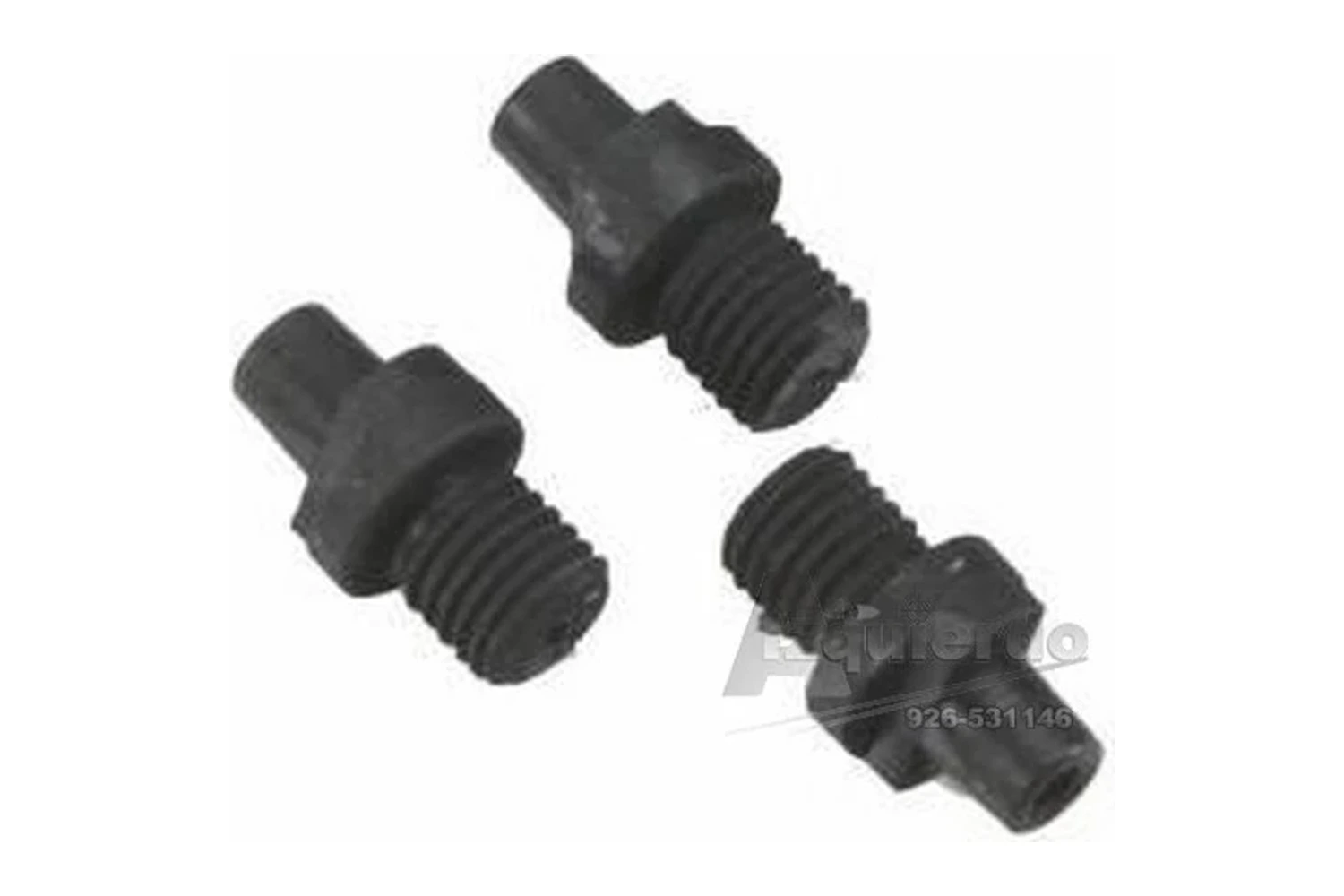
The nipples on which the percussion cap sits. Packs of six, except those for the Remington Pocket, which come in fives.
Tools
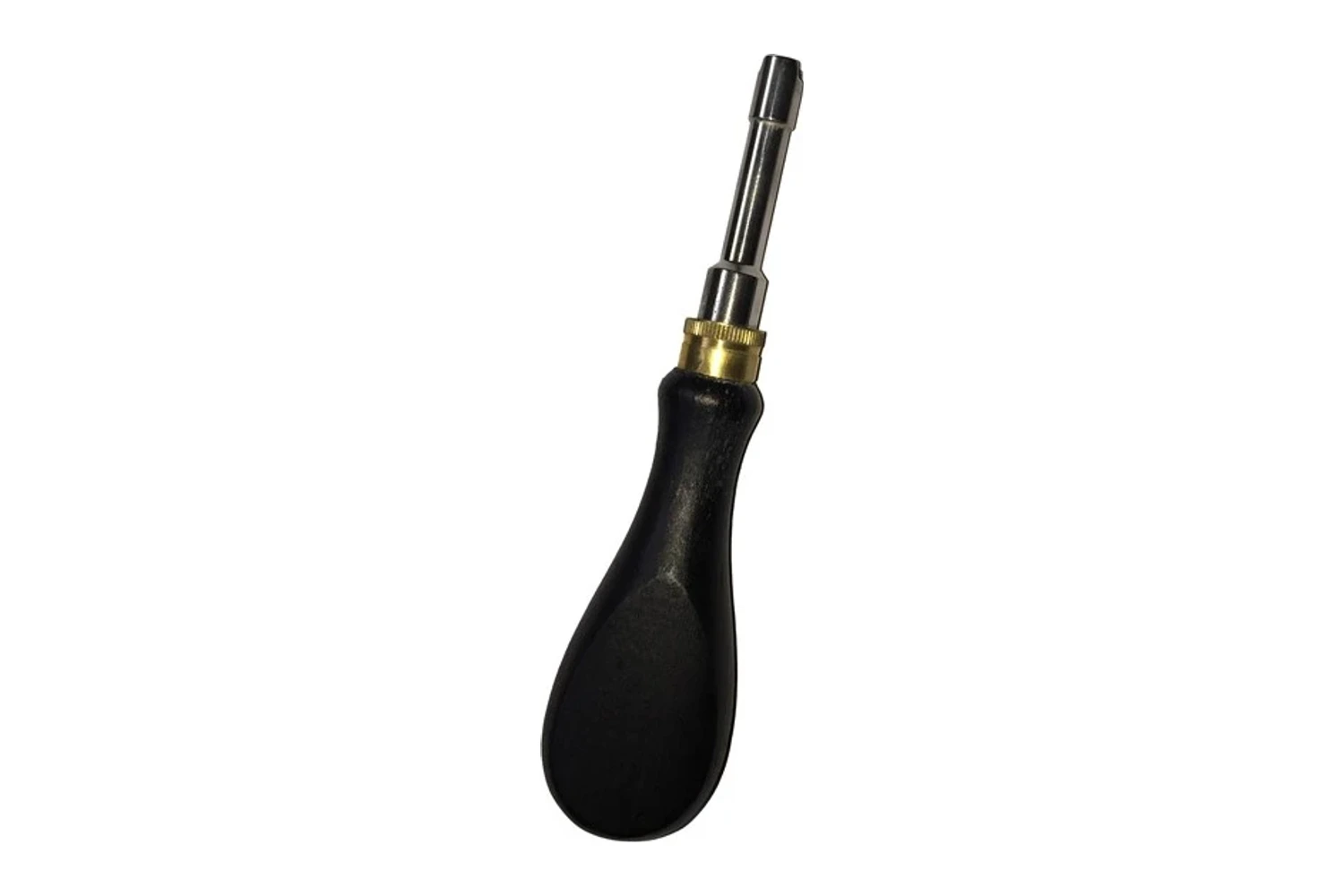
Nipple wrenches, a wooden-handled screwdriver and the stand that holds the cylinder outside the firearm for loading.
Cases
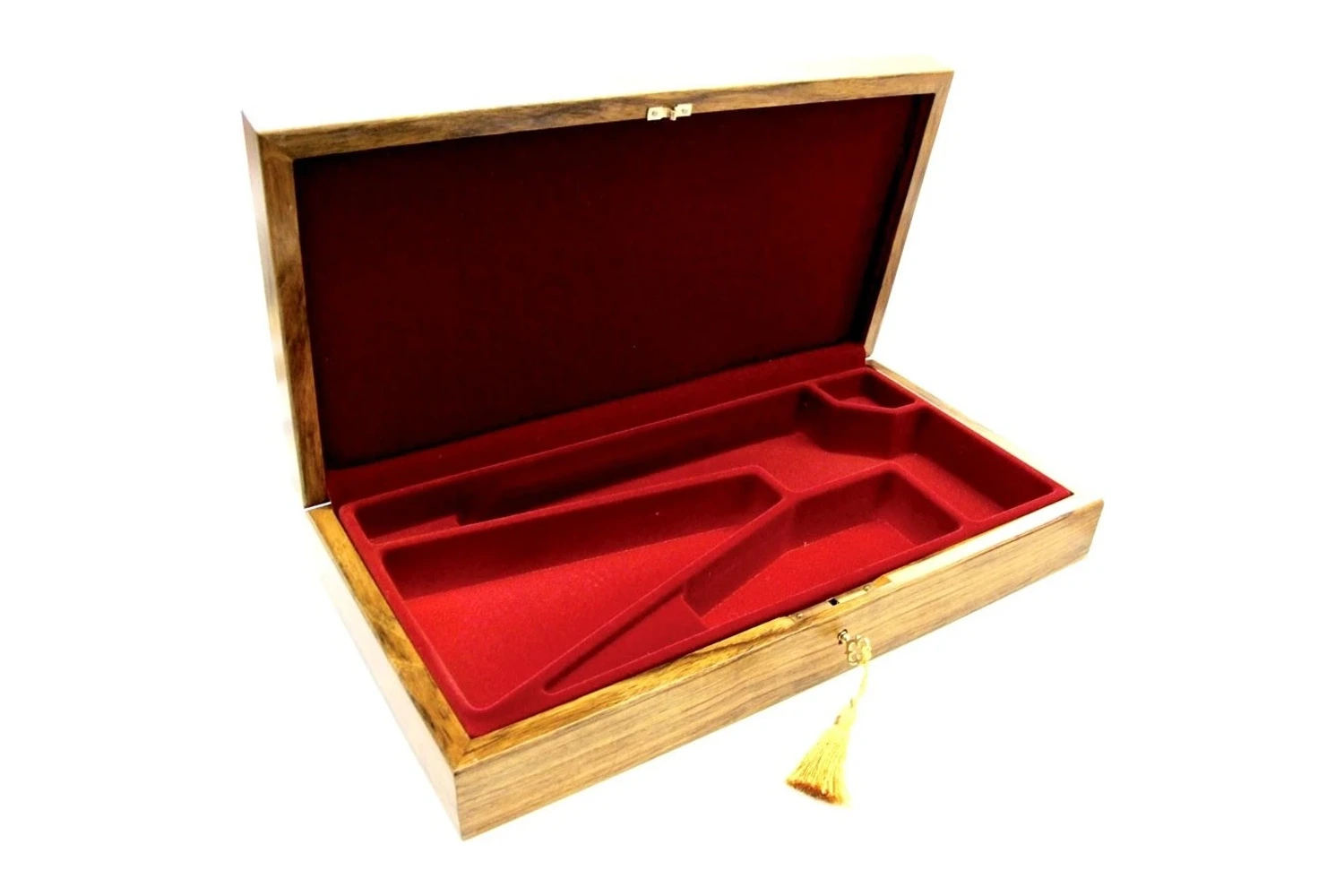
The maker’s wooden cases. The deluxe version is lined in red cloth and cut out so the revolver cannot move with the lid closed.
Models
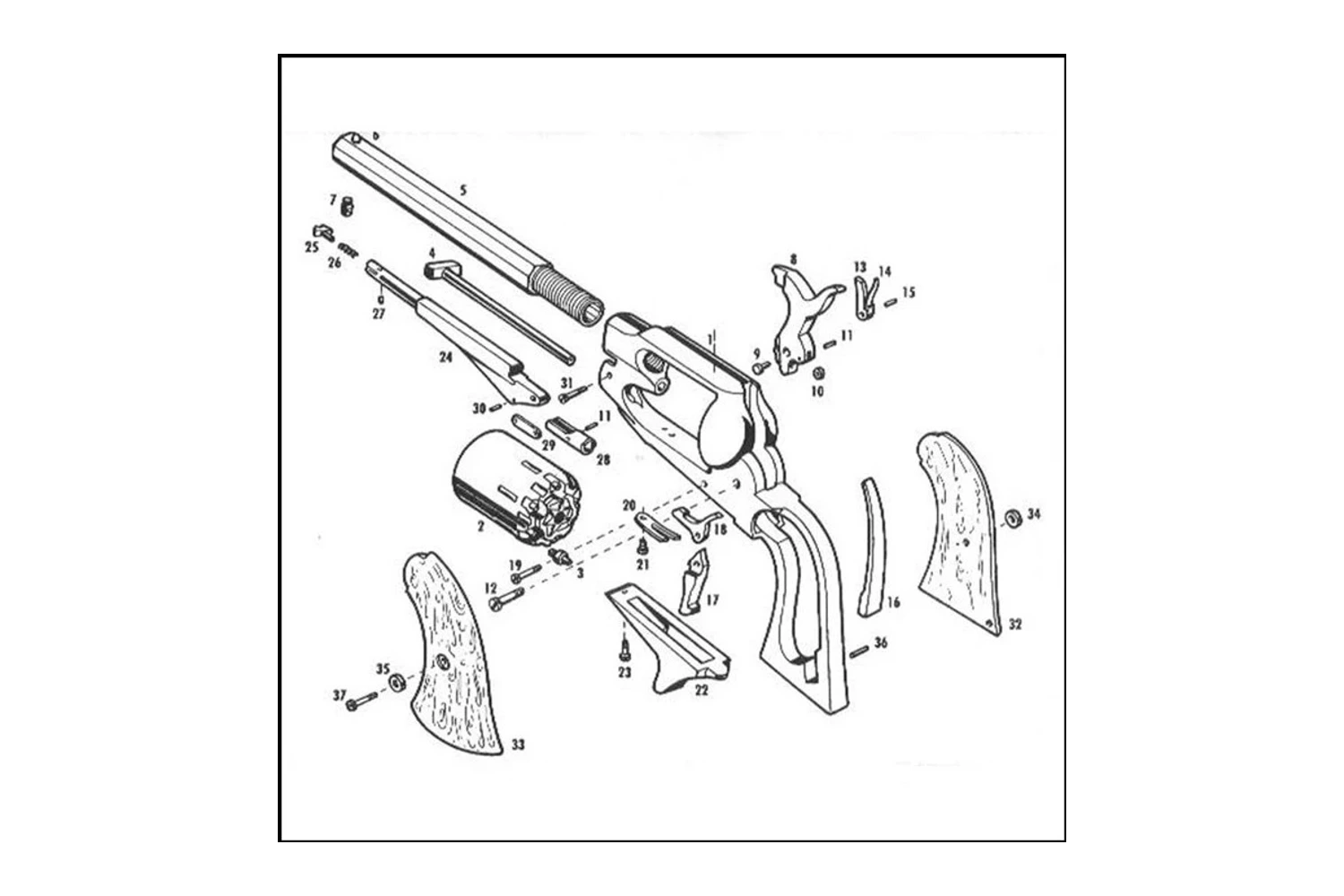
Spare parts
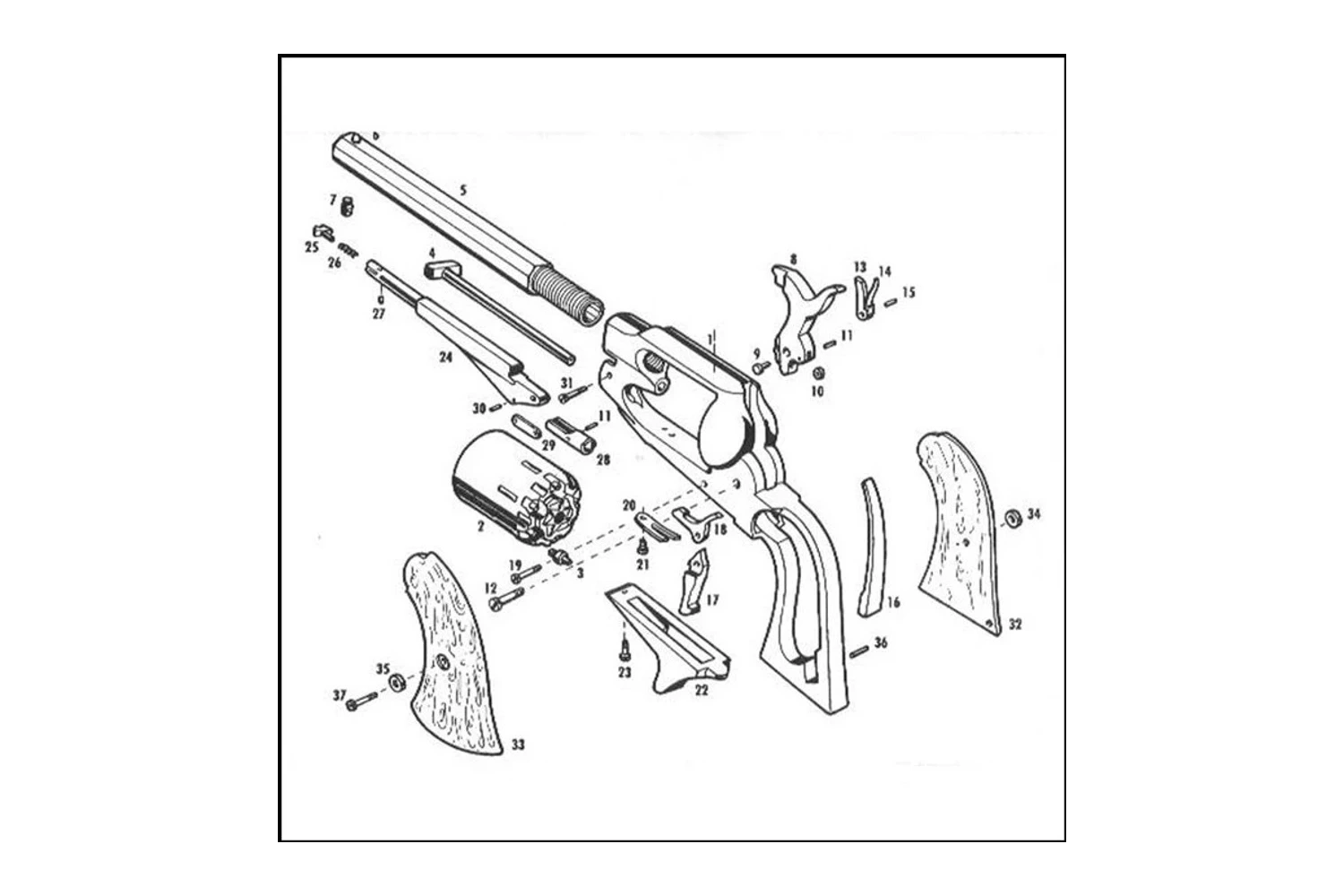
Spring-and-hammer kits, cylinders, grips and individual parts identified by drawing number.
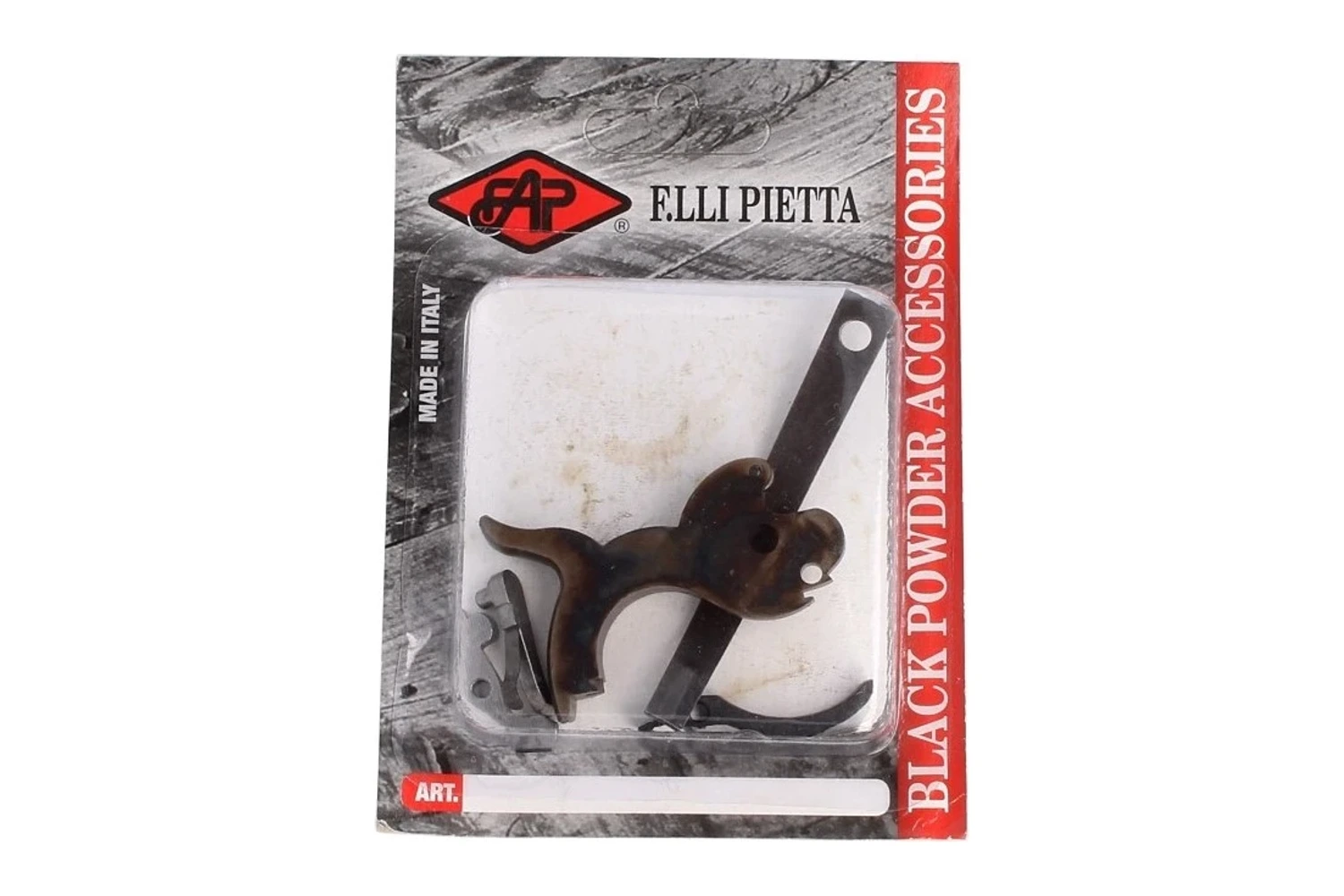
Spring-and-hammer kits
Factory Black Powder Accessories blister packs with replacement springs and hammer, one for each revolver family.
Cylinders
Complete replacement cylinders in brass, blued, stainless and nickel-plated finishes.
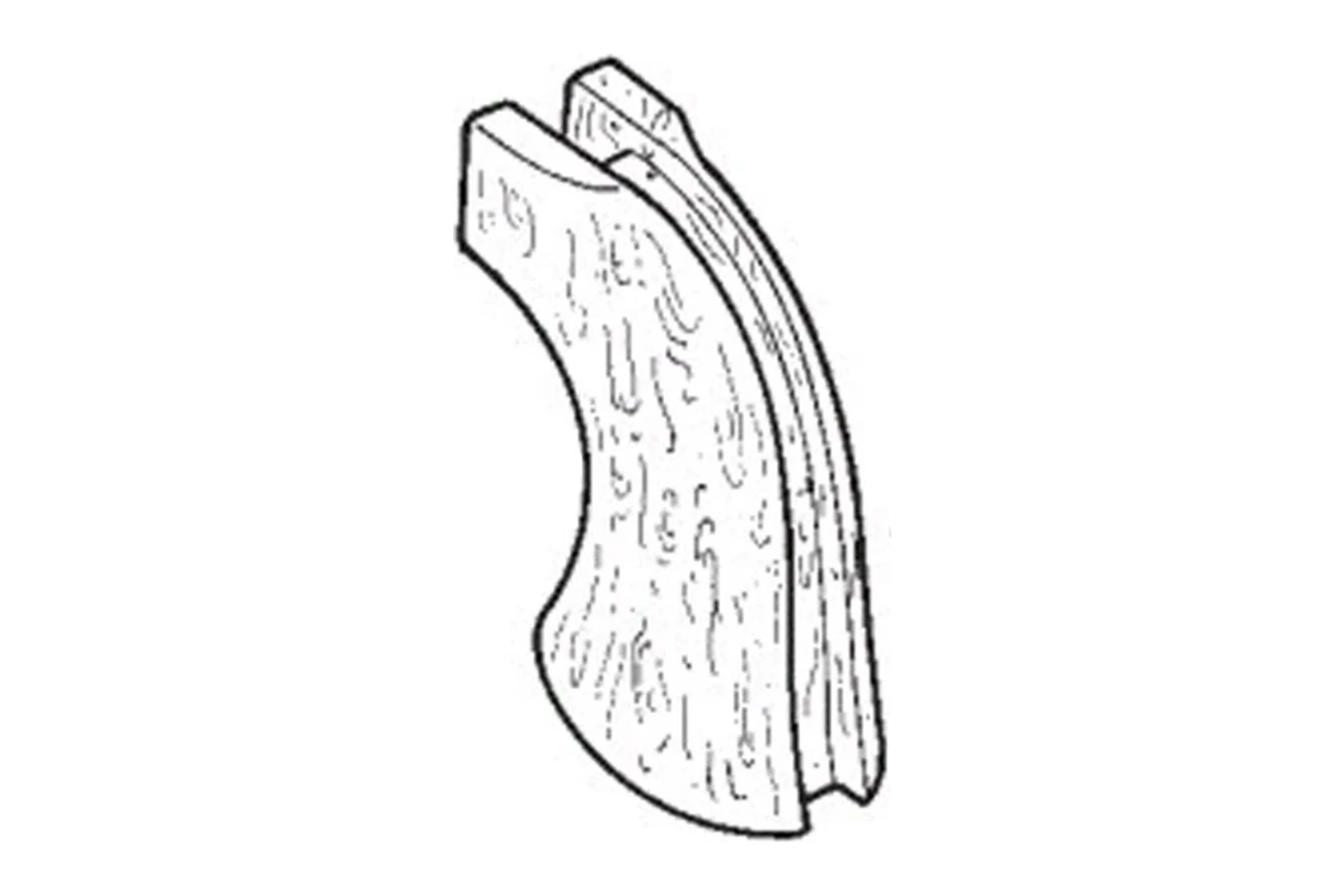
1873 grips and screws
1873 grips in wood or white PVC, and twelve-screw sets in blued or stainless steel.
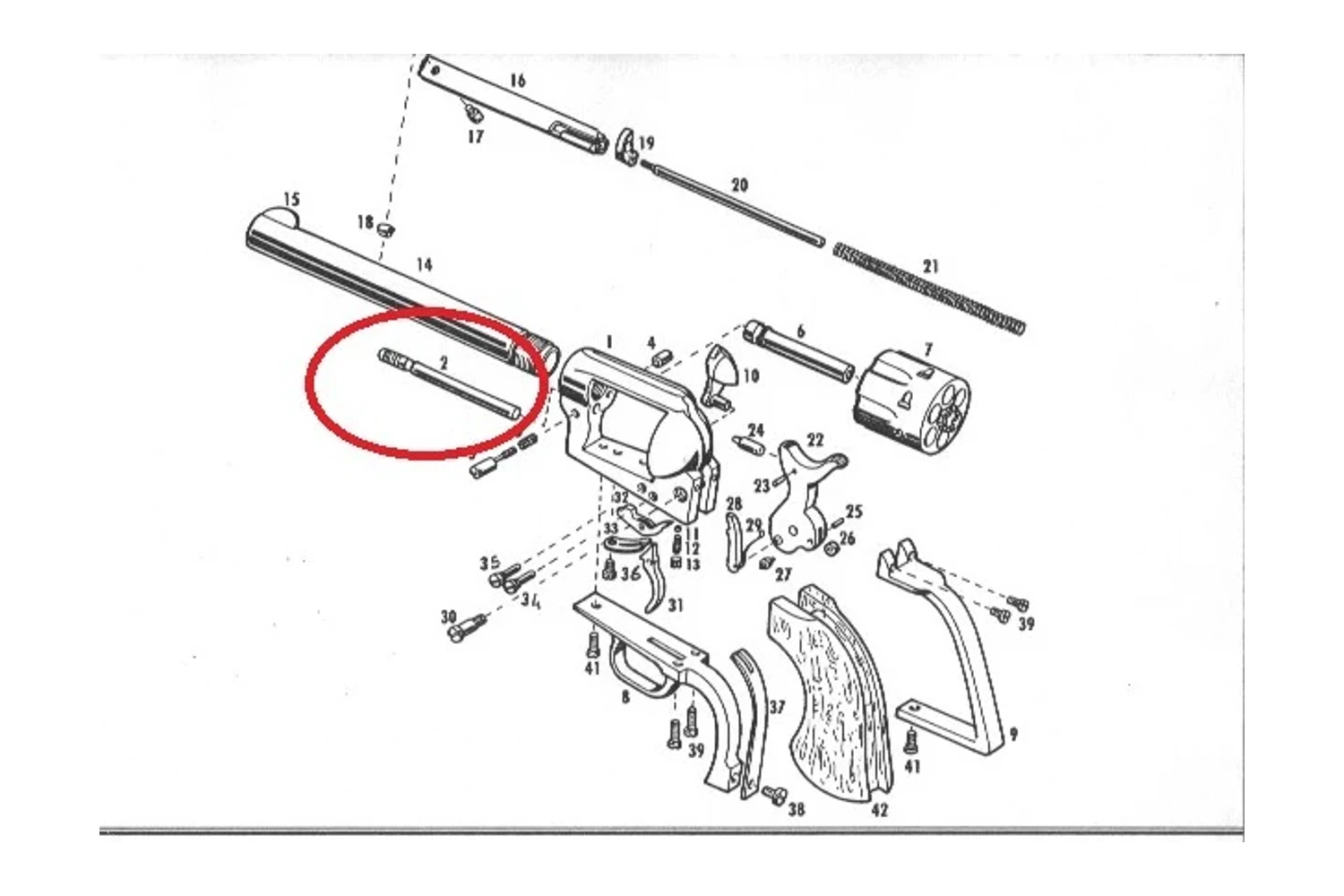
1873 Single Action parts
Individual parts from the 1873 drawing, each under its drawing number: from the cylinder arbor to the firing pin.
Muzzle-loading parts
Loading levers, cylinder arbors and levers, hammers and Remington Pocket cams, under the names used to order them.
Parts
- Cylinder lever Navy .44
- Cylinder lever RMG .44
- Cylinder lever RMG .44 stainless
- Cylinder lever .36
- Cylinder lever 1858 stainless Nº 6
- Cylinder arbor 1858
- Base Pin Navy/Army Nº 13
- Loading-lever retainer RMG
- Lever screw RMG .44 Nº 28
- Hammer Remington Pocket
- Cam Remington Pocket
- Cam 1863 Remington Pocket
- Loading lever Remington Pocket
- Front sight Remington Target stainless
Pietta in the shop
Revolvers, spare parts, nipples, balls and wads, reference by reference.
Firearms and ammunition subject to regulatory control are purchased and processed under the applicable rules through an authorised gun dealer.
The shop is available in Spanish.