
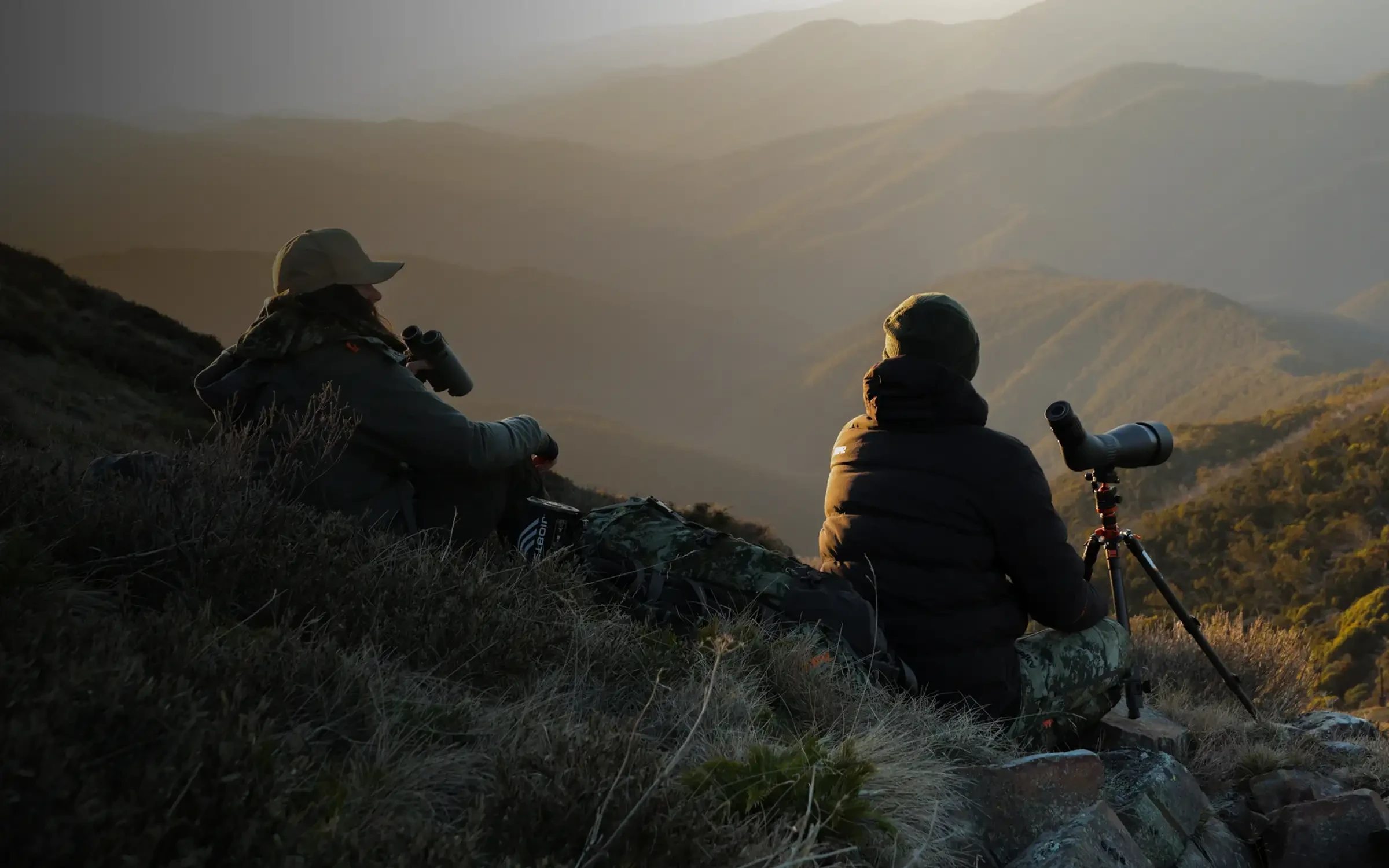

Under ZeroTech’s published terms, the Triple A warranty is transferable and requires no proof of purchase. Australian optics since 2018.
Image: ZeroTech Optics
- Founded 2018
- Origin Australia
- Lines Thrive · Vengeance · Trace
- Commercial warranty Triple A, for life
- Categories Optics
History
A 2018 brand with half a century behind it
ZeroTech was founded in Australia in 2018. It is a young brand and does not pretend otherwise: what stands behind it is the house that created it, which its catalogue describes as the largest optics supplier in the southern hemisphere, with more than fifty years of optical instruments to its name. The same catalogue traces the origin to a family with three generations of optical distribution and manufacturing behind it, come over from the United States.
The optical and mechanical engineering team sits inside the company: it designs, tests and delivers from Australia before exporting. The proving grounds the brand claims are the arid plains of Australia and Africa, the fjords of southern New Zealand, and Alaska. Today it reaches distributors in more than fifteen countries.
The catalogue is organised into three ranges, and they are the three that cross customs to get here. Thrive is general hunting and shooting use, and Thrive HD steps up the glass, takes transmission to 92% and adds an illuminated reticle. Vengeance is the price range, in riflescopes and binoculars. Trace is the long-range line, with Trace Advanced at the top: first focal plane, PTS turrets with a zero stop and, on the 5-30x56, ED glass and Japanese manufacture.
And then there is the warranty, which is where the house stakes its argument. The Triple A covers the product for life: any owner, any fault, no paperwork and no proof of purchase. It is transferable, so a second-hand ZeroTech arrives covered from day one.
Product families
What we distribute
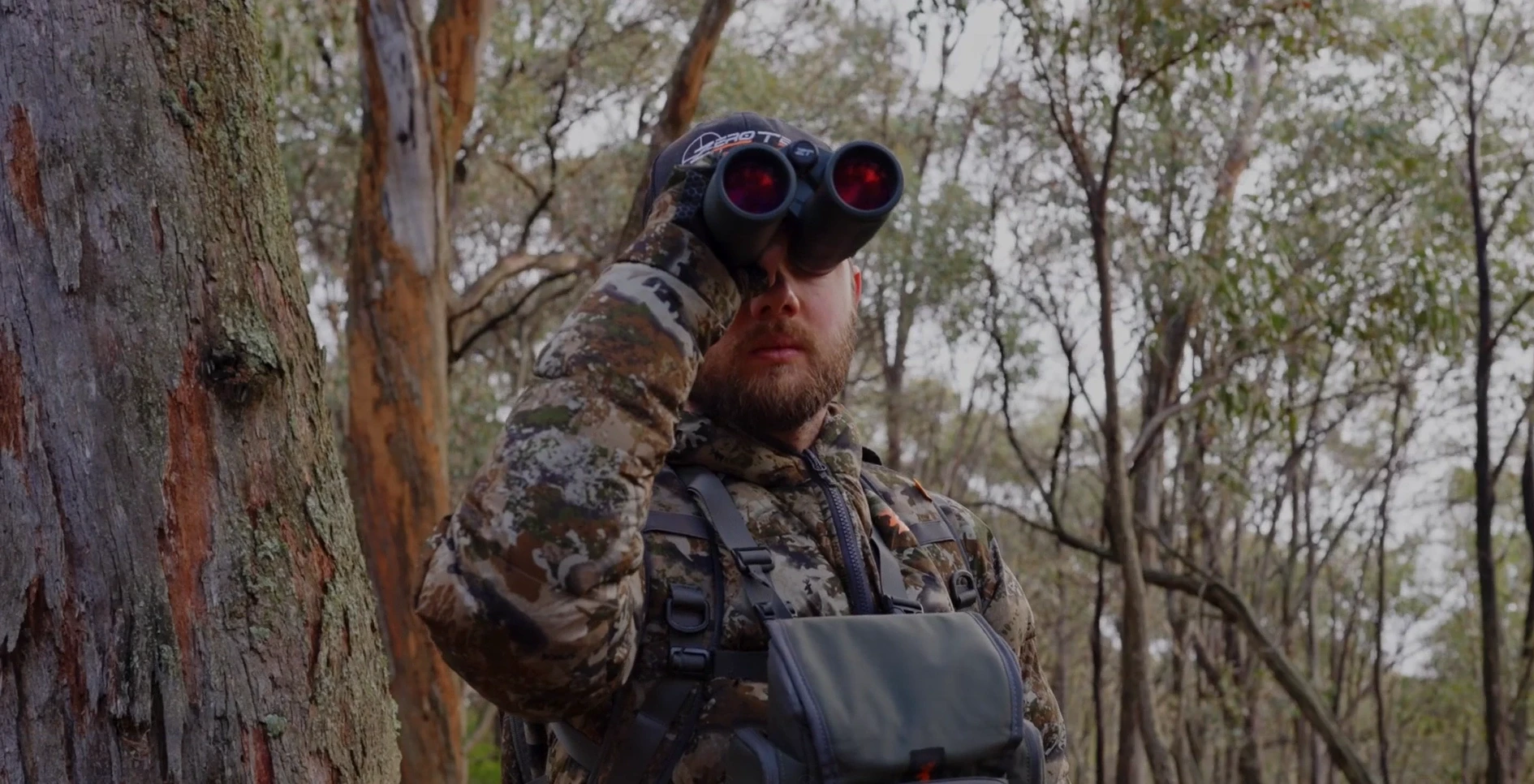
The house's three ranges. In optics, what separates one reference from the next is not the calibre: it is the magnification, the objective, the focal plane and the reticle, and that is how they are noted.
Riflescopes
Everything in second focal plane comes with capped turrets in MOA; first-focal-plane models come with an RMG reticle in MRAD and a zero stop.
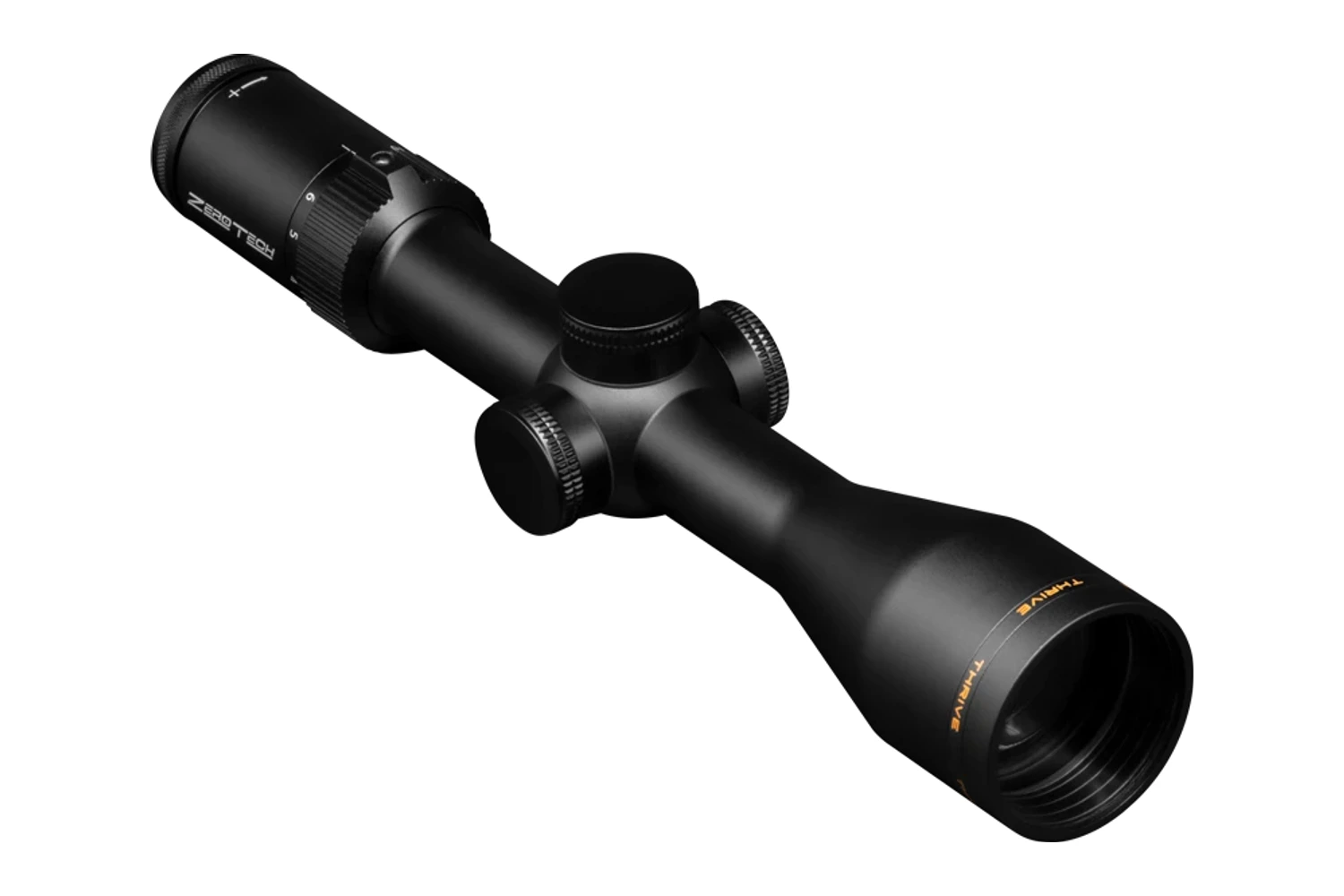
Thrive 4-16x50
30 mm tube in 6061-T6 aluminium, capped 0.25 MOA turrets over 60 MOA of elevation and another 60 of windage, side focus from 10 metres to infinity and a locking dioptre. 74.5 mm of eye relief, IPX7 sealing and 714 g. It is the same scope with three reticles, all second focal plane and calibrated at 16x: the PHR 2 steps its holdovers at 1.1 · 2.5 · 5 · 10 · 15 · 20 and 25 MOA under a floating centre dot; the G4 mounts a thick 2.5 MOA lower post rising 22 MOA to the fine centre; the PHR 4 steps its marks in MOA up to 12.5.
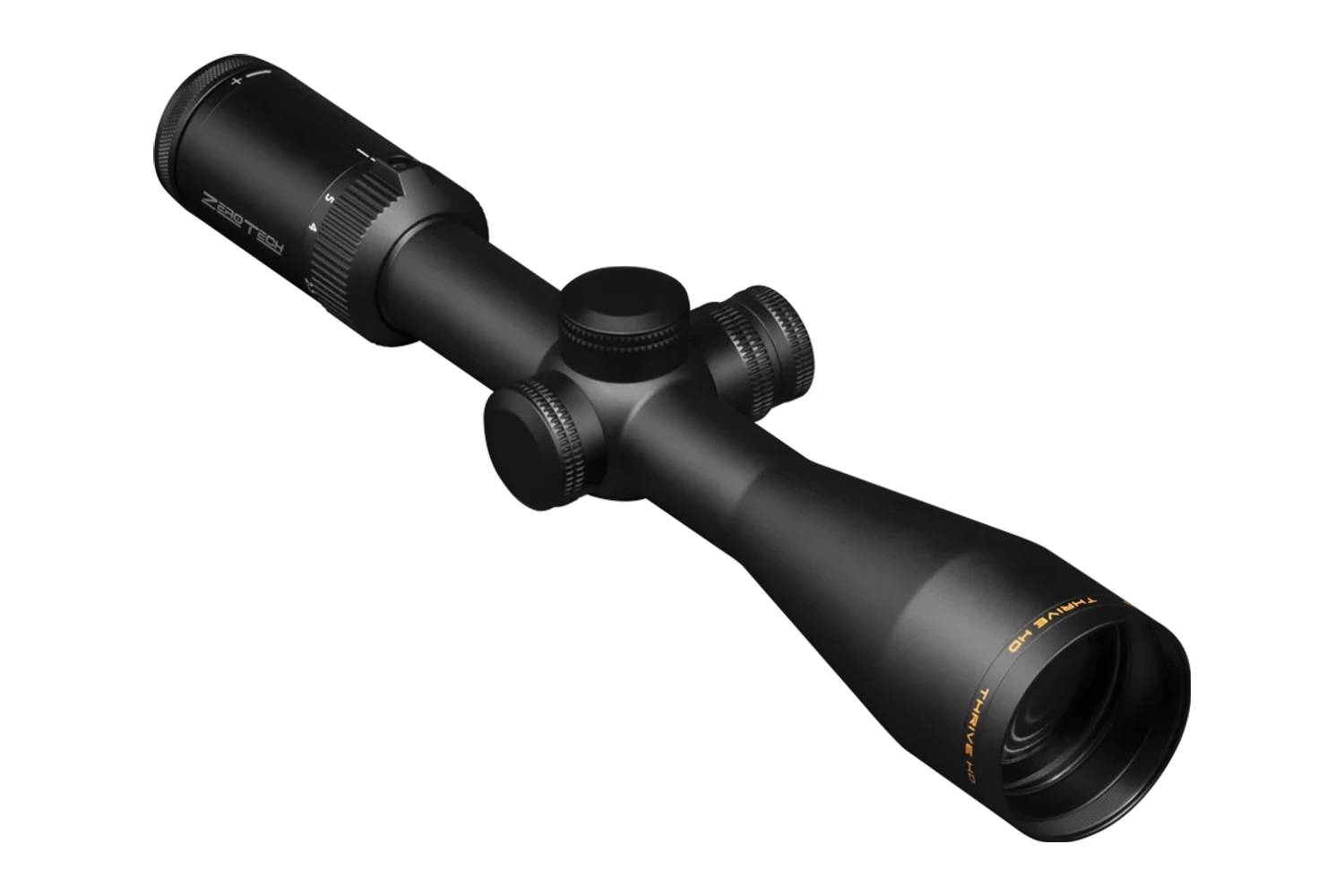
Thrive HD 2.5-15x50 PHR II illuminated
HD glass at 92% transmission, with an 11 mm exit pupil at the bottom of the zoom: it forgives your position while the eye is not yet settled behind the scope. Illuminated PHR 2 reticle with five levels, calibrated at 15x. Capped 0.25 MOA turrets over 70 MOA of travel, side parallax from 10 metres and a locking dioptre. The illumination switches itself off after three hours and comes back at the level it was left on. 740 g, IPX7.
Reference
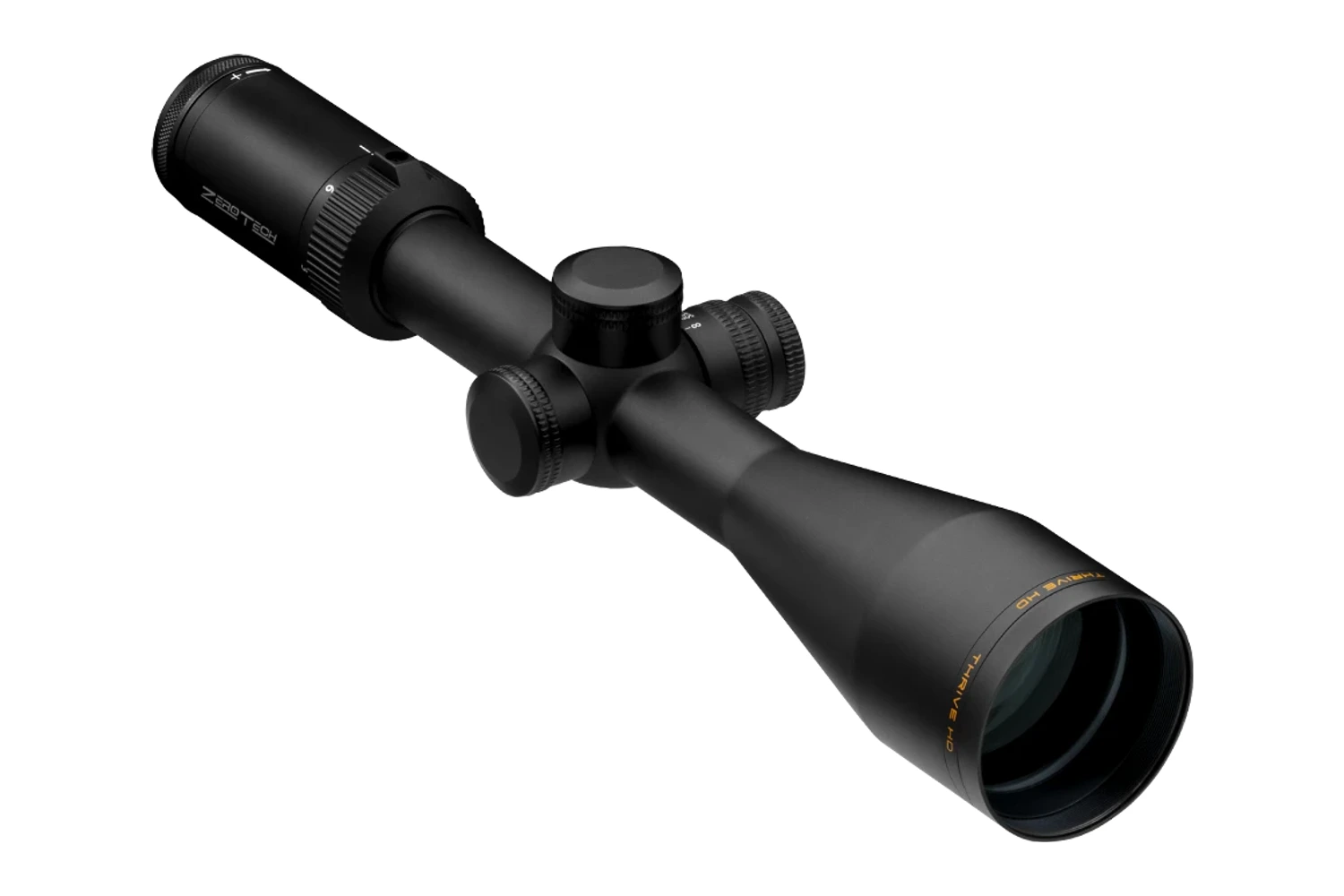
Thrive HD 3-18x56 PHR II illuminated
56 mm objective and 92% transmission, with 90 MOA of elevation and as much windage under 0.25 MOA caps that zero with the multi-tool. Illuminated PHR 2 calibrated at 18x, with the same 1.1 to 25 MOA holdovers, and a half-magnification index marked on the power ring. Side parallax from 10 metres to infinity. 816 g.
Reference
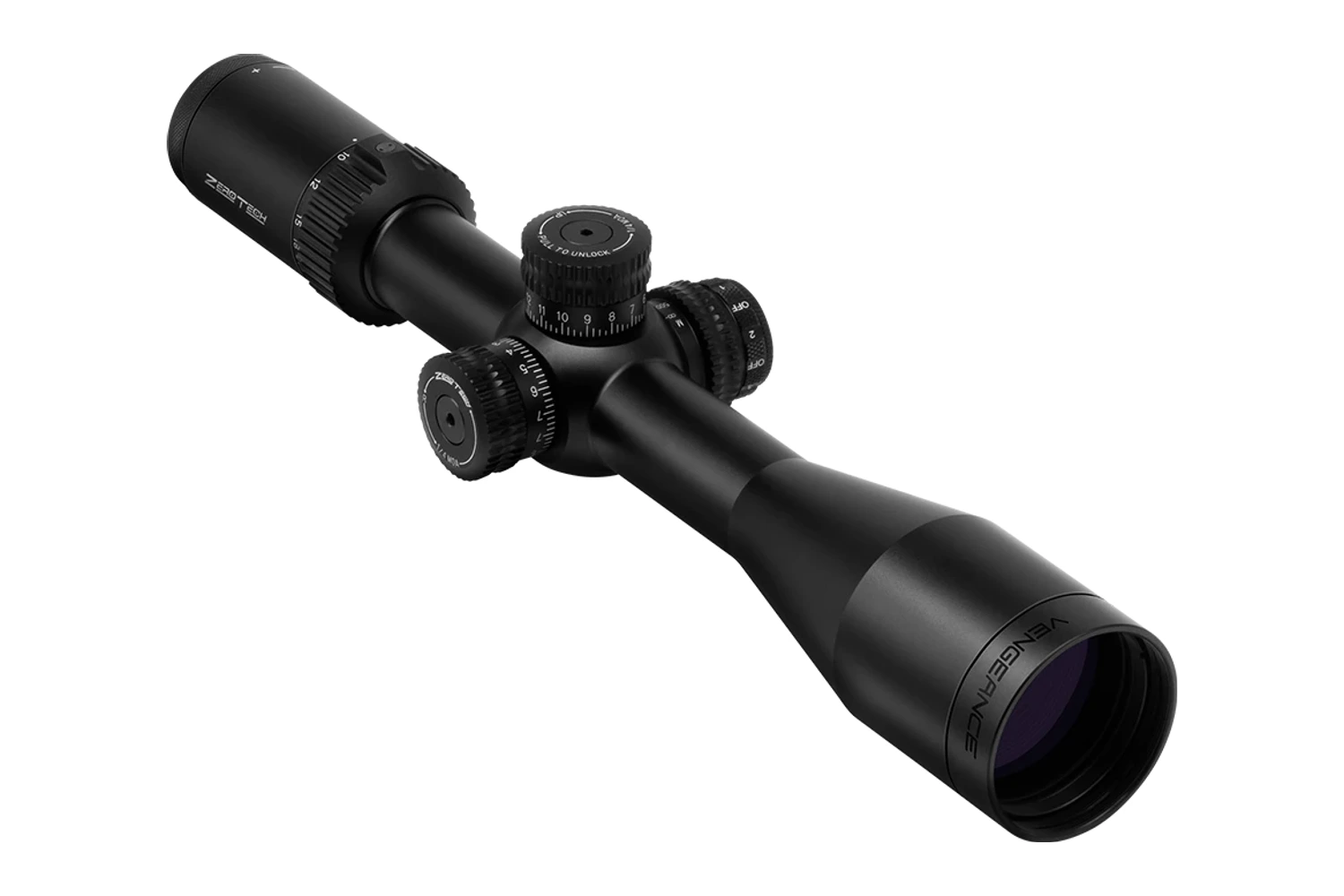
Vengeance 4-20x50 PHR II illuminated
A field of 6.8 metres at 100 at the bottom of the zoom and 1.7 at the top: quick in thick cover and enough to resolve detail on a clean hillside. Second focal plane calibrated at 20x, with six illumination levels separated by an off position and a CR 2032 battery. Pop-Lok 0.25 MOA turrets over 70 MOA of travel, 30 mm tube and parallax from 20 metres. 800 g.
Reference
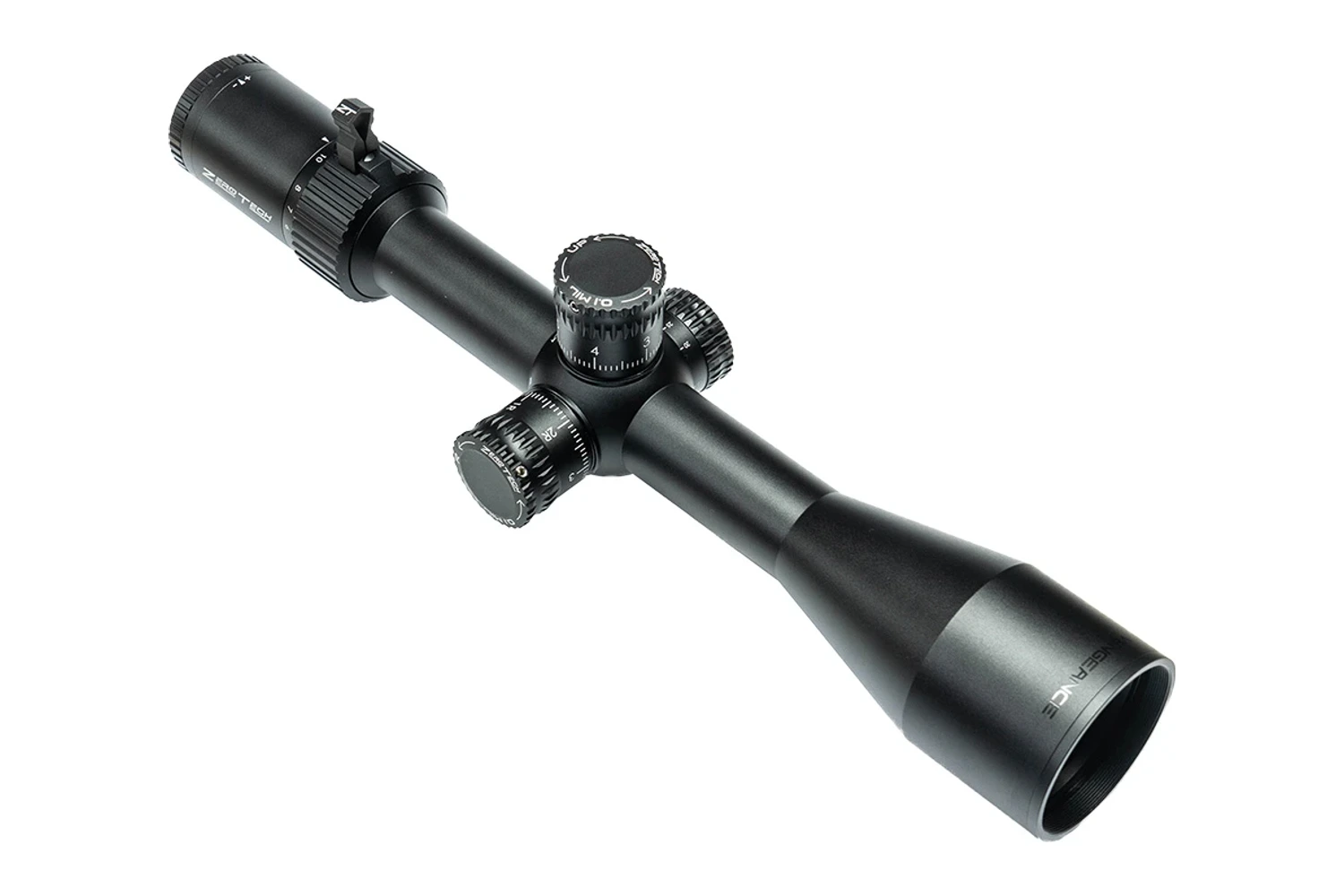
Vengeance 6-24x50 FFP RMG
First focal plane: the RMG reticle —floating centre dot, 0.5 MRAD increments and 0.1 measuring bars between them— keeps its angular value from 6x to 24x, so wind correction is read on the reticle, not the turret. 17.5 MRAD of elevation and windage in 0.1 MRAD clicks, worth 1 cm at 100 metres, with a hard zero stop. Parallax down to 10 metres. 698 g.
Reference
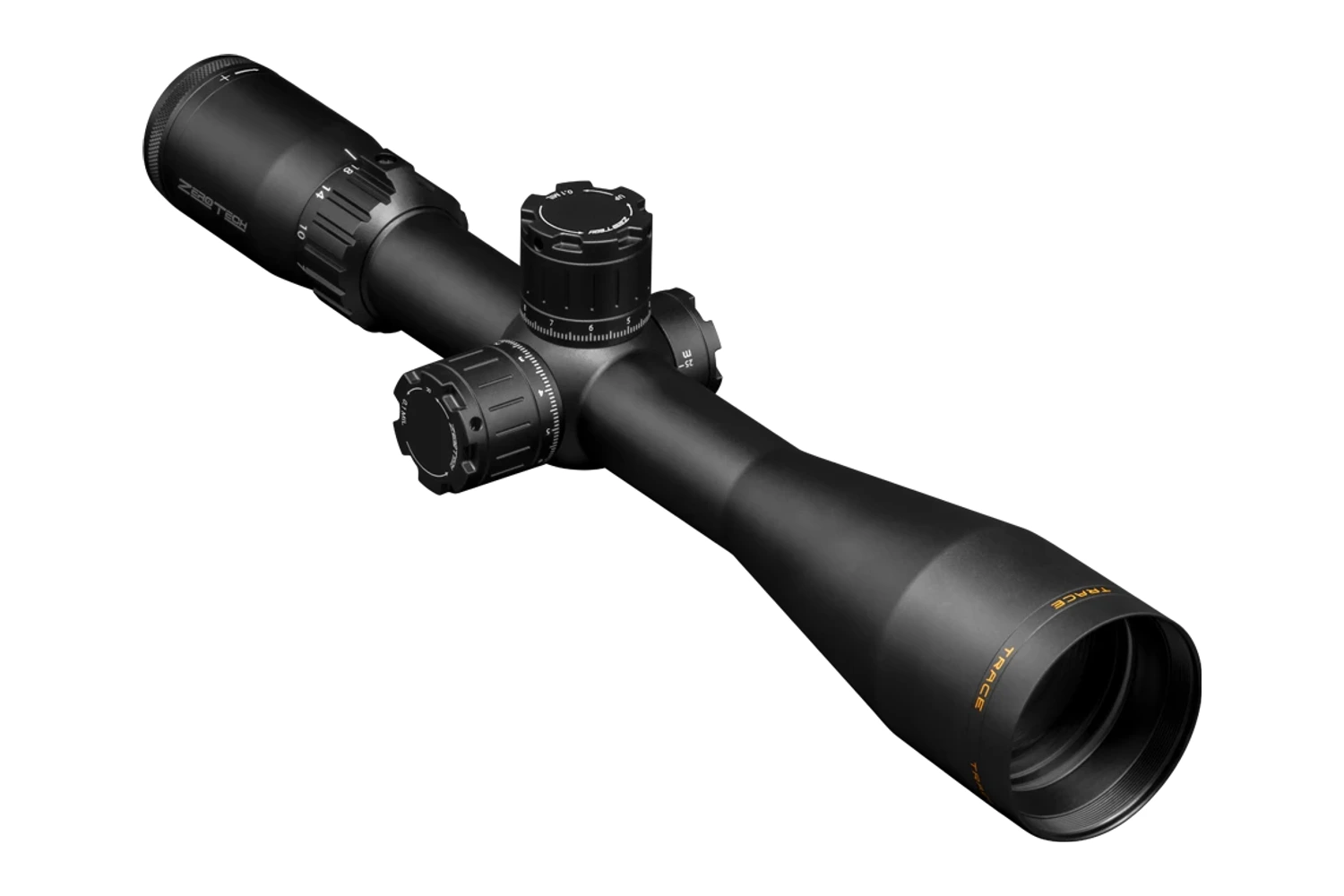
Trace 4.5-27x50 FFP RMG
The RMG in first focal plane on an 824 g body, with 17.8 MRAD of elevation and another 17.8 of windage in 0.1 MRAD clicks, and the elevation against a fixed zero stop it cannot pass. Side focus from 25 metres to infinity, 91 to 100 mm of eye relief and a locking dioptre.
Reference
Trace Advanced 4-24x50 FFP RMG illuminated
Glass-etched RMG grid in first focal plane, with illumination on a ten-position mechanical wheel and an off stop between each level: one click switches it off, another brings back the same brightness. 23 MRAD of elevation and 20 of windage in 0.1 MRAD clicks, over a zero stop. 8.6 mm exit pupil at 4x, Weathershield exterior coating and argon purging. 790 g.
Reference
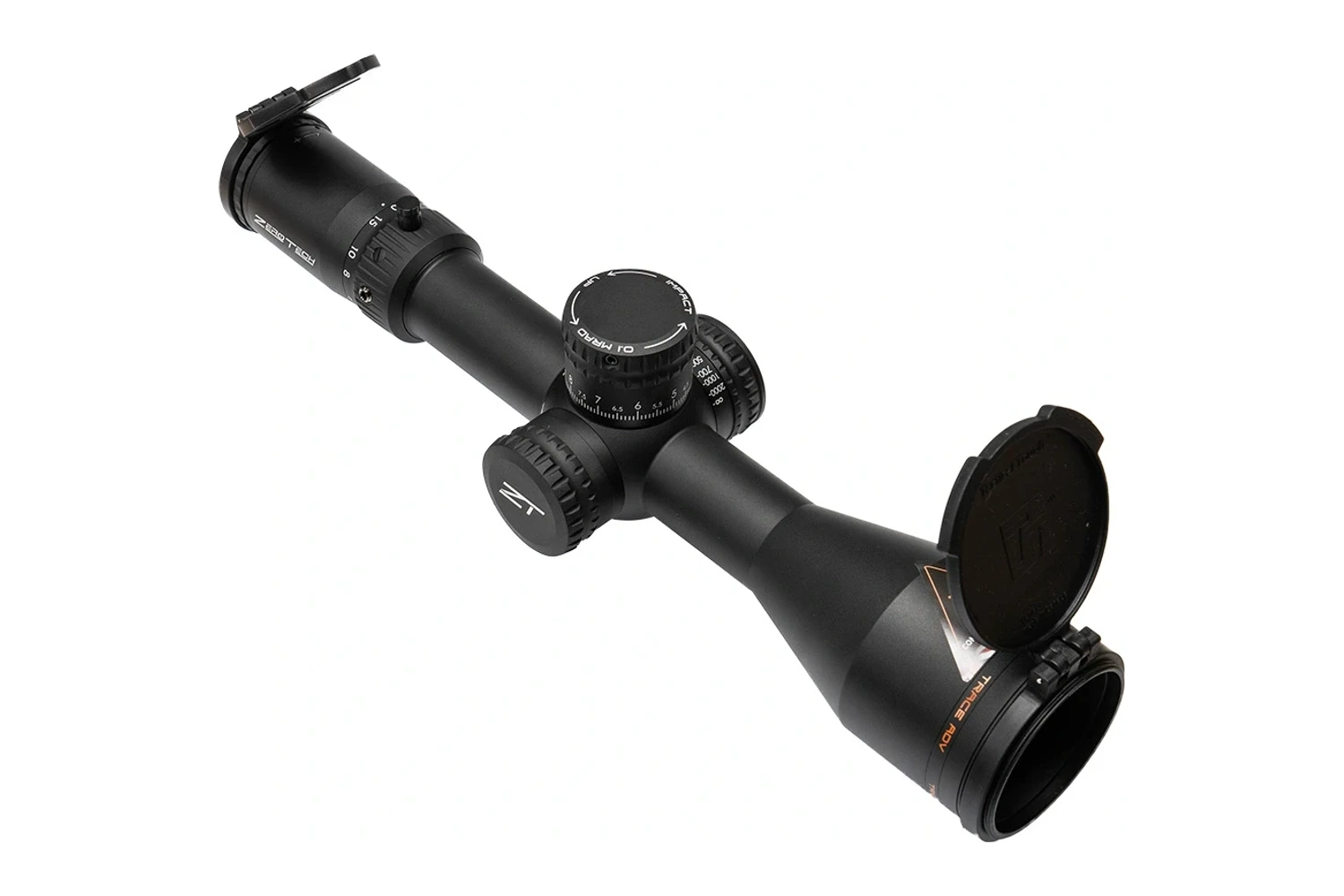
Trace Advanced 5-30x56 ED FFP RMG 2 illuminated
Designed in Australia and made in Japan. Full MRAD grid in first focal plane, 20 MRAD deep on the vertical axis, with ten-level push-button illumination that switches itself off and recovers the previous setting. 35 MRAD of elevation in 0.1 MRAD clicks over a zero stop, hidden-thread windage cap and a 34 mm tube, the only one of the brand we bring in. ED glass against colour fringing in high contrast. 1,012 g.
Reference
Binoculars
All 10-power. What changes between them is the objective, the prism type and the reflective coating, and that is where light transmission goes.
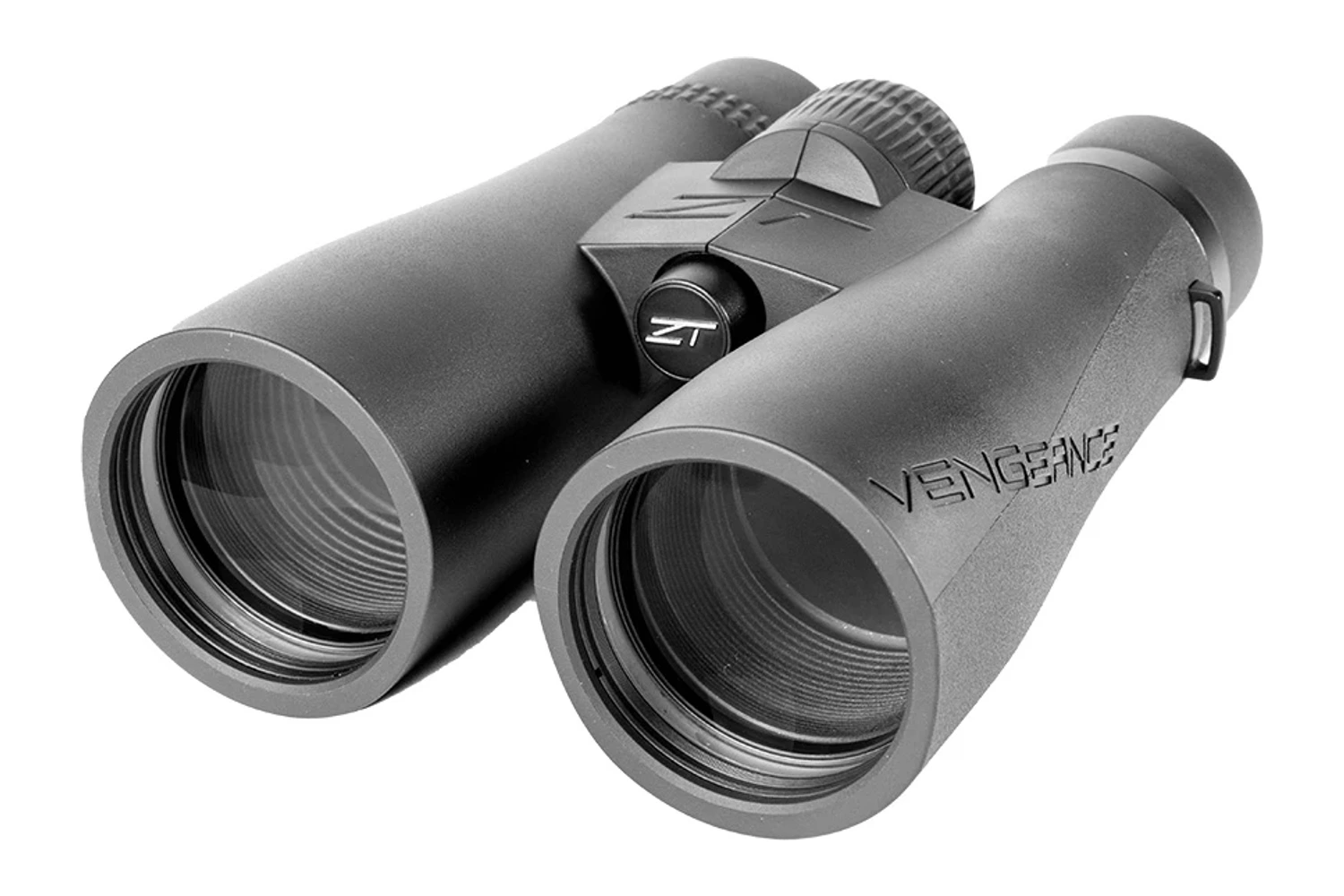
Vengeance 10x42 and 10x50 binoculars
The house's price range: BaK 4 roof prisms with silver mirror coating and fully multi-coated surfaces, at 80% transmission. The 10x42 weighs 588 g and gives 17 mm of eye relief over a 4.0 mm exit pupil; the 10x50 goes up to 751 g, 18 mm and a 4.9 pupil, the one you appreciate on the coast and at first light. Both with threaded eyepieces, central focus from 5 metres, rubber-armoured waterproof body and tripod mount.
Configurations
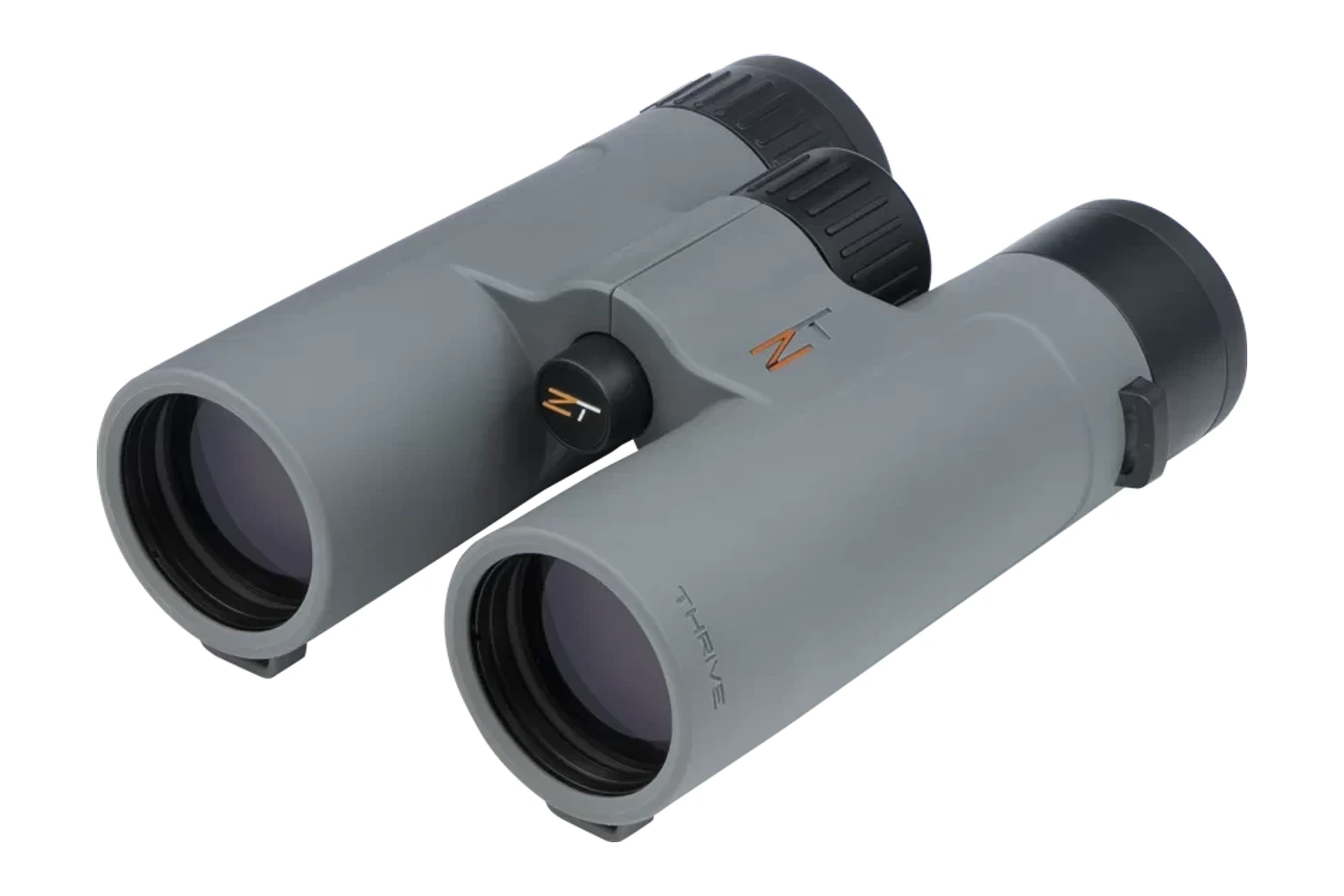
Thrive 10x42 binoculars
BaK 4 roof prisms with aluminium mirror coating and fully multi-coated surfaces: 72% transmission. A 5.8° field, which is 108 metres at 1,000, central focus from 4.5 metres to infinity and 15.1 mm of eye relief. Dioptre on the right tube: set it once and it stays. Rubber-armoured waterproof body, 616 g, with case and strap.
Reference
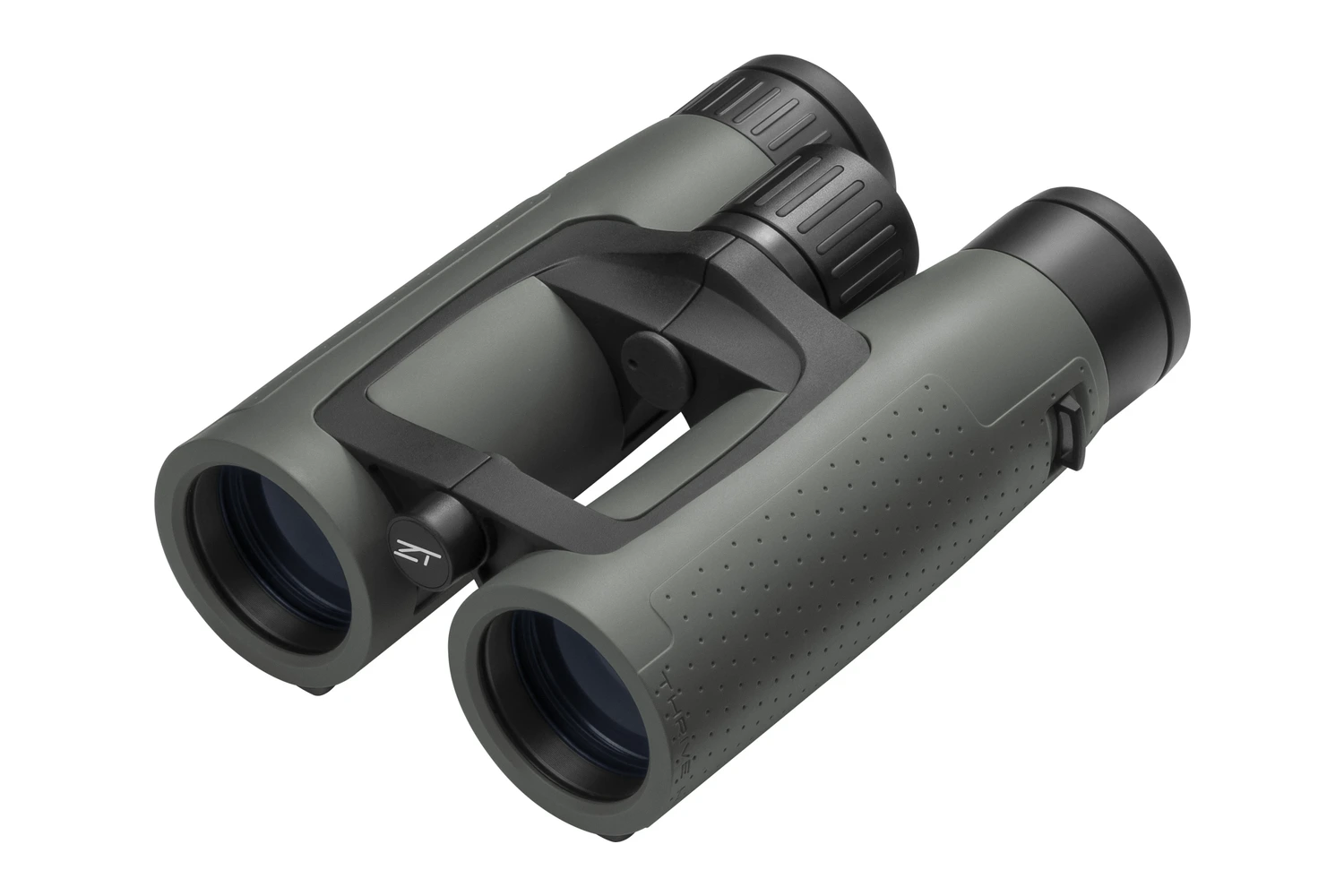
Thrive HD 10x42 binoculars
ED glass and phase- and dielectric-coated prisms —reflecting close to 99% of light against the 87-95% of aluminium—: that is where the 88% transmission the house publishes comes from. Magnesium alloy chassis under rubber, integrated lens covers and a textured panel for handling with gloves. A 6.5° field and focus from 2.5 metres. 793 g, with a flip-lid case.
Reference
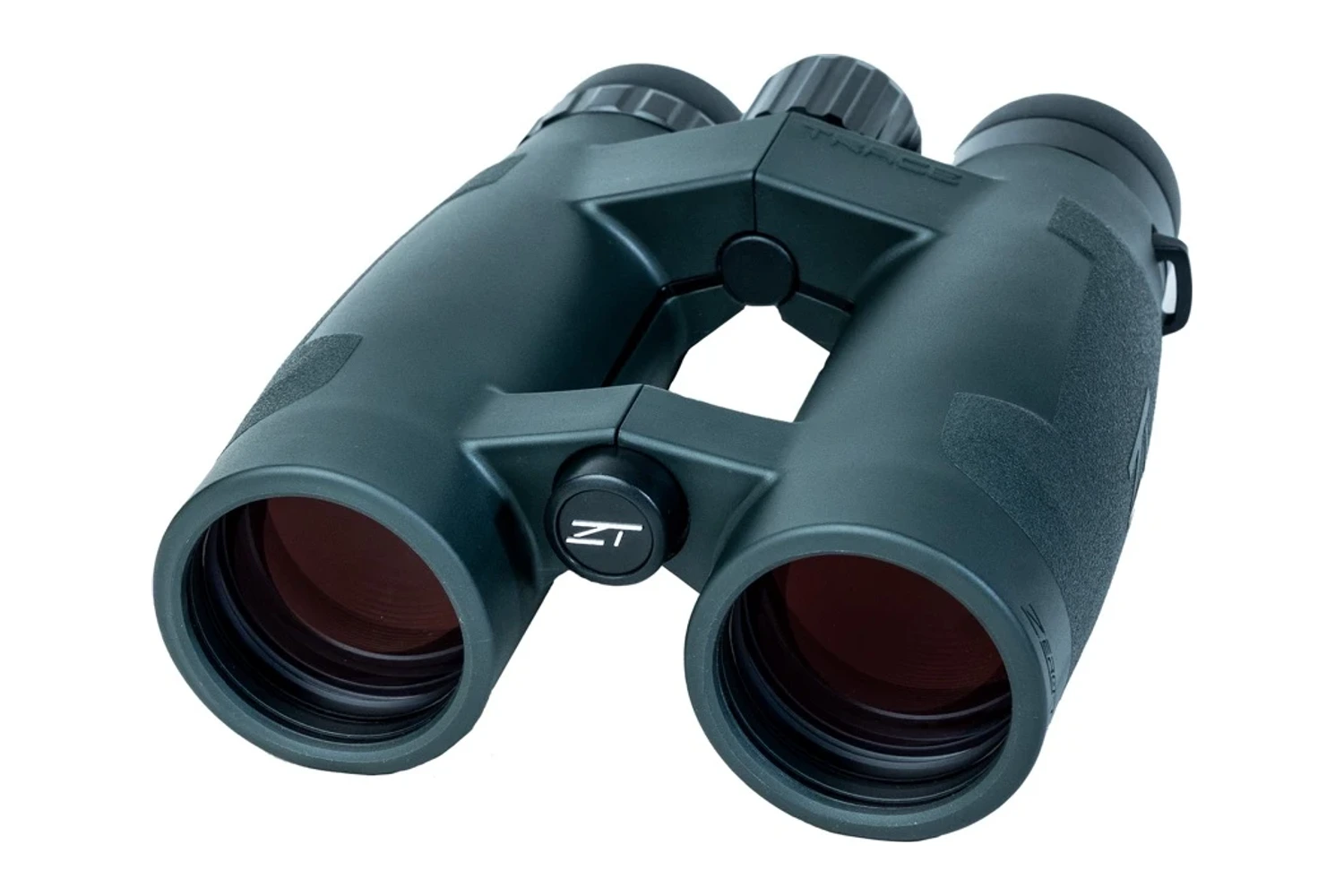
Trace ED 10x45 binoculars
The only Abbe-Koenig prism binoculars we bring in: the rest are roof prisms. With phase and dielectric coating and low-dispersion glass they reach 90% transmission over 45 mm objectives. A 4.54 mm exit pupil, 14.3 mm of eye relief and a 6.4° field. Waterproof, nitrogen purged and with a hidden tripod mount. 930 g.
Reference
Spotting scopes
The same 20-60x85 angled format and 1,885 g in both. The difference is in the glass.
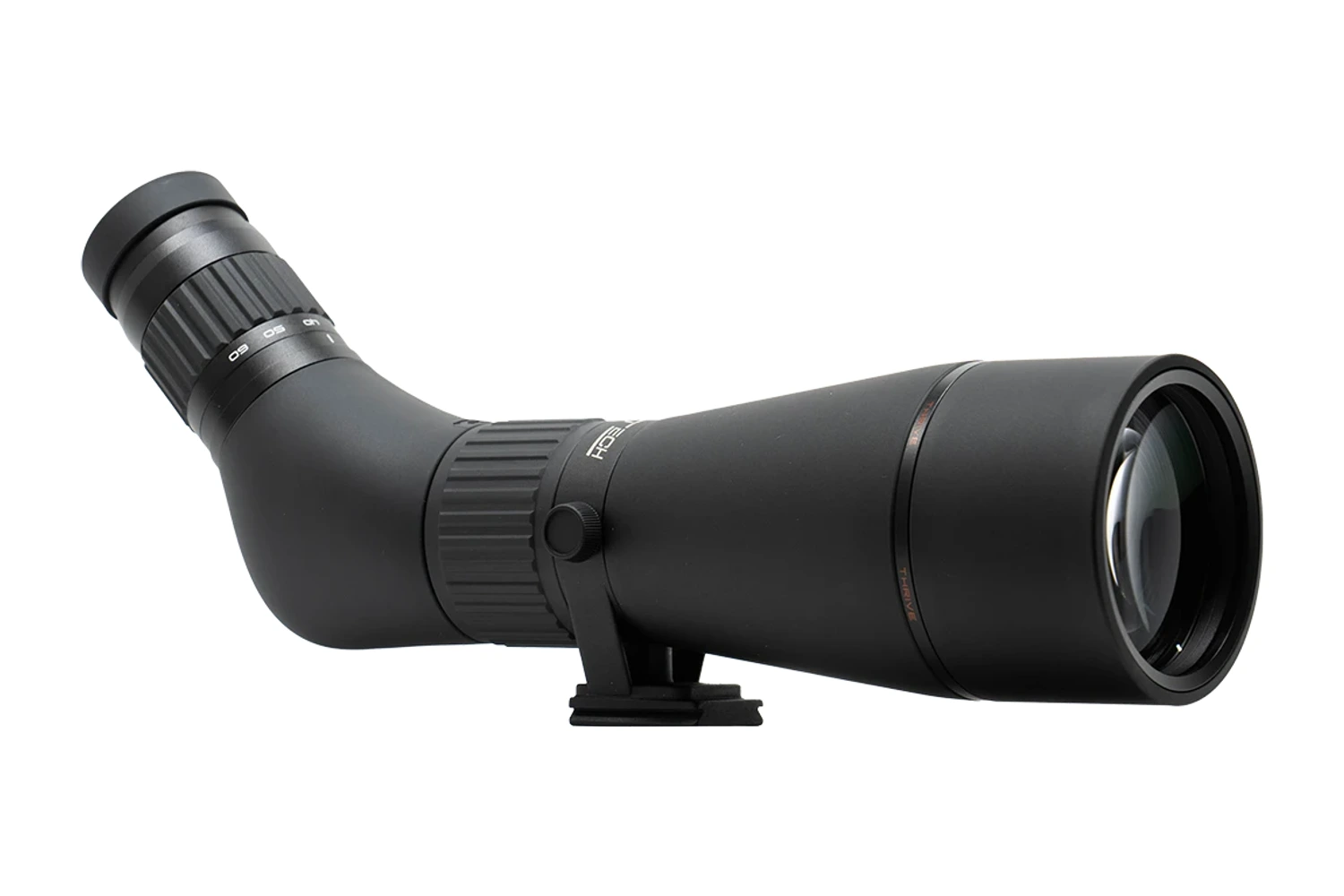
Thrive 20-60x85 spotting scope
85 mm objective, 33 metres of field at 1,000 at 20x and 16 at 60x, with an exit pupil of 4.1 to 1.4 mm and 18 to 20 mm of eye relief behind a threaded eyepiece. The foot carries an integrated ARCA Swiss dovetail and a 1/4-20 thread, so it mounts straight onto an ARCA head or a standard plate. Barrel focus, extending sunshade, rubber armour and IPX6 sealing.
Reference
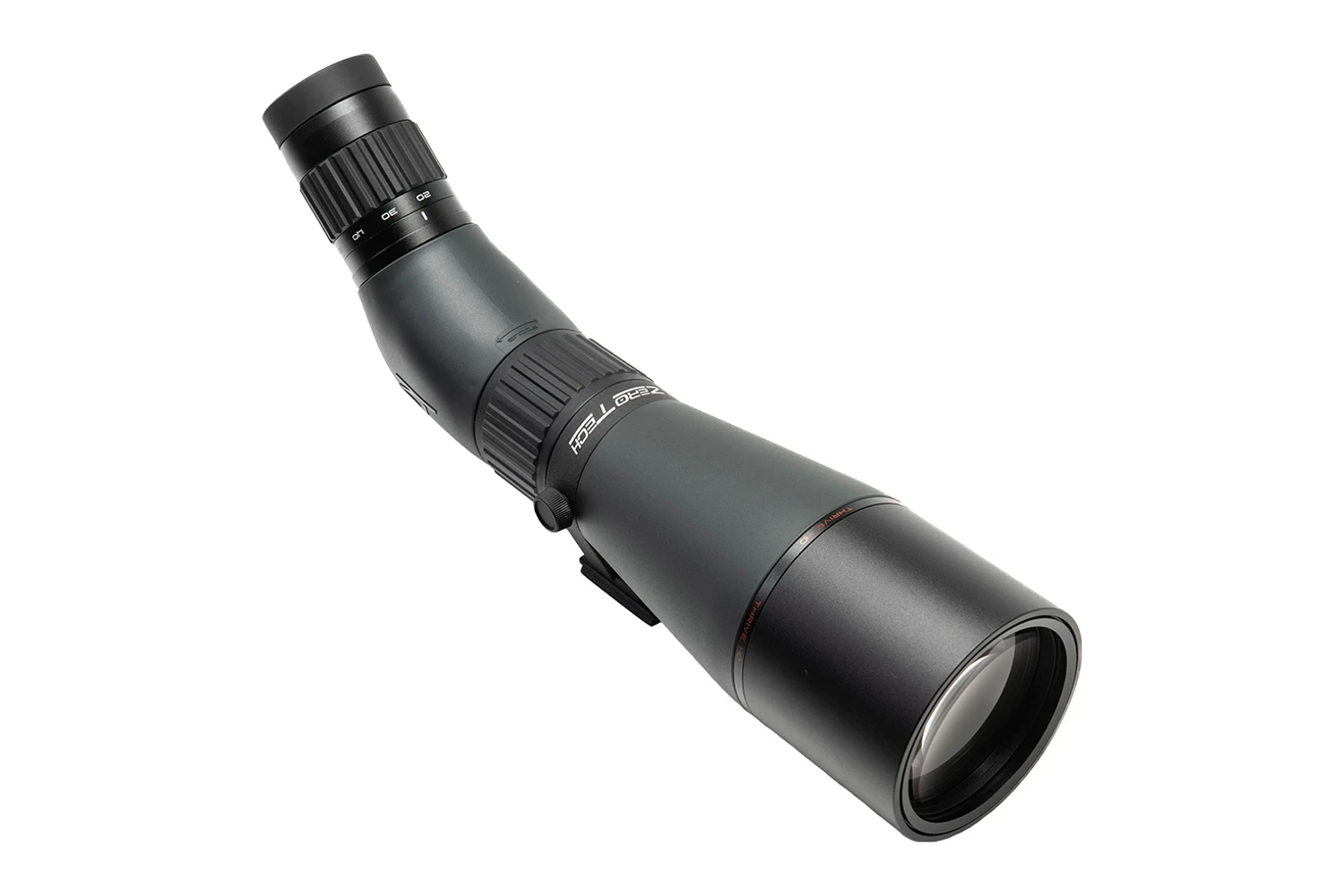
Thrive HD 20-60x85 ED spotting scope
The same format with a Japanese ED objective: 33.6 metres of field at 1,000 at 20x and 17 at 60x, 19.6 to 17.8 mm of eye relief —so glasses still work as magnification climbs— and dielectric-coated prisms over broadband multi-coated surfaces. Linear zoom and an oversized focus wheel. Argon-purged chassis with IPX6 sealing, with the same ARCA dovetail and the same 1/4-20 thread in the foot.
Reference
To read
ZeroTech catalogue
This catalogue is published in Spanish.
ZeroTech at the shop
Riflescopes, binoculars and spotters.
The shop is available in Spanish.