
Nosler Partition and AccuBond: key differences
26 August 2026 · 6 min read
What the Nosler Partition is, how its central partition works, and how it differs from the AccuBond in structure and behaviour.

The Partition is the origin of Nosler
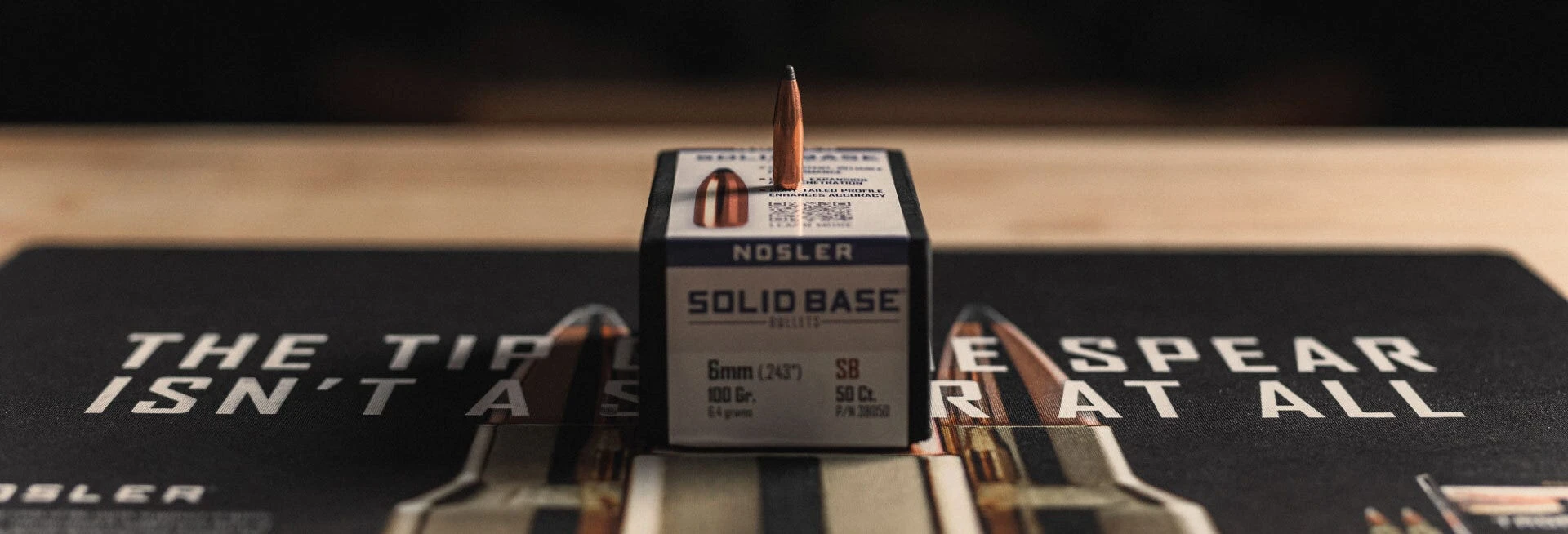
The history of Nosler begins with the Partition. The brand itself places the origin of this bullet in a Canadian moose hunt in the autumn of 1946, when John A. Nosler was dissatisfied with the performance of the projectile he was using in his .300 H&H. From that experience he began working on a design that would maintain expansion and penetration more consistently. In 1947 he tested the first Partition design and in 1948 he founded Nosler Partition Bullet Company in Ashland, Oregon. In other words: before being just another family within the catalogue, the Partition is the product on which the brand was built. (nosler.com)
What exactly a Partition is
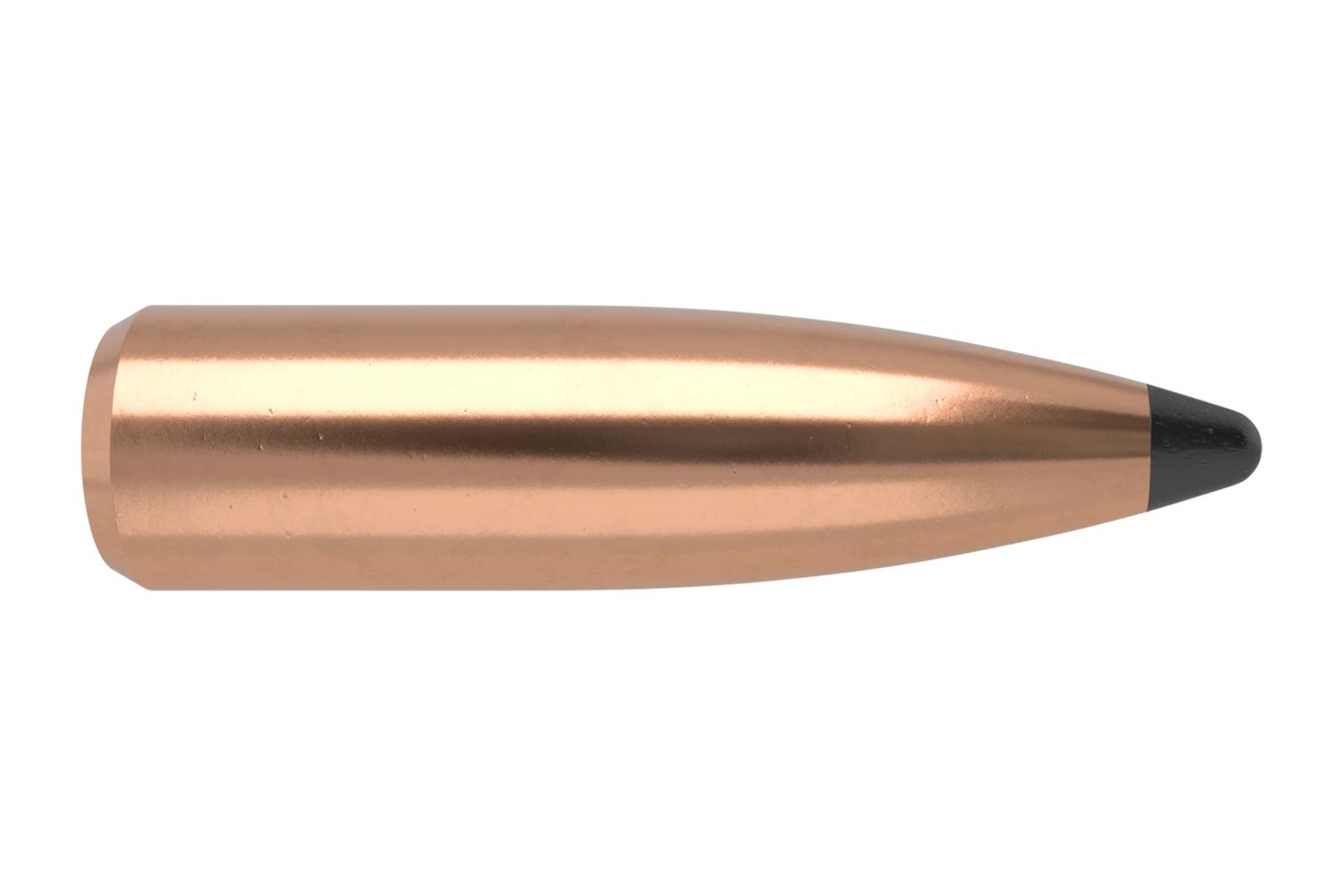
Nosler defines the Partition as a dual-core hunting bullet. Its distinctive feature is a complex jacket with two lead cores separated by an integral or monolithic central partition. The front core is intended to expand and transfer energy, while the rear section is contained by that central partition in order to retain mass and keep penetrating. In the 2026 catalogue, the brand also describes a fully tapered alloyed copper jacket, capable of opening rapidly at the thinner mouth and then controlling expansion along the axis of the projectile. (nosler.com)
Put another way, the Partition divides the work into two zones. The front half is sacrificed to initiate a wide mushroom; the rear half does not depend on a chemical bond between jacket and core, but rather on a physical barrier that limits how far the deformation can travel backwards. That is the key to the design and also the reason why it remains a benchmark when controlled expansion is discussed. (nosler.com)
How the central partition works
The central partition of the Partition is not a piece added afterwards, but part of the jacket’s own construction. According to Nosler, that partition supports the already expanded mushroom and retains the rear core, which keeps more than two thirds of the original weight to ensure deep penetration. The brand adds that its dual-core design offers good mushrooming characteristics at virtually all impact velocities. (nosler.com)
That operation explains why the Partition has had such continuity. In a conventional lead-and-jacket projectile, deformation of the front section can progress too far rearwards if it encounters serious resistance. In the Partition, the partition acts as a mechanical limit: front expansion occurs, but the rear core continues working as a more compact mass. The result sought by the brand is to combine a wide wound channel with deep penetration, even when the impact requires passing through bone or dense tissue. (nosler.com)
It is worth noting an important nuance. Nosler does not present the Partition as a bullet designed to maximise ballistic coefficient or to stretch the form to the extreme, but as a tool for terminal performance. Its prestige does not come from being the most streamlined, but from how it resolves the balance between opening and depth through a structural solution that is very simple to explain and difficult to replace: two cores and a partition between them. (nosler.com)
What the AccuBond is and what changes compared with the Partition
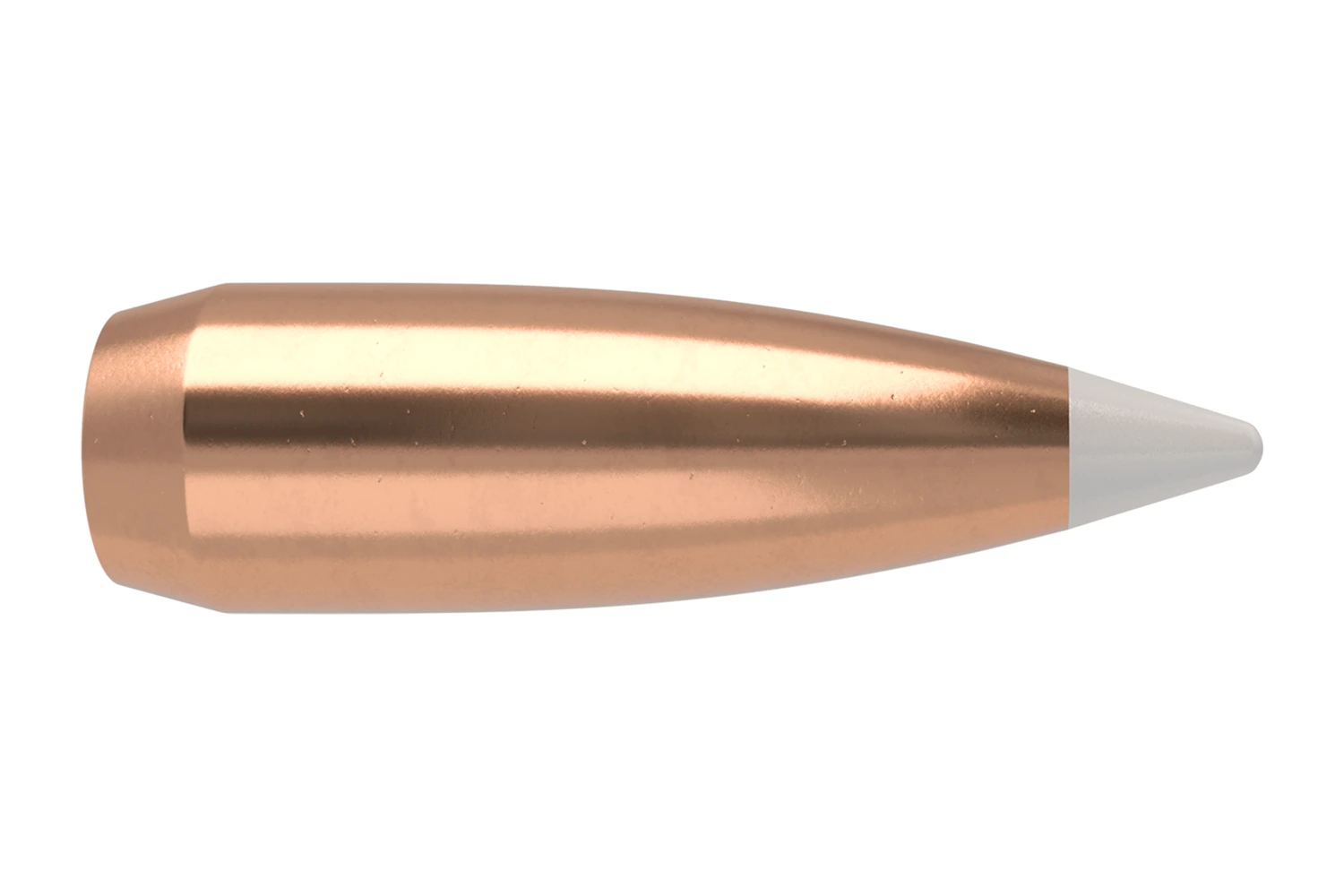
The AccuBond starts from a different idea. Nosler explains in its official FAQ that it was designed to replicate in hunting the terminal performance of the Partition, but with a more aerodynamic form and using modern manufacturing technology through jacket extrusion and bonding the core to the jacket. Instead of two cores separated by an integral partition, the AccuBond uses a single alloyed lead core permanently bonded to a heavily tapered alloyed copper jacket. Added to that are a white polymer tip and a boat-tail base. (nosler.com)
Nosler summarises the essential difference in this way: the Partition controls deformation with an internal physical barrier; the AccuBond does so by bonding the core to the jacket and by means of a more refined external design. In external terms, two visible features also change. The Partition retains an exposed lead nose and a flat base, while the AccuBond uses a white polymer tip and a boat-tail. (nosler.com)
What that difference in construction means in practice
The most useful comparison is not in the trade name, but in the internal architecture. In the Partition, front expansion can be very pronounced because the rear section is protected by the partition. In the AccuBond, weight retention depends on the permanent bond between core and jacket, while the solid rear base acts as a platform to form large-diameter mushrooms. Nosler maintains that both are intended as general-purpose hunting bullets for big game animals and that both usually retain between 65 and 70 % of their original weight in hunting use. (nosler.com)
The practical advantage of the AccuBond lies in its form. The polymer tip protects the meplat, helps initiate expansion and accompanies a more streamlined profile. The boat-tail improves the aerodynamic concept compared with the flat base of the Partition. That is why Nosler presents it as the option that reproduces the terminal idea of the Partition in a slimmer projectile. (nosler.com)
This difference can be seen in the data from its 2026 catalogue. For example, in .30 the 180 grains Partition is listed with BC 0,481 and an overall length of 1,350 inches, while the 180 grains AccuBond appears with BC 0,588 and 1,485 inches of overall length. In 7 mm, the 150 grains Partition is listed with BC 0,456 and the 160 grains AccuBond with BC 0,531. These are figures for specific models, not a universal rule for all weights and calibres, but they clearly illustrate the approach of each family. (nosler.com)
Partition or AccuBond: they do not do the same thing in the same way
Nosler insists that the terminal performance of both is similar, but not identical in construction. That precision matters. The Partition remains a classic controlled-expansion bullet based on a physical separation between two cores. The AccuBond belongs to another generation: a single core, permanent bond with the jacket, polymer tip and boat-tail. In other words, they pursue a similar result by different technical routes. (nosler.com)
The velocity range published by the brand for the catalogue examples also changes. On the AccuBond page, Nosler indicates a minimum operating velocity of 1.800 fps and shows, for an example of 30 calibre and 165 grains, retentions of 90 %, 77 % and 60 % at 1.800, 2.400 and 3.050 fps respectively. In the general explanation of the Partition, Nosler states that the rear core retains more than two thirds of the original weight. These are different ways of presenting the same objective: maintaining a substantial part of the projectile’s mass after expansion. (nosler.com)
The enduring relevance of a 1947 design
Seventy-nine years after that first test in 1947, the Partition still occupies a singular place because it solves an old problem with direct mechanics: letting the front section work and forcing the rear section to keep driving on. That logic explains why Nosler still considers it the benchmark against which it compares other modern hunting bullets. The AccuBond does not replace it in the strict sense of the design; rather, it translates its underlying idea into a more aerodynamic bullet with a clearly contemporary appearance. (nosler.com)
To understand the difference between them, it is helpful to keep a simple image in mind. If a Partition is cut open, a central wall appears separating two cores. If an AccuBond is cut open, a single core adhered to the jacket appears. Everything else — polymer tip, flat base or boat-tail, length and BC — follows from that initial engineering decision. (nosler.com)