
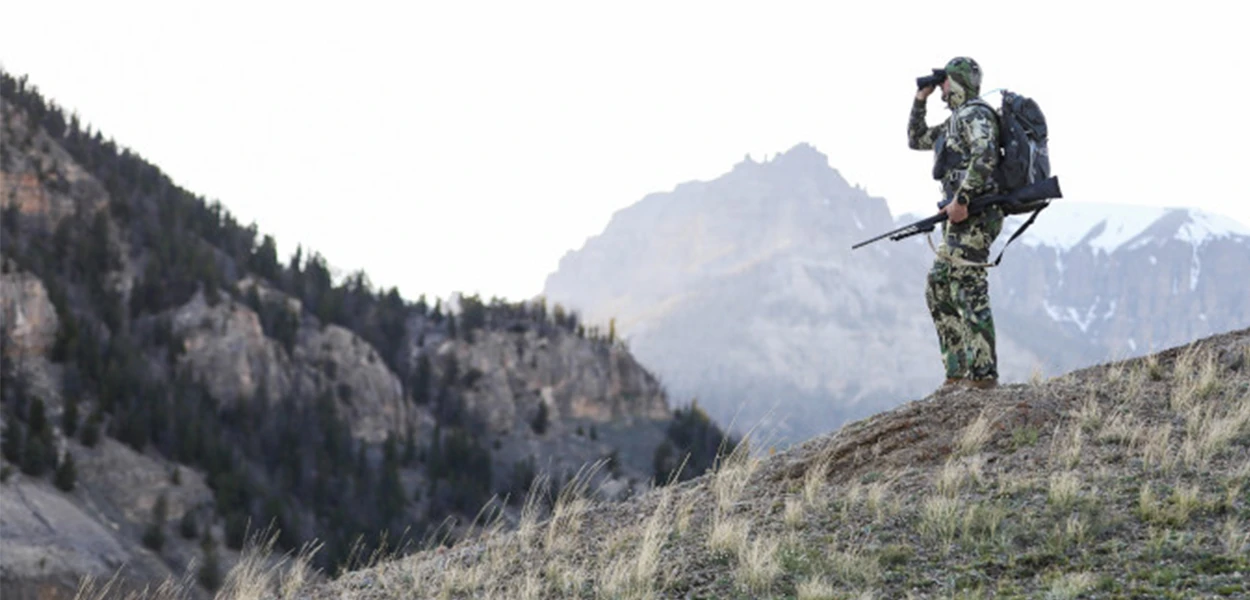

Since 1947 it has made nothing but bullets, and production lots are test-fired in a 300-metre underground tunnel.
Image: Sierra Bullets
- Founded 1947
- Factory Sedalia, Missouri
- Weight tolerance ±0.3 grains
- Manufactures Bullets only
- Categories Ammunition · Reloading
History
One thing, made many times
Sierra began in 1947 in a California Quonset hut. The Second World War had just ended, shooting was growing at an unprecedented rate and quality ammunition was scarce: shooters were discovering reloading as the answer. Frank Snow, Jim Spivey and Loren Harbor founded the company to fill that gap. Martin Hull, a competition shooter, soon joined and ran the ballistic laboratory for almost twenty years.
In 1990 the factory moved from Santa Fe Springs, California, to Sedalia, Missouri. There it built what remains its signature: a 300-metre underground firing tunnel, described by the company as the world’s longest privately owned underground test range. It is used daily: rifle bullets are evaluated at 200 yards and handgun bullets at 50, and an entire lot is rejected if it does not produce the expected group.
The rest of the process is equally measured. Jackets use gilding metal —95% copper and 5% zinc—, with nineteen strip widths and an alloy Olin Brass makes exclusively for Sierra. Weight tolerance is ±0.3 grains; jacket concentricity runs from 0.0000″ to 0.0003″ on competition bullets and to 0.0006″ on hunting bullets. Final visual inspection covers 100%.
What Sierra does not make says as much as what it does: no loaded ammunition, powder or cases. “Hunting and competition bullets for rifles and handguns are all we manufacture”, the company writes. Everything arriving here is therefore a reloading component, without exception.
Product families
What we distribute
The manufacturer’s current lines, plus the reloading manual. Not one loaded cartridge: Sierra does not make them. Each line contains the calibres and weights supplied in Spain.
Competition
The target lines. Sierra warns that none is recommended for hunting: they do not provide the expansion of its thin-jacket hunting bullets.
MatchKing (SMK)
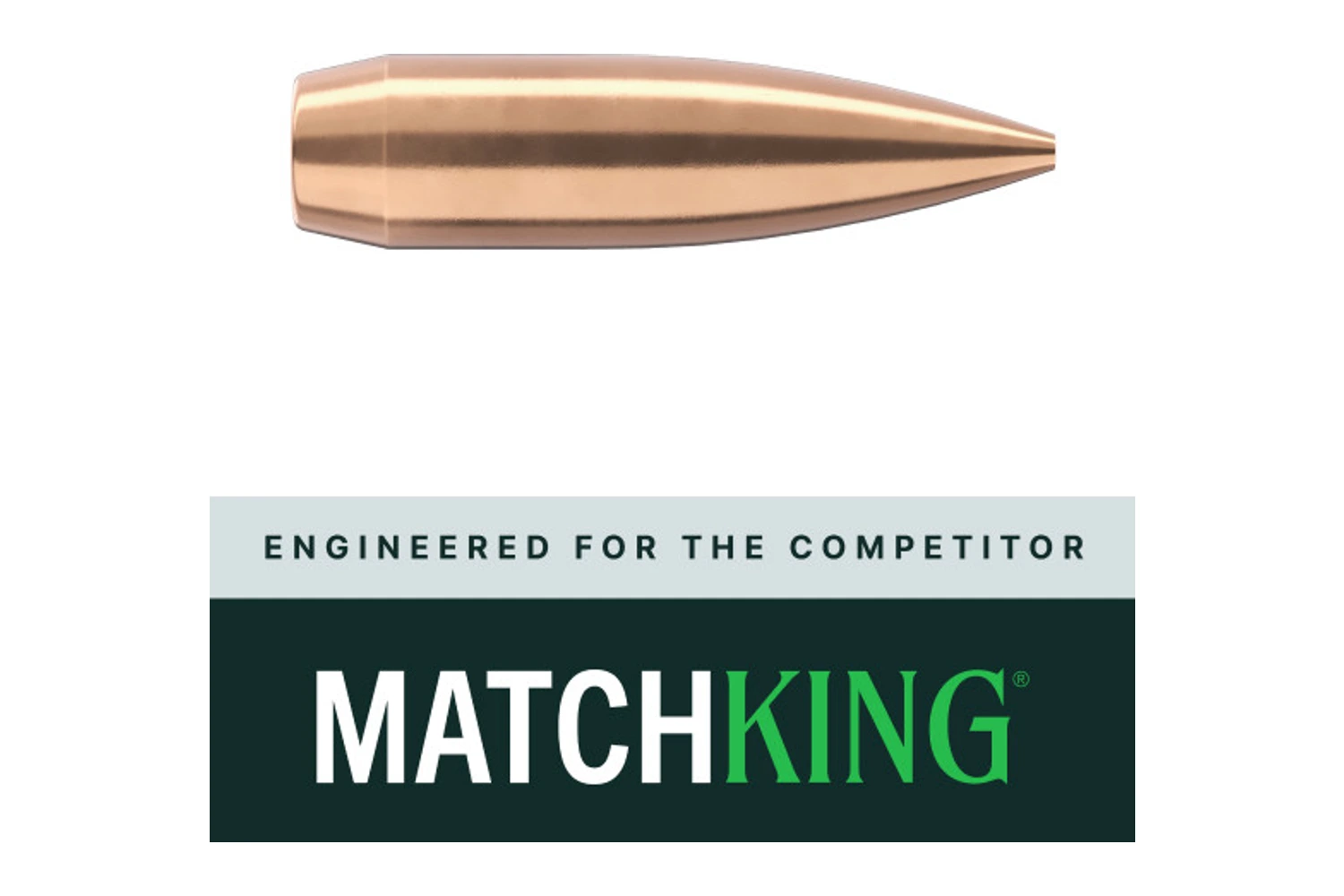
The bullet that made the company’s name: hollow point boat tail, high ballistic coefficient and very tight tolerances. It underpins the list of state, national and world records claimed by the brand. The calibre benchmark has remained the same for decades: .30, 168-grain reference #2200.
References
- .22 · 52 gr HPBT
- .22 · 52 gr HPBT (500 u.)
- .22 · 53 gr HP
- .22 · 69 gr HPBT
- .22 · 77 gr HPBT (50 u.)
- .22 · 77 gr HPBT (500 u.)
- .22 · 77 gr HPBT (cannelure, 50 u.)
- .30 · 125 gr HP/CN
- .30 · 150 gr HPBT
- .30 · 155 gr HPBT
- .30 · 155 gr HPBT/CN Palma
- .30 · 168 gr HPBT
- .30 · 168 gr HPBT (500 u.)
- .30 · 168 gr HPBT (moly)
- .30 · 169 gr HPBT/CN
- .30 · 175 gr HPBT
- .30 · 190 gr HPBT
- .30 · 200 gr HPBT
- .30 · 220 gr HPBT
- .303 · 174 gr HPBT
- .338 · 250 gr HPBT
- .338 · 300 gr HPBT (50 u.)
- 6 mm · 70 gr HPBT
- 6 mm · 70 gr HPBT (moly)
- 6 mm · 107 gr HPBT/CN
- 6,5 mm · 107 gr HPBT
- 6,5 mm · 140 gr HPBT
- 6,5 mm · 140 gr HPBT (moly)
- 6,5 mm · 142 gr HPBT/CN
- 7 mm · 150 gr HPBT
- 7 mm · 168 gr HPBT
- 7 mm · 180 gr HPBT
- 8 mm · 200 gr HPBT
Tipped MatchKing (TMK)
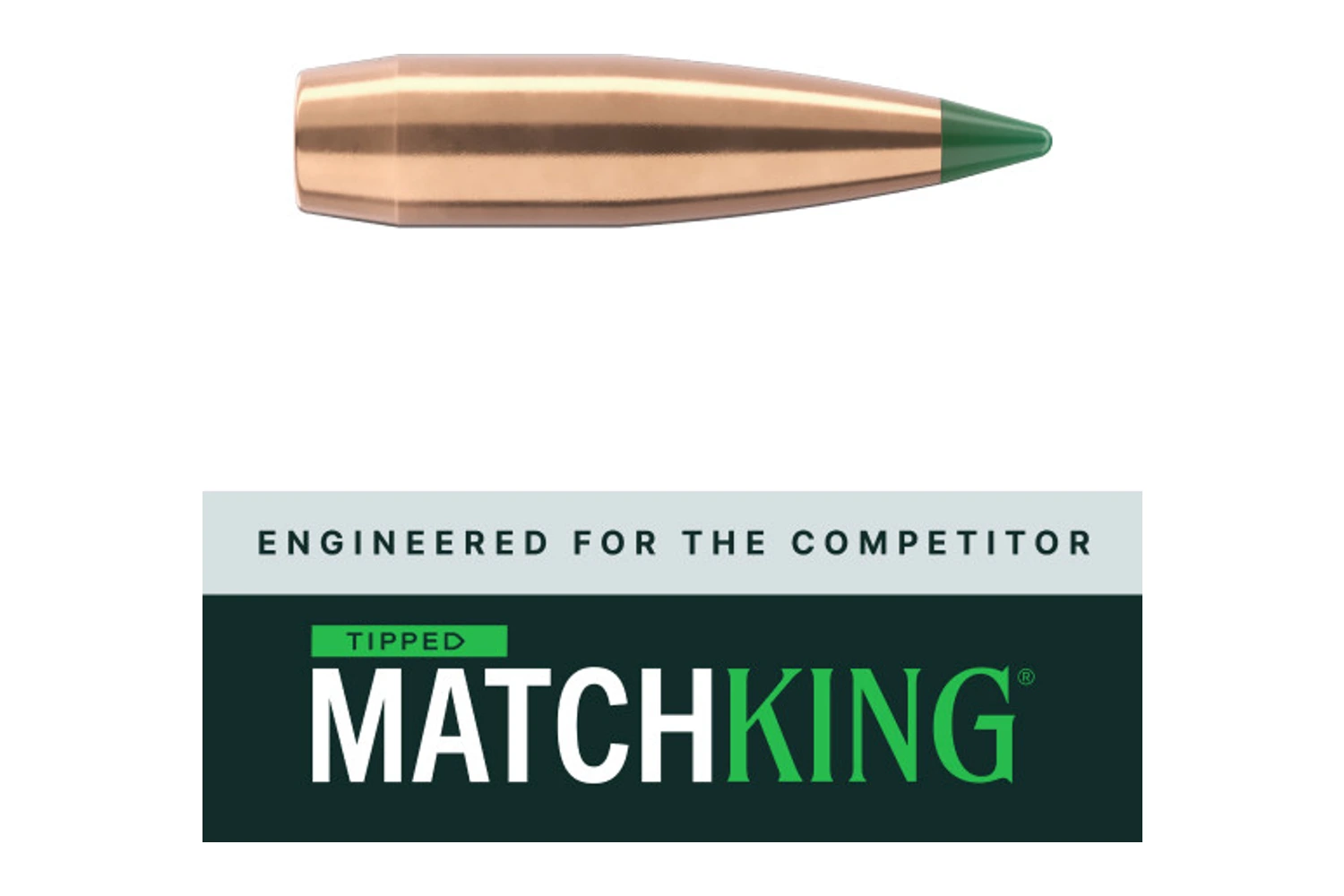
The MatchKing with an acetal-resin tip: less drag and therefore a better ballistic coefficient. The .30, 168-grain bullet remains supersonic at 1,000 yards at normal .308 Winchester velocities, unlike its untipped counterpart.
Hunting
Separated by construction: boat tail or flat base, with or without a polymer tip.
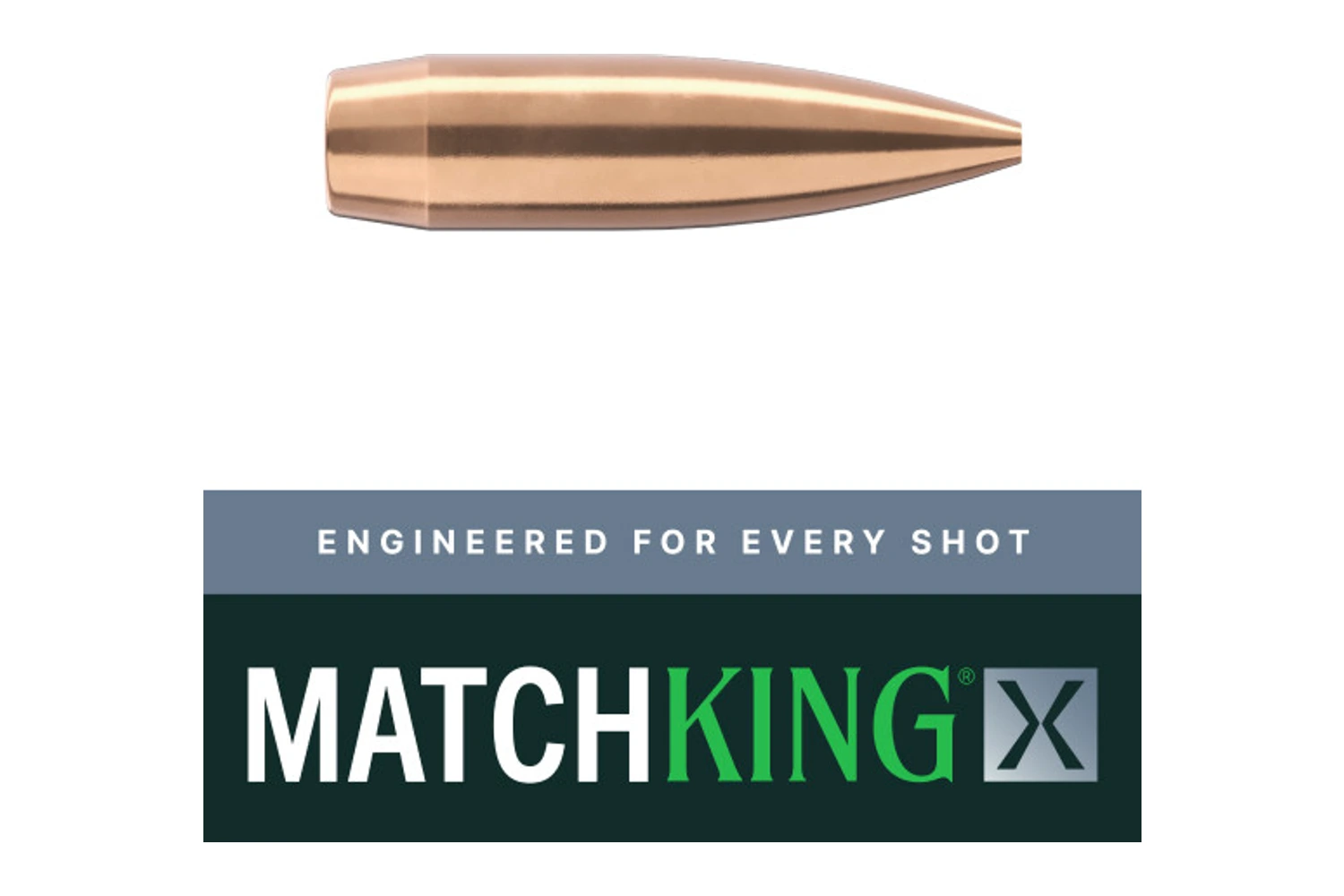
MatchKing X (MKX)
The MatchKing redesigned for the field. It shares ogive profile and external dimensions with the MatchKing of the same weight, so the two can be alternated without changing the seating die. A softer core and a mouth designed to expand differ; a proprietary drawing process leaves the jacket thick through the body.
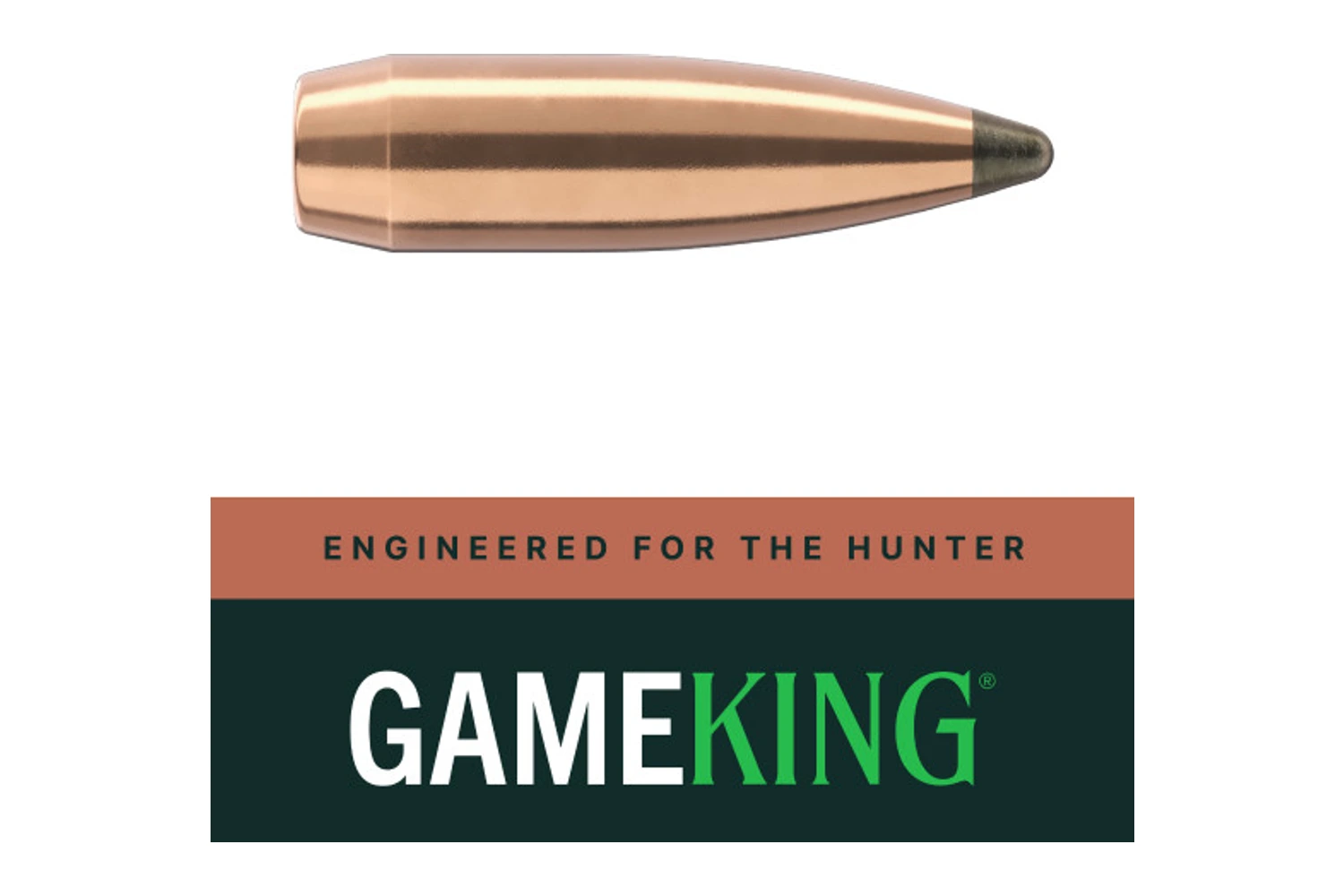
GameKing (SGK)
Boat tail and progressively tapered jacket. The spitzer boat-tail profile gives a flat trajectory and low wind sensitivity, while the jacket preserves expansion and penetration at long-range impact velocities. Sierra says many group like a match bullet.
References
- .22 · 55 gr FMJBT
- .22 · 55 gr HPBT
- .22 · 55 gr SBT
- .22 · 65 gr SBT
- .25 · 117 gr SBT
- .270 · 140 gr HPBT
- .30 · 150 gr FMJBT
- .30 · 150 gr SBT
- .30 · 165 gr HPBT
- .30 · 165 gr SBT
- .30 · 180 gr SBT
- .30 · 200 gr SBT
- .338 · 215 gr SBT (50 u.)
- .338 · 250 gr SBT (50 u.)
- .375 · 250 gr SBT (50 u.)
- .375 · 300 gr SBT (50 u.)
- 7 mm · 140 gr HPBT
- 7 mm · 140 gr SBT
- 7 mm · 150 gr SBT
- 7 mm · 160 gr HPBT
- 7 mm · 160 gr SBT
- 7 mm · 175 gr SBT
- 8 mm · 220 gr SBT (50 u.)
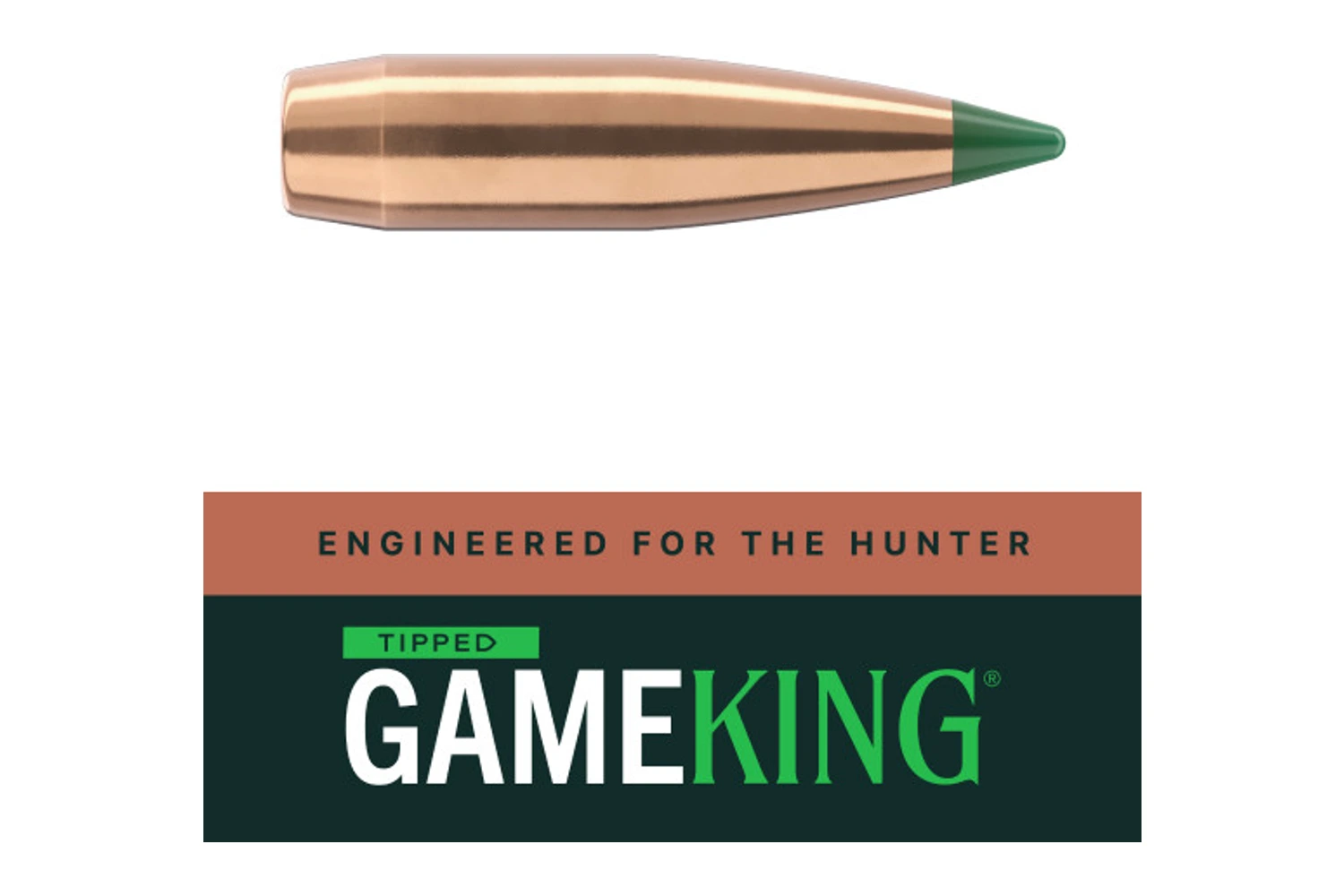
Tipped GameKing (TGK)
The GameKing with a green polymer tip and an open cavity beneath it that opens the core on impact. Sierra markets it as GameChanger, the name still used on many of our listings.
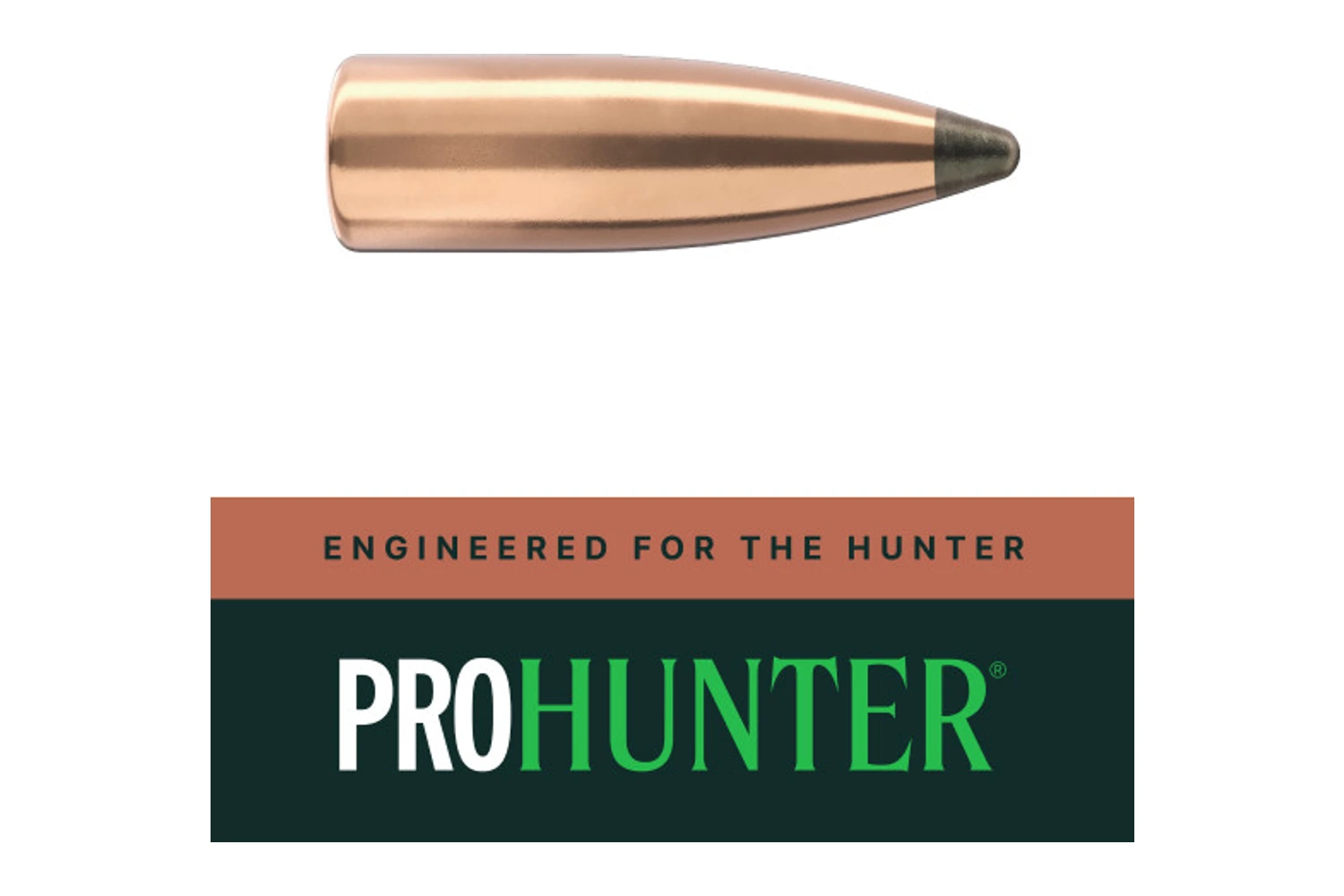
Pro-Hunter
Flat base and Sierra’s double-taper hunting jacket. With no boat tail it takes less powder space, making it suited to low-capacity or short-neck cases. The line also contains flat- and round-nose bullets, including those for .30-30 and .375.
References
- .30 · 125 gr SPT
- .30 · 150 gr FN
- .30 · 150 gr RN
- .30 · 150 gr SPT
- .30 · 170 gr FN
- .30 · 180 gr RN
- .30 · 220 gr RN
- .303 · 125 gr SPT
- .303 · 150 gr SPT
- .303 · 180 gr SPT
- .338 · 225 gr SPT (50 u.)
- .375 · 200 gr FN
- 6 mm · 100 gr SBT
- 6 mm · 100 gr SPT
- 6,5 mm · 120 gr SPT
- 7 mm · 120 gr SPT
- 7 mm · 140 gr SPT
- 8 mm · 150 gr SPT
- 8 mm · 175 gr SPT
Varmint
Thin jackets designed to withstand high muzzle velocity and open quickly. These lines have changed names; the shop still uses the old ones.
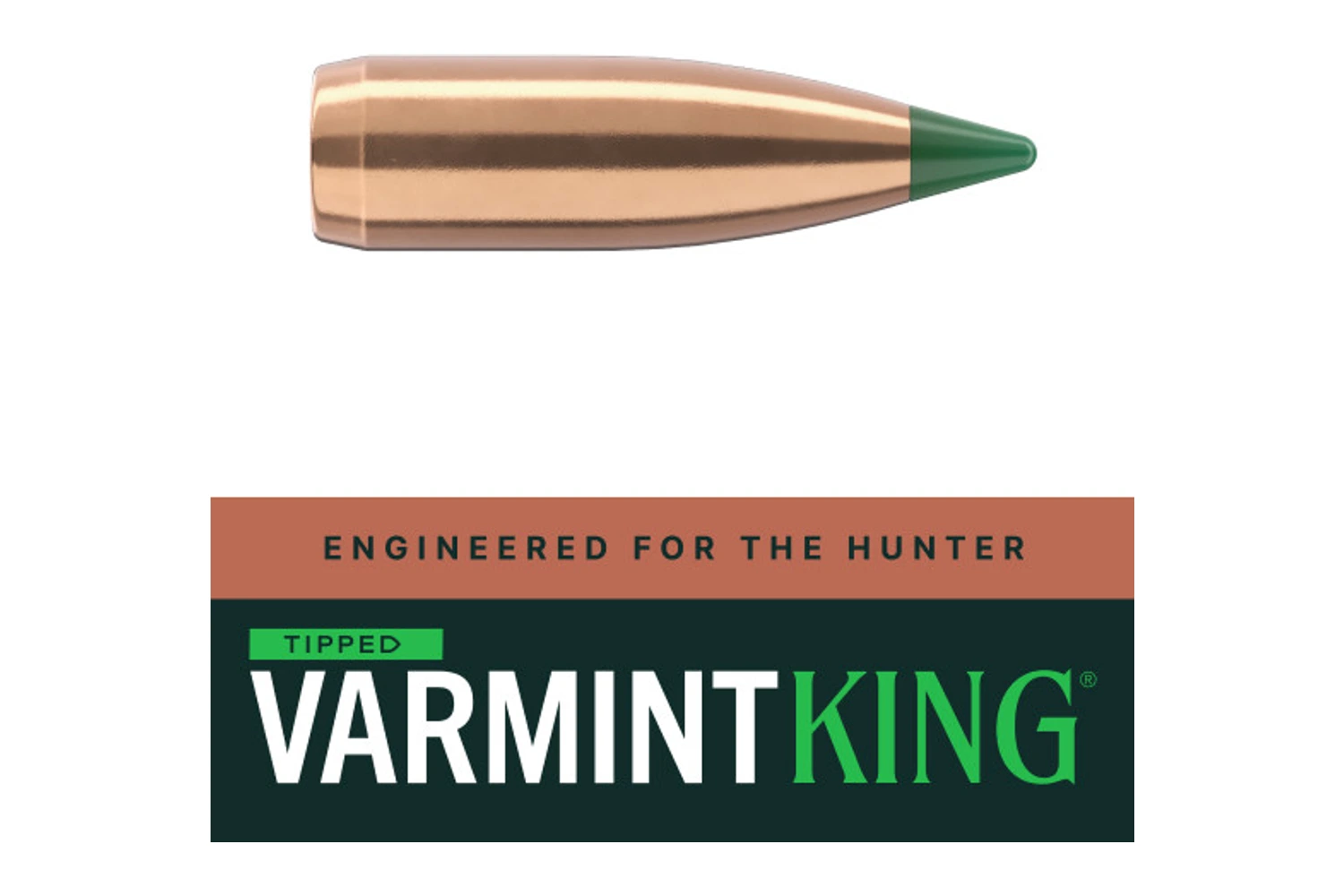
Tipped VarmintKing (TVK)
Polymer tip over a thin jacket: cleaner profile, less drift and rapid opening. Sierra formerly called this line BlitzKing, the name still used in the shop.
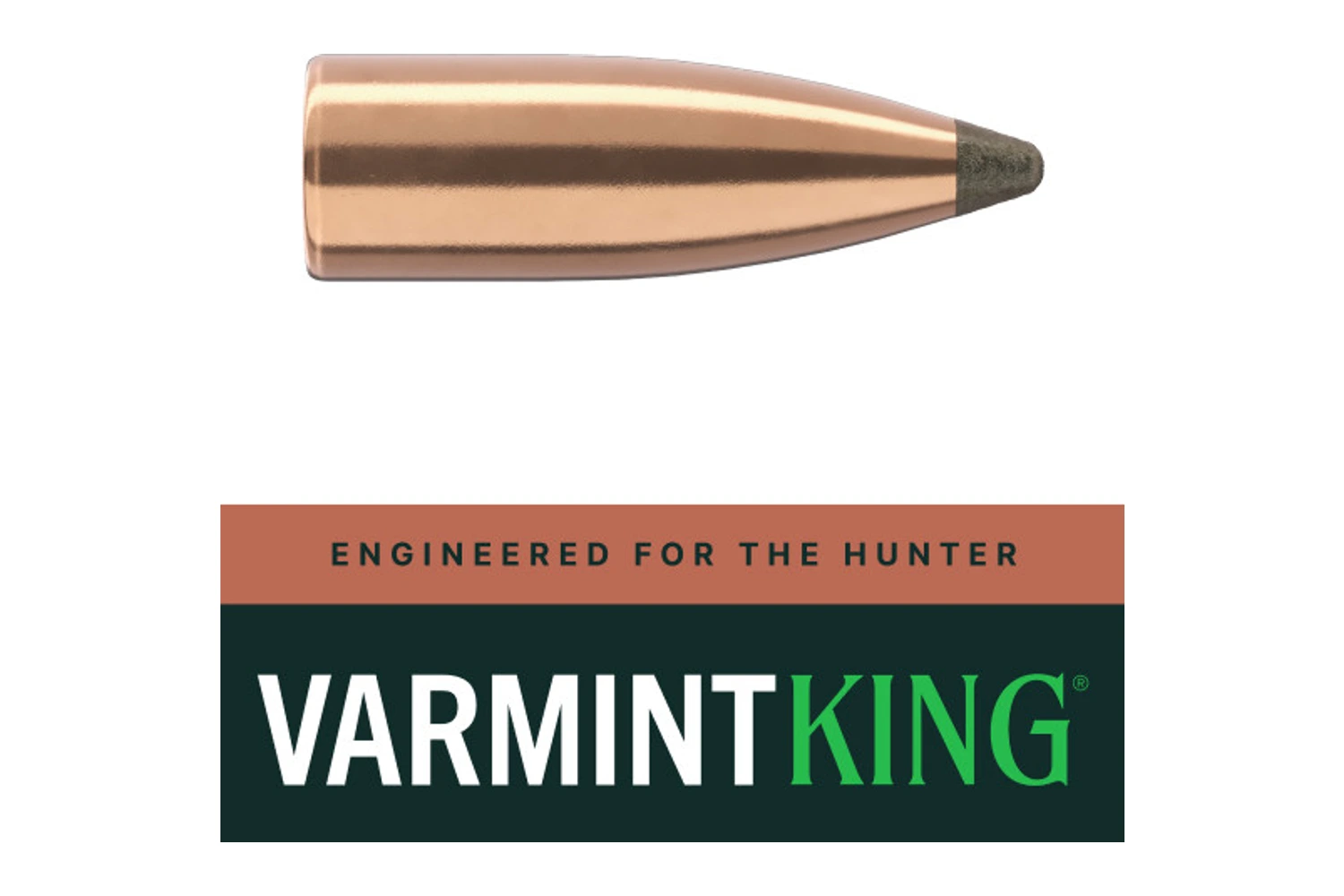
VarmintKing (SVK)
The same thin jacket without a polymer tip, in spitzer, hollow-point and Hornet forms. It was formerly Varminter, the name still used on most of our listings.
Handguns
Bullets for revolvers and semi-automatics, with a different purpose in each line.
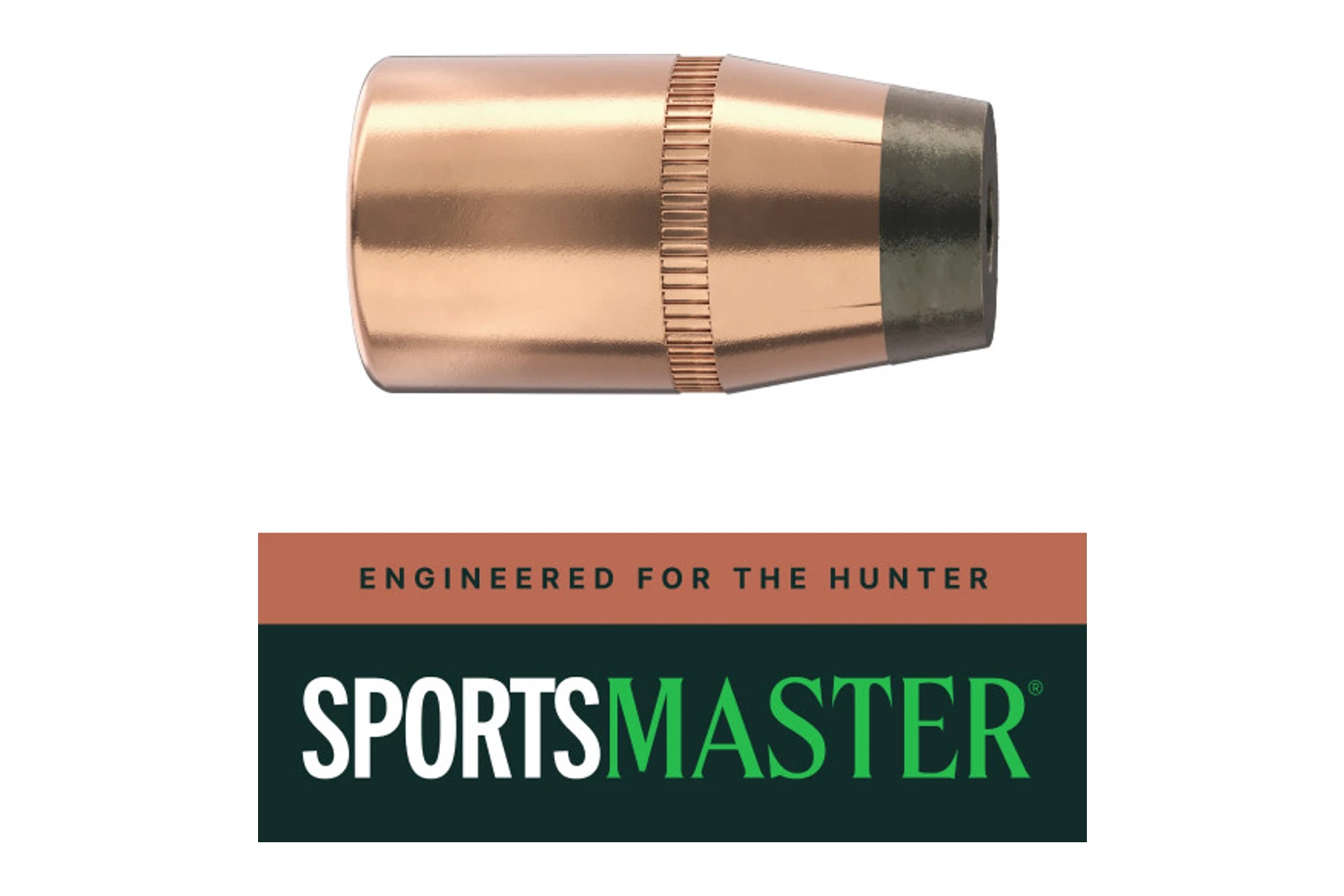
SportsMaster
Expanding handgun bullet with its own cavity and Power Jacket skives, distributing expansion evenly. The .38, 158-grain #8360 has its cannelure positioned for crimping in most .38/.357 revolvers and carbines.
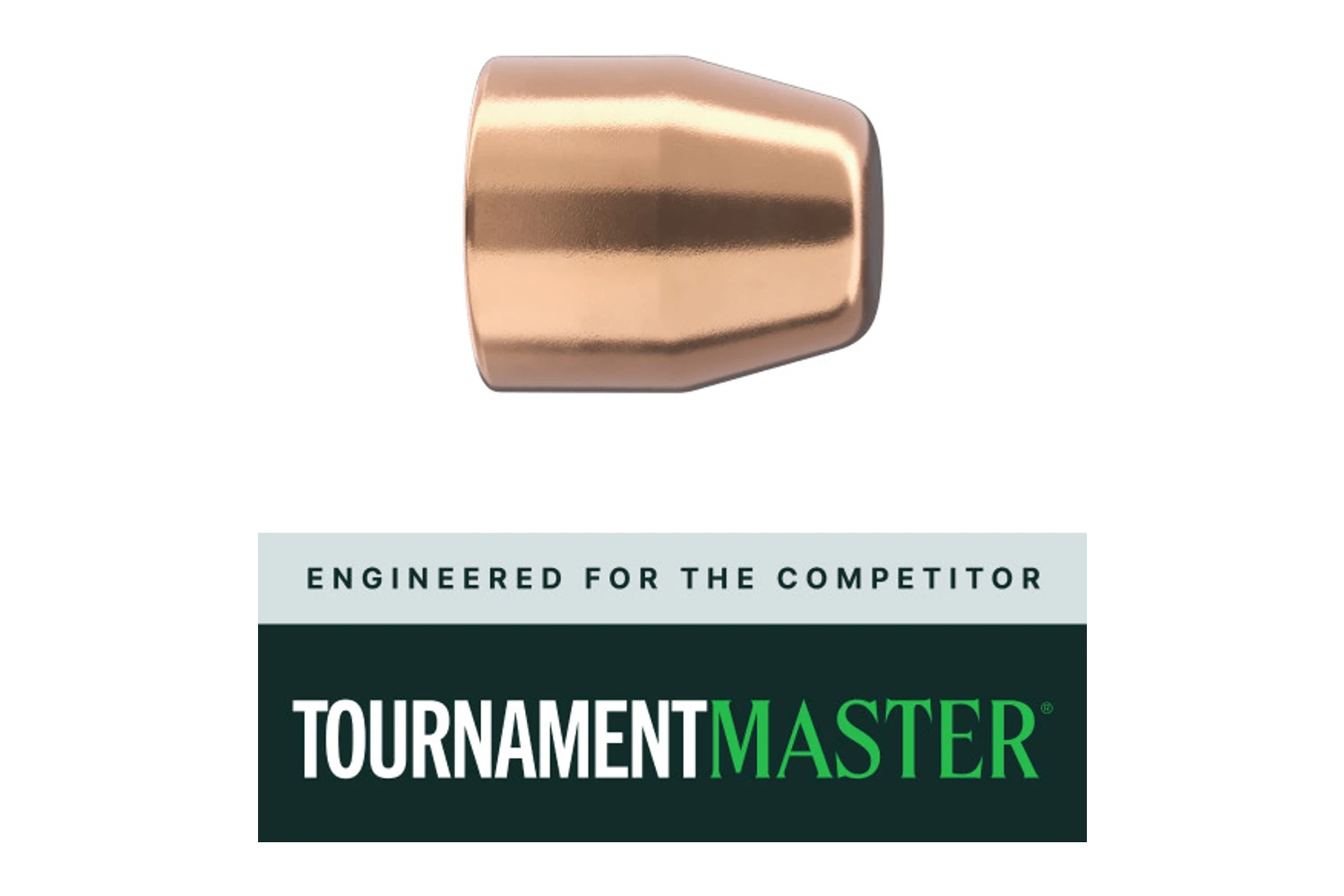
TournamentMaster
Jacketed target bullet designed for reliable feeding in semi-automatics. The 9 mm, 95-grain #8105 appeared in 1983 as a jacketed round nose and adopted its present form in 1984.
References
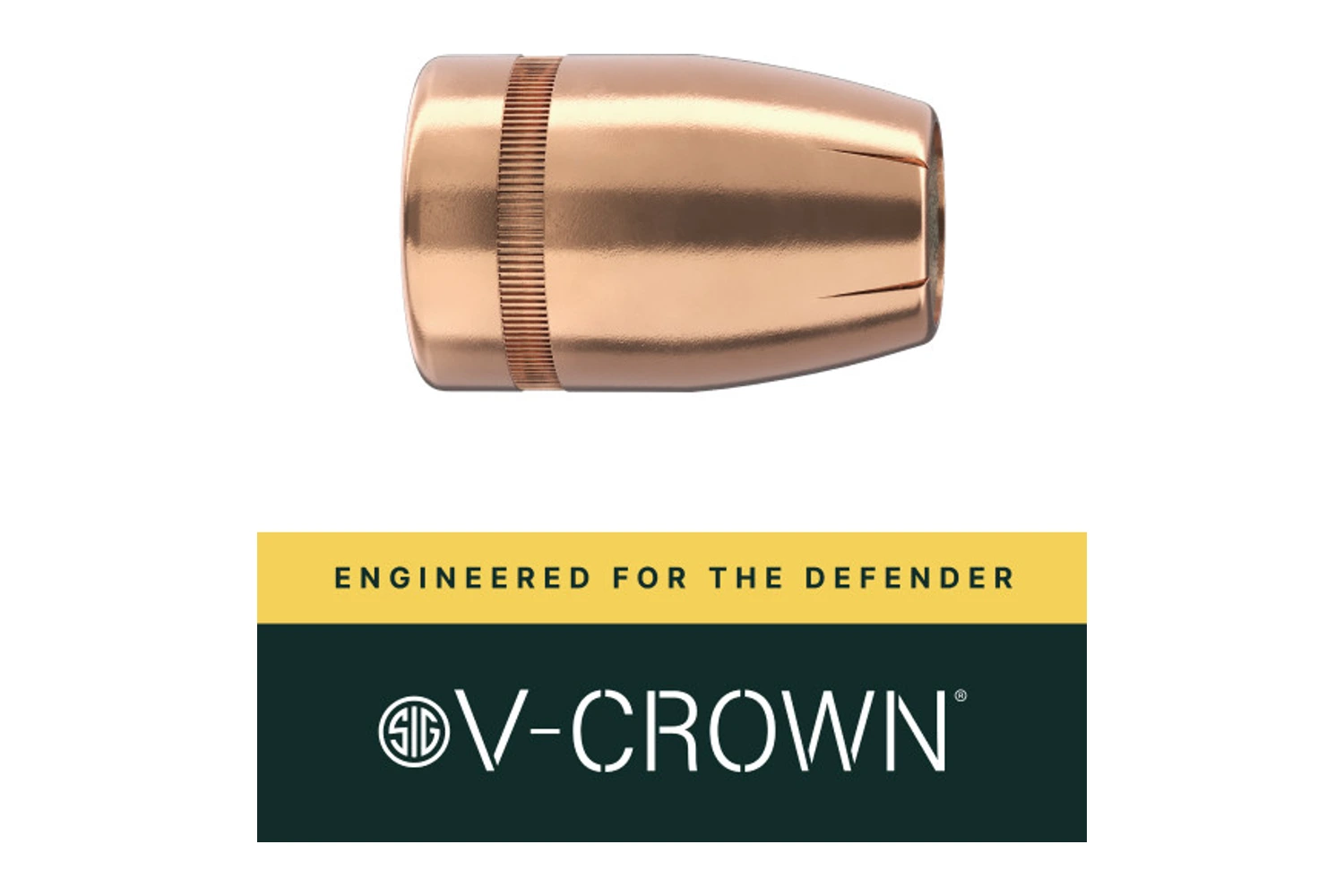
SIG V-Crown
Made by Sierra for SIG Sauer: a stacked-cavity hollow point with a second inner cavity. On #9924, #9465 and #9820 a mid-body cannelure locks jacket to core.
References
Reloading data
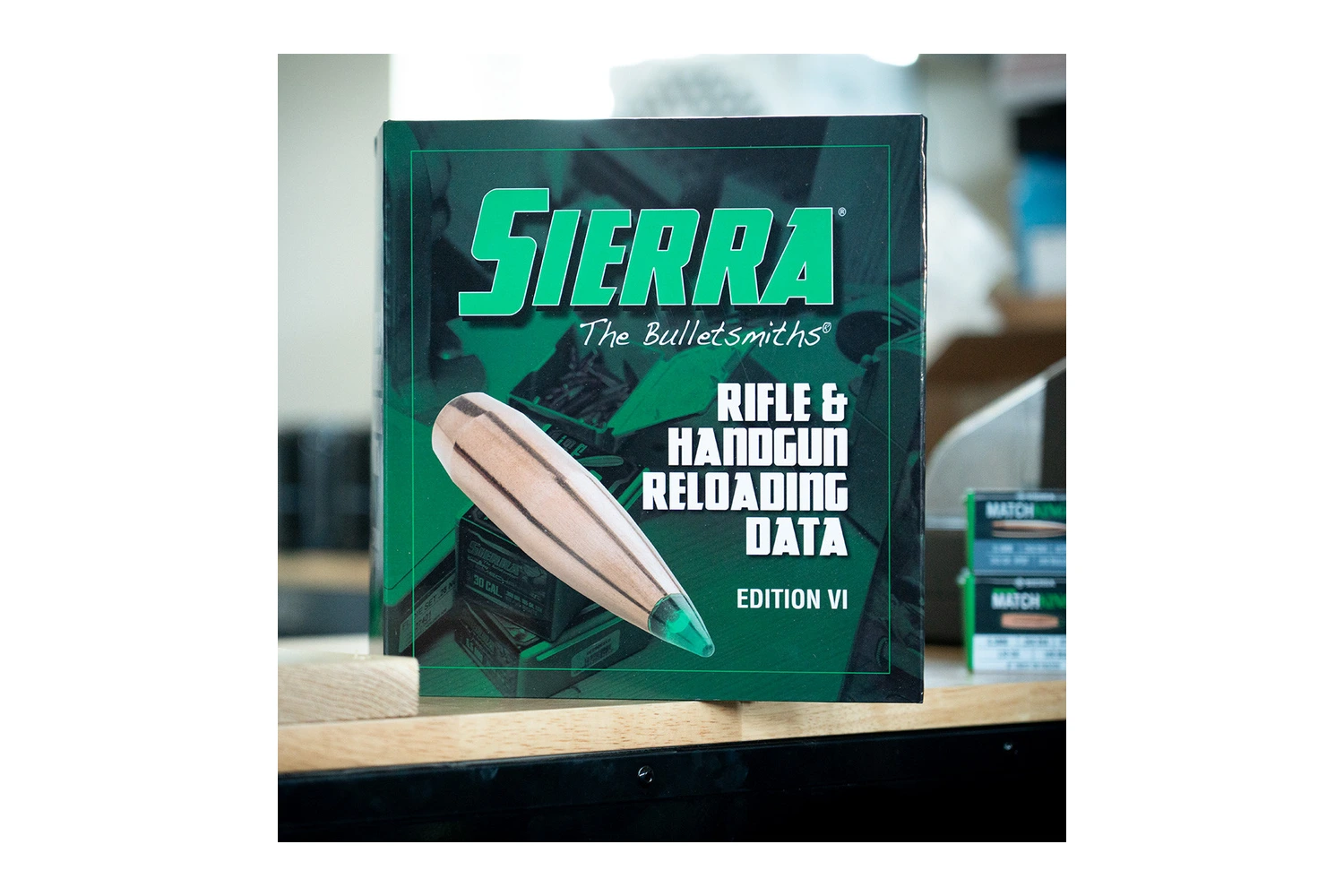
Sierra reloading manual
The company’s rifle and handgun reloading data, with each cartridge’s history. 1,368 pages in a three-ring binder, in English. Produced by the Sedalia ballistic laboratory and the 300-metre tunnel.
Edition
To read
Sierra bullet poster
This catalogue is published in Spanish.
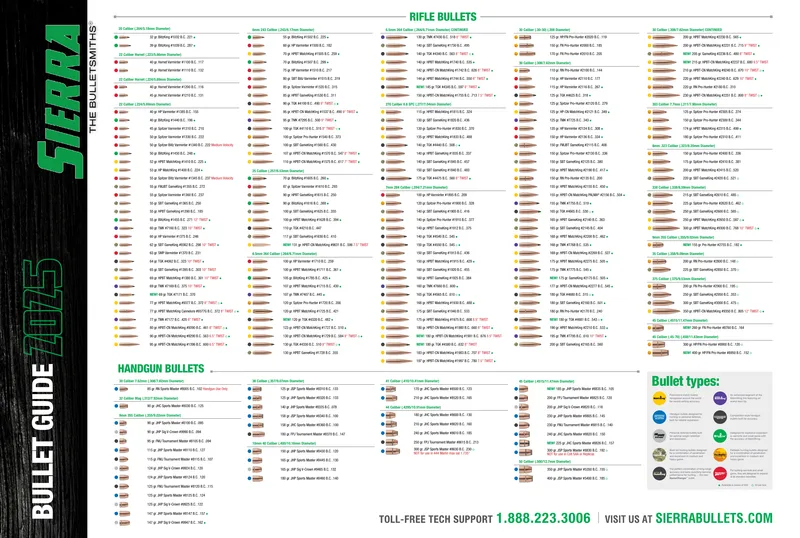
Sierra in the shop
Bullet references and the manual.
Firearms and ammunition subject to regulatory control are purchased and processed under the applicable rules through an authorised gun dealer.
The shop is available in Spanish.